




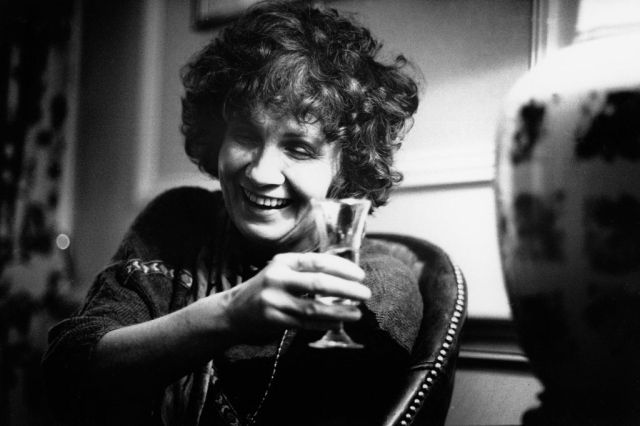
Ailce Munro's work tells us more than she realized about men and women. Credit: Getty





When the sexual-abuse scandal involving Canadian literary legend Alice Munro broke in July 2024, a few months after the writer’s death, the debate among fans mostly centered on the necessity of separating the artist from the art. Munro’s daughter Andrea Skinner had exposed her mother — the prize-winning writer of short stories about women and girls — for having overlooked Skinner’s sexual abuse at the age of 9 by Munro’s second husband, Gerald Fremlin. Even when informed of the abuse by Skinner as an adult — and having it confirmed by Fremlin, as family letters revealed — Munro chose to stay with him. Her fans, who had believed her to be an advocate for women, felt betrayed. The writer Mary Gaitskill described her feelings as “paralysis,” “real anger” and “disillusionment,” and went so far as to say she’d seen Munro as the “ideal mother.” And yet Munro on the page had not changed; her genius remained undimmed; and her stories still had value for us.
Now, two years later, the stories may not have changed, but Munro’s fall has opened the possibility of a better understanding of them. Writers and critics have already dug through Munro’s work looking for biographical clues and found them in plenty. Her later work often features characters whose lives have been derailed by a failure or an action not taken, a formative crime or mistake; and this may have been her own obsession over her failure to protect Skinner. Several stories are directly about sexual abuse of young women and girls, others invoke the dangerous sexual currents between daughters and their mothers’ boyfriends.
Alice Munro, we now see, was never an advocate for women. She was a woman caught up in the values of her time, and she and her daughter paid the price for them.
Much attention has centered on the story “Vandals,” published in the 1994 collection Open Secrets, the first after Munro was informed of the abuse. In it, a young woman burns down the house of the man who abused her as a child. The narrative point of view is from the abuser’s wife, who failed to protect the girl. “Vandals” is “a harrowing and quite direct fictional reflection on [Munro’s] failure to protect her daughter from her husband,” as the critic James Tussing recently observed in the journal Literary Imagination.
Tussing presents the bold thesis that the abuse scandal not only allows us to look for clues to Munro’s life in her work, but also compels us to notice an aspect of the work that readers had only been “diffusely aware” of: namely, Munro’s skepticism “about the value of moral judgement as such.” The knowledge of this radically changes our understanding of Munro. Her portrayal of sexuality as a force beyond reason and morality — brutal, bestial, untamable, and essentially gendered for female submission — becomes not a critique but a description. And she was never a feminist and never an advocate for what she called “the change” toward women’s equality that the public believed her to be.
Munro saw the appeal of the sexual revolution — she liked the sex, at least — and she appreciated and benefitted from feminism’s fruits in terms of creative fulfillment and career opportunities. But she was aware of the price, for children and for women’s own fulfillment. Deep down, she believed that the goal of equality between the sexes was both an impossibility and unsatisfying: the human animal is built along different lines.
This is to say that Munro’s choice of Fremlin — a dominating, magnetic, abusive man — illumines the many Fremlin-like figures in her work, now revealed to be written at least partially in appreciation. The Fremlins degrade women, exert raw power over them, and enforce women’s qualities as lesser. Often, they are dangerous criminals or murderers. Yet they are uniquely the men with whom her women can achieve full sexual and relational satisfaction. The animal demands of sex and gender, as she saw it, are atavistic and beyond morality, and thus the sexual revolution itself can only ever be a partial and painful project.
Another Fremlin type is the uncle in the story “Haven,” from Munro’s last collection, Dear Life. Here, a teenage-daughter narrator has been abandoned with her old-fashioned uncle and aunt for the summer while her progressive parents are do-gooding in Africa. Her uncle mocks the narrator’s parents and bullies his wife — he is tyrannical, temperamental, cruel. And yet, somehow, the aunt is “younger and fresher and tidier” than the narrator’s mother, who as the beneficiary of equality in marriage, should be more vibrant. The aunt blushes at a mention of the marital bedroom, a space she seems to consider both private and sacred, and dotes on her bully of a husband. She keeps a lovely home, speaks only when it is allowed, and “her life revolves around that man,” as the narrator’s mother remarks.
The narrator realizes that, contrary to her expectations, “such a regime could be quite agreeable.” She adds, “I don’t mean that I was won over to Uncle Jasper’s way of thinking entirely — just that it did not seem so alien to me as it once had.” And the secret to her aunt’s happiness appears to be sexual. She is prone to radiant smiles. The narrator, “creeping past my aunt and uncle’s closed bedroom door on a Sunday morning” hears “sounds such as I had never heard from my parents or from anyone else — a sort of pleasurable growling and squealing in which there was a complicity and abandonment that disturbed and darkly undermined me.” The progressive parents, free to have any kind of sex at all, aren’t really enjoying it; whereas animalistic “growling and squealing” erupt from the traditional marriage. If this is the better choice is an open question, but it’s obviously hotter.
I sorted six collections of Munro stories seeking to confirm these insights: The Lives of Girls and Women (1971), Something I’ve Been Meaning to Tell You (1974), The Moons of Jupiter (1982), The Progress of Love (1986), The Love of a Good Woman (1998), and Dear Life (2012). The first two were written before Munro’s marriage to Fremlin; the middle two after Fremlin’s abuse of Skinner had taken place but before Munro was explicitly informed of it; and the final two when she knew about it, and was processing it in fiction.
Of the 61 total stories, the first two collections are the widest-ranging and focus more on childhood and families than men, women, and elemental sexuality, though the theme is present from the start. Thirty-seven, or about 60%, concern “the change” in some significant way. Of the 40 stories published after Munro’s marriage to Fremlin, 28 (70%) are significantly about a romantic relationship, with 10 presenting a man with abusive, dominating characteristics in an attractive light. Thirteen more substantially involve female dissatisfaction with men who are abusive in their unattainableness, thanks to the new morality allowing endless affairs, partner-changing, and lack of commitment, or who are disappointing husbands. Counted generously, there are, at most, three or four outliers that present happy-ish couples not involved in a dynamic of gendered brutality and abuse.
To name just a few of these dominating, abusive, desired men in Munro’s middle period: Duncan in the story “Dulse,” a man for the sake of whom the narrator has given up “all pride and common sense”; Mr. Cryderman in the story “Jesse and Meribeth,” who molests the teenage narrator while denigrating and humiliating her, an experience which she finds to be very arousing; Dr. Streeter in the story “Eskimo,” who has “the mind of a dinosaur,” plus a man referred to as “the Khan” in the same story, whose domination inspires “a trance of devotion” in his possibly kidnapped teenage girlfriend — this couple’s lovemaking inspires both sickness and “sudden and punishing” desire in the narrator.
In the later work, after Munro learned of Skinner’s abuse, there are many more Fremlins, often of a more explicitly criminal nature. Both Mr. Gorrie and Rupert Quinn in the collection The Love of a Good Woman have probably killed someone — and each inspires passion and self-immolation in women who are otherwise seeking an independent, modern path.
There are various ways to interpret what Munro’s personal choice of such a man means about her theory of men and women. Rachel Aviv, in her authoritative reporting on the scandal for The New Yorker, presents the facts in such a way as to suggest that Munro was a victim of her generation. She was an abuse survivor herself, beaten by a ruthless patriarch of a father, and she was raised in an earlier time, when women were expected to be subservient to men. And then she also lived under Fremlin’s thumb. “Her mode of writing feels almost traumatized,” Aviv observes. The relationship with Fremlin, in this interpretation, is a kind of retrograde submission to the hierarchies of the past. And Munro’s oft-presented fantasy of “total surrender” to a man isn’t a deep female need, but a mistake of her upbringing — redeemed, possibly, as a kind of extreme bent towards passive observation that’s useful for writing fiction.
Munro herself made this justification on occasion. She recognized that submission wasn’t “something the modern woman is supposed to be content with,” as she told the BBC in 1976. Munro went on to note that this tendency of hers was an observational asset, the strategy of a true storyteller: “I will let situations develop way past the point where I should stop them, just to see what will happen, to see what people will say, to see what people will do.” This form of whitewashing has been a fairly common response to the disturbing elements of Munro’s work. Upon awarding her the Nobel Prize, the Swedish Academy extolled her for championing “the silent and the silenced, the passive, those who choose not to choose.”
Tussing, however, ferrets out a darker Munro: not a nice lady a little confused about sex, nor a great humanist and ideal mother — but a woman “writing beyond good and evil,” willing to face our brutality, and her own. He contends that Munro kept Fremlin around because she believed that “the springs of creativity and sex are all together,” as she once said, and that she needed the sexual fulfillment he provided in order to write.
Like Aviv, Tussing queasily suggests that the writing can semi-redeem her choice of Fremlin over Skinner. Hers is “the poetic role of mediating between reason and brutality,” he writes, adding the high-flown justification that “this need to tame by explanation is … the shared origin of both religion and poetry, perhaps even of language.”
Alice Munro was misguided not by the evils of patriarchy, but by the sexual revolution and the spirit of her age. Munro criticized the effects of the sexual revolution and she doubted its potential to transform human relations, but she believed in the underlying secular-individualist metaphysics that made it possible. The Canadian countryside of her youth had already lost the sense of order or supernatural order upon which standards of moral behavior and institutions like marriage and the family were once based. There was no “before.” She was born into a time ripe for a new set of values that elevated individual pleasure and perhaps a misty sacredness of sex or art as the highest goods.
We see this with a special clarity in Munro’s breakout collection, Lives of Girls and Women, a set of linked short stories set in the mythical Wawanash County, in the Ontario that would become her lifelong terrain. This is the collection in which Munro delves most deeply into her familial past, and it is startling to discover the scenes of darkness, chaos, and abandonment where we might expect “tradition.” Religion is vestigial in this county; a higher order is non-existent; and the sexual revolution has already begun.
In the first story in this collection, “The Flats Road,” Del, a character who shares many biographical points of similarity with Munro, launches into the tale of an ur-marriage that would resonate throughout the author’s work. Del’s neighbor Uncle Benny (a false relative, “he was not our uncle, or anybody’s”) answers a newspaper ad for a bride and is subsequently frog-marched into marrying the teenaged mother of a bastard child. The bride turns out to be mentally disturbed — she wears an incongruous red jacket, has legs “like scissors,” and beats her infant. The groom is a great man for the land but also a hoarder, a fabulist, and set in his ways. This grim couple is a more extreme echo of Del’s stolid, farmer father and his eccentric, intellectual, outsider mother, who attempts to sell encyclopedias to the locals and writes letters to the newspapers promoting contraception.
Already then, in this raw, new country, marriage is accidental, and familial relations are false or weak. And as if these unstable married figures weren’t grim enough, Del describes her memory of Uncle Benny’s parents, now deceased, as “old and heavy and half-blind, sitting on the porch in the sunlight, wearing many dark layers of disintegrating clothing.”
These, and many other individuals in Munro’s work, cling to a kind of tradition — even Uncle Benny’s hoarding resonates both into the past and into an uncertain future. But for most, it is vanishing (“disintegrating”) around them, and it wasn’t much to begin with. In the second story, “Heirs of the Living Body,” an uncle of Del’s is attempting to write a history of the region — a project of great manly and intellectual importance — but his one blind eye, “dark and clouded,” metaphorically suggests impaired vision. Nothing of any importance has happened, so he is attempting to record everything, and has only reached the year 1906 at the time of his death. Del inherits his manuscript unappreciatively, and allows it to be ruined in a flood.
The idea of the rural past as already corrupted is counterintuitive to contemporary readers, raised on the fantasy of infinite social progress, but it rings true. My own mother was born nine years after Alice Munro and lived an American-township analog of Munro’s life. A few times in my deep childhood, we visited the totemic old farm relatives, and I recall the flies, the swollen ankles, the stultifying boredom, and my mother’s genuine horror and gratitude to have escaped such a place. She laughs at farmhouse chic to this day. Trust me, you wouldn’t want to live like that.
No one did want to live like that, and thus Wawanash County got the sexual revolution.
Young Del senses she is different from the people around her; she is academically gifted and wants more out of life. In the title story, when she is a young teen, she engages in an affair (or is sexually abused, depending on how you want to look at it) with Mr. Chamberlain, a smooth-talking bachelor who is friends with her mother’s boarder. (Her mother, discontented, has moved into town and left her father out on Flats Road.) The relationship begins as Del performs a half-beseeching, half-humiliating routine, pretending to be a seal and barking, crawling around her living room floor in front of Mr. Chamberlain, and he secretly grabs her developing breast. “It was like a slap, to leave me stung,” Del says.
Del is aroused by these violent attentions and seeks out opportunities in which they might continue. Mr. Chamberlain is a proto-Fremlin, written years before Munro married the real-life one. But the story asks us to believe, as Munro does, that Del’s choice of the situation, her willingness to engage with her own raw sexuality, even to the point of seeking brutality, is in some sense what sets her apart from her best friend, whose traditional life path serves as the story’s counterpoint. Mr. Chamberlain writes, “Del is a bad girl,” on an envelope. Del asks: “Had he hit upon my true self?” She seems to believe he has.
This is another theme that would reappear throughout Munro’s work — an instance of sexual boldness or transgression as expressive of a character’s core identity. Her women are always running away from their husbands and toward it, as are so many of us in the world built by the sexual revolution. Munro believed in this form of fulfillment, as she believed that marriage could be a kind of incoherent, fatal seizure (see the story “The Moon Over the Orange Park Skating Rink,” for the best example of this). But in this, too, perhaps she was expressing more about her time, place, and upbringing than about humanity writ large. If the era of peak pornography has taught us anything, it’s that the desire for transgression is easily manufactured and doesn’t say much about the individual at all.
Nonetheless, Munro was an astute observer, and even as she asserted the appeal of sexual freedom, her stories convey, again and again, the mystery that for women somehow it doesn’t work out. If relations between men and women were broken before the change, the cracks widened still more afterward. Munro’s subject matter was always narrow in scope; seen in this light, it becomes a monomania. She spent her career pushing and pulling and rearranging the possibilities of male-female romantic relations, post-change, in an obsessive attempt to make things right, or to catalog all the ways things can go wrong. (If one recalls Uncle Craig’s manuscript or her mother’s encyclopedias, there’s a beautiful kind of order to it.)
Do we want evidence that the philosophy of the sexual revolution doesn’t work for women?
We don’t, of course, we don’t. Which explains the decades-long critical misunderstanding of Alice Munro — I went through more than a dozen reviews, obituaries, and blog posts at random, and none of them mentioned sex — and also the squeamish blankness with which even the best minds confront her crime. An honest appraisal would see that Munro’s treatment of her daughter expressed the values of the sexual revolution in an extreme form: she chose her personal sexual fulfillment and her art over her child. She did this knowingly. She had been doing it all along. She told us about women who did this every chance she got, and she tallied the costs they bore. The revelations about Skinner’s abuse are such a fitting coda to her fictional output, she couldn’t have written it better herself.
To acknowledge this while still valuing Munro’s work would challenge the past 70-some years of feminist dogma. What Munro saw and couldn’t unsee was the difficulty — the impossibility, really — of rewriting certain rules of human existence. We might call these rules the natural outcome of human nature; Christianity would call them the fruits of original sin. We can choose ourselves over the web of relations in which we are enmeshed. We can deny that there’s something about male dominance that turns women on; we can skip out on marriages; we can choose to see a fictional scenario about a young girl choosing to be molested by an older man as empowering; we can do many things. But somehow, as Munro reveals, both in life and in fiction, we can’t prevent a bad choice from having a bad consequence.
By this reckoning, the debate about condemning Munro but not her art has it backwards. Her art stands as a gorgeously drawn catalog of dysfunction, but the values it expresses can be comfortably condemned. The writer herself can then, perhaps, be forgiven. She betrayed her daughter, but she saw as best she could, and she worked very hard to tell us about it.
When Munro looked to express the good in human life, as she occasionally did, she found it in the brutal truth and inexplicable beauty of nature, or in the almost-devotional love present in the artist’s gaze, or in moments of fleeting human connection that were to be treasured because they were so partial and so rare. Men and women, she thought, might occasionally find each other. Sometimes, a certain quiet being-together was possible, and a kind of peace.
And families, even damaged ones, had their moments. She wrote of Del’s parents in “The Flats Road”: “We were in a house as small and shut up as any boat is on the sea, in the middle of a tide of howling weather.” Del imagines this as she goes to sleep, and thinks of her parents downstairs on the floor below her: “They seemed to be talking, playing cards, a long way away in a tiny spot of light, irrelevantly; yet this thought of them, prosaic as a hiccup, familiar as breath, was what held me …”.
These are the kinds of “quiet truths” that Alice Munro was so celebrated for. They are also, to some extent, banalities.
We might aim higher. We might aim for marital love that doesn’t involve abuse, perhaps a form of male dominance harnessed to male responsibility and care. Women might enjoy that, too. We might aim for familial love that takes that “tiny spot of light” and grows it through lifelong care and commitment to each other. We might drop everything and visit our dying mothers, as Munro didn’t do, and unrepentantly wrote about. We might develop a theory of sexuality that gives a mother the psychological ammunition to protect her child, and a teenage girl a reason to say no to her darker sexual impulses.
For a decade before she died, Alice Munro had Alzheimer’s. She forgot what she’d done, her middle daughter, Jenny, told The New Yorker. Jenny, in an extraordinary act of grace, cared for her mother during her decline, inverting Munro’s behavior with her own mother. Jenny told Aviv that Munro, wiped clean of memory and unable to write, seemed to have an ability to love in a new way that she hadn’t before. This, too, was a fitting ending.
In the Christian order, the soul is supernatural and must remain untarnished. It is each human being’s job to carry this precious cargo back to God through the difficult moral labor of seeking salvation with fear and trembling (cf. Phil 2:12). Munro believed in no such thing, of course. The religious impulse, for her, like the sexual impulse, was somehow atavistic and operated despite our better knowledge. Yet all the unbelief in the world can’t hide the ways the old religious law does seem to be borne out. Freed of her acts, Alice Munro’s soul was beautiful.
