




The American Society of Plastic Surgeons has come out against gender transition surgeries for minors. Credit: Getty





For years, proponents of pediatric gender medicine appeared to have an ironclad medical consensus behind them. “Gender-affirming care” — including puberty blockers, cross-sex hormones, and even irreversible surgeries — was simply a medical best practice. Many of them claimed these treatments were “life saving,” suggesting there was no difference between them and, say, the suite of interventions oncologists might prescribe for cancer patients.
But the consensus was always a mirage — and this week, at least among major US medical groups, it officially vanished.
On Tuesday, the American Society of Plastic Surgeons came out in opposition to providing gender-transition surgeries to minors. The recommendation, the first of its kind from a mainstream medical association, was published in a nine-page policy statement that marks a watershed moment in these debates. It’s part of a broader rethink among many experts, a reminder that science can trump ideology when investigators follow time-tested, evidence-based processes.
To wit, the ASPS examined the thorny cross-section of scientific research and medical ethics that inform the question of whether to provide gender-transition interventions for minors. After considering the weakness of the relevant scientific evidence and the balance of risks versus benefits, the organization urged its 11,000 members to delay gender-transition surgeries — including breast removal and augmentation, penis inversions, and facial-feminization surgery — until patients reach age 19.
The document — which, while addressed to plastic surgeons, is not a clinical-practice guideline — also cautions that the prospect of treating gender distress in minors with blockers and hormones raises serious ethical concerns due to the shaky state of the supporting science, the challenges of procuring minors’ informed consent, and the irreversibility of hormones in particular.
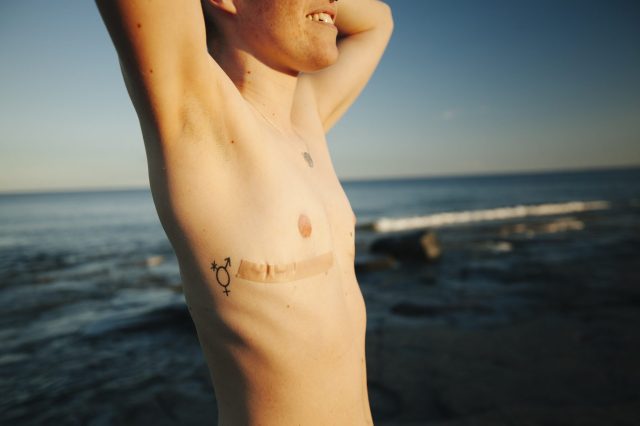
While supporters of gender-transition surgeries often falsely characterize them as rare, approximately 1,000 minors received such interventions annually in recent years — overwhelmingly mastectomies for girls who identify as male or nonbinary.
The ASPS’s position is grounded in systematic literature reviews — the gold standard of scientific evidence — and pays deference to Britain’s mammoth Cass Review of the field. Accordingly, the document validates the evidence-based-medicine approach to this discipline advocated by the quietly influential — and much-maligned by transgender activists — Society for Evidence-Based Medicine.
The policy document points to widely debated and criticized research that has suggested that, absent a gender transition, most youths with gender dysphoria will grow out of it. It goes on to point out that even highly experienced clinicians are unable to reliably predict which adolescent patients will persist in their gender-related distress. It then tips its hat to the massive report on pediatric gender medicine commissioned by the US Department of Health and Human Services, which was published in its final form in November and has been roundly dismissed as politically tainted, biased and therefore irrelevant by transgender advocates.
The ASPS continues: “The HHS report underscores that this uncertainty has significant ethical implications: when the likelihood of spontaneous resolution is unknown and when irreversible interventions carry known and plausible risks, adhering to the principles of beneficence and nonmaleficence (i.e., promoting health and well-being while avoiding harm) requires a precautionary approach.”
Those bold assertions are all but guaranteed to enrage and demoralize transgender activists, especially given that this policy statement arrives amid attacks on pediatric gender medicine by the Trump administration as well as a larger fracturing of the global elite consensus about pediatric gender medicine. The cracks have fast expanded after multiple systematic literature reviews found that the evidence backing the benefits of giving gender-transition interventions to minors is weak and uncertain.
Health authorities in a swath of European nations and the ruling Labour party in Britain sharply restricted minors’ access to gender-transition interventions. In the United States, just more than half of states, all of them red, have banned these practices. And on Friday, a jury in Westchester County awarded $2 million in damages to a detransitioner after her attorney convinced a jury that her psychologist and plastic surgeon had deviated from best practices and harmed her by removing her breasts when she was 16 years old. It was a landmark case — the first decision of its kind — and is expected to serve as a catalyst for others.
The ASPS’s position statement calls into question the logic pushed by many transgender activists that patient autonomy should be paramount — even absolute — among minors seeking these interventions. The document states that “patient autonomy is more properly defined as the right of a patient to accept or refuse appropriate treatment; it does not create an obligation for a physician to provide interventions in the absence of a favorable risk-benefit profile.”
Wading into the policy debate, the ASPS asserted that it opposed the criminalization of gender-transition interventions for young people and other “punitive legislative approaches.” A few states — Idaho, Oklahoma and Florida among them — impose such harsh criminal penalties. And yet, the ASPS stopped short of explicitly opposing bans that impose only civil consequences, which comprise the vast majority of state bans on pediatric gender medicine.
The ASPS policy document’s age cut-off of 19 for surgeries puts the ASPS in line with policies of the Trump administration as it has engaged in a whole-of-government assault on what remains of the pediatric gender medicine field.
Yet leaders at the ASPS saw the new recommendations as necessary. Dr. Scot Glasberg is a plastic surgeon in private practice in New York and a past ASPS president. He was not directly involved with the new policy statement but said he was intimately familiar with its development. He said the organization selected age 19 as a cutoff because by that point young people are safely out of puberty.
“This entire statement revolves around a vulnerable population,” Glasberg told UnHerd. “The ages of development are key.” And given the weakness of the evidence base, he continued, “we felt it would be best to recommend to wait until the age of 19” to allow young people time to mature.
Facing what is sure to be considerable backlash from liberal groups and transgender advocates, Glasberg asserted that the ASPS’s work on this document was fully independent of the Trump administration. “We have the beauty as an organization to be out of the line of politics,” Glasberg said. “We deal with science and evidence and data, and that’s why we made the decision we did.”
The ASPS had telegraphed its discomfort with gender-transition interventions for minors during the Biden administration. In August 2024, the organization made clear that it did not endorse such practices. The organization’s president at the time, California plastic surgeon Dr. Steven Williams, said in an Instagram live interview the following month that he wouldn’t commit to the ASPS coming out in opposition to those bans.
Yet major LGBTQ and liberal nonprofits, including GLAAD, the Human Rights Campaign, and the ACLU, have continued to routinely make the false claim that all major medical organizations endorse what they call gender-affirming care for minors.
As recently as December, the ACLU made this claim in a statement about its efforts to combat the Trump administration’s threats to strip Medicaid funding from hospitals that provide gender-transition interventions to patients under age 19. The ACLU release stated: “The administration’s proposal seeks to block the provision of evidence-based, medically necessary care for transgender people under 18 — care that is supported by every major medical association in the United States, including the American Medical Association and the American Academy of Pediatrics.”
After UnHerd challenged the ACLU over the veracity of its statement, a representative replied: “The ASPS opposes bans on gender-affirming medical care, like those the ACLU has challenged in court, so your claim is misleading at best.” Contacted for further comment after the ASPS released its new policy statement, the ACLU didn’t reply. GLAAD and HRC also didn’t reply to a request for comment.
The ASPS’s policy statement is already providing ample fodder for the legal profession.
Alabama Attorney General Steve Marshall, who has tangled with the ACLU in court, was eager to provide a comment. “For years, legal advocacy groups like the ACLU have worked hand-in-hand with medical interest groups,” he said, “to manufacture a narrative for use in court that providing sex-change procedures to children is medically necessary and recommended by every major medical organization,” he told UnHerd. “The claim has always been false, and I am glad that responsible medical organizations are finally beginning to put patient safety and evidence-based review ahead of ideology.”
Legal experts said the ASPS appeared eager to ward off attempts by litigators to leverage its new policy document in detransitioner lawsuits against plastic surgeons. More than two dozen suits have been filed by such plaintiffs so far, including some that, like the case that won the judgment in Westchester on Friday, include a plastic-surgeon defendant.
A critical statement in the ASPS document reads: “This position statement is not a retroactive judgment, but a forward-looking response to evolving evidence.”
Yet Charles LiMandri — a partner at the California law firm LiMandri and Johnna, which is behind two of the most famous detransitioner lawsuits — still sees an opening. “What the opposition has always said,” LiMandri told UnHerd, is that pediatric gender medicine “is evidence-based medicine, and that the science was settled and supportive. Those were lies.” He continued: “The fact that people are coming out now and saying there never was good science to support this proves those were lies. So in one sense they could say, ‘Well, the new ASPS standards can’t be applied retroactively.’ But on the other hand, they can’t deny the fact that if there’s no evidence for it now, there never was. And they said there was.”
Adam Deutsch, a personal-injury attorney in White Plains who represented the plaintiff in the detransitioner lawsuit, referenced the difference, dissected during the three-week trial, between the 16-year-old girl’s desire for surgery and the responsibility of the care providers to determine whether it was in a minor’s best interest. He said that the ASPS position statement validated his successful effort to point the finger at the defendants.
Deutsch noted another element of the policy document that dovetailed with his client’s lawsuit: what he interpreted as the ASPS asserting that plastic surgeons needed to conduct their own due diligence when screening patients and not merely rely on the independent word of a referring mental-health professional.
The attorney suggested that the ASPS might be putting more doctors on notice than just those who care for minors. He said he thought such a position by the ASPS would place greater pressure on surgeons when considering performing gender-transition surgeries on adults, as well.
The once-impenetrable edifice of gender activism is beginning to crumble.
Benjamin Ryan is a New York City-based reporter. His writing has appeared in The New York Times, The Washington Post, and The Atlantic, among other publications.
 benryanwriter