





A negative attention mill. (Rich Storry / Getty Images)





My ornery eighth-grade teacher was fond of warning the loud and obnoxious boys against settling for “negative attention”. “If you want attention,” he’d say in a voice that a pack-a-day habit had turned to gravel, “it is easier to get it by doing something bad than good, but try to resist the temptation.” Most students found him a comical figure — but, many years later, the on-air personalities and corporate executives of the world’s most famous sports television network are in desperate need of his advice.
ESPN, once the pinnacle of excellence in sports coverage and journalism, has transformed into a “negative attention” mill, sacrificing its reputation to pursue a business strategy of cheap clickbait, empty controversy, and the self-centered whining of delinquent children. For sports-lovers across America, that’s bad enough. But even worse is how ESPN’s decline presages a broader cultural collapse, one that’s dragged journalistic standards, civil discourse, and athletic culture into the national sewer.
When I was a kid in the late Nineties, watching ESPN was the sporting equivalent of religious experience. The network’s high broadcast quality of games and matches had no rival; the journalism was groundbreaking and reliable; the analysis was insightful. It should go without saying that a television station with the actual name of “Entertainment and Sports Programming Network” made athletic competition the center of its broadcasting cosmos.
ESPN was the brainchild of Bill Rasmussen, a sports journalist who aspired to create his own network after losing his media job with a Connecticut ice hockey team. After securing investors and sponsorships, his channel made its debut in 1979. Its climb to the top of sports broadcasting was slow and steady — yet, by the Nineties, it dominated America’s sports programming. There are plenty of reasons for this, from the right on-air talent to the novelty of cable television, yet perhaps most striking of all was ESPN’s innovative programming.
That began, of course, with live sports. Yet when ESPN wasn’t showing one of the “big four” — baseball, basketball, football, hockey — it showcased less popular games from tennis to billiards. There were also sporting documentaries, often involving “classic” games, like a dramatic comeback victory in the NBA finals or a no-hitter in baseball. Then there was NFL Films, a sports media company founded by a veteran of the Second World War, and which transformed old American football games into pure cinema. With aesthetic sophistication and theatrical voiceovers, its patented slow-motion spiral took on the feel of a history-altering event. NFL Films not only influenced sports coverage, but also Hollywood. Any Given Sunday and Remember the Titans are just two of the movies that made use of NFL Films’ epic style.
To celebrate its 30th anniversary in 2009, meanwhile, ESPN debuted its 30 for 30 series. Enlisting Barry Levinson, Spike Lee, and other A-list Hollywood film directors, the documentaries explored moments when sport interacted with politics or pop culture, such as the OJ Simpson murder trial or NBA legend Magic Johnson’s diagnosis with HIV. Entries in the series have won Emmys, Academy Awards, and the Peabody, arguably the most prestigious prize in broadcast journalism.
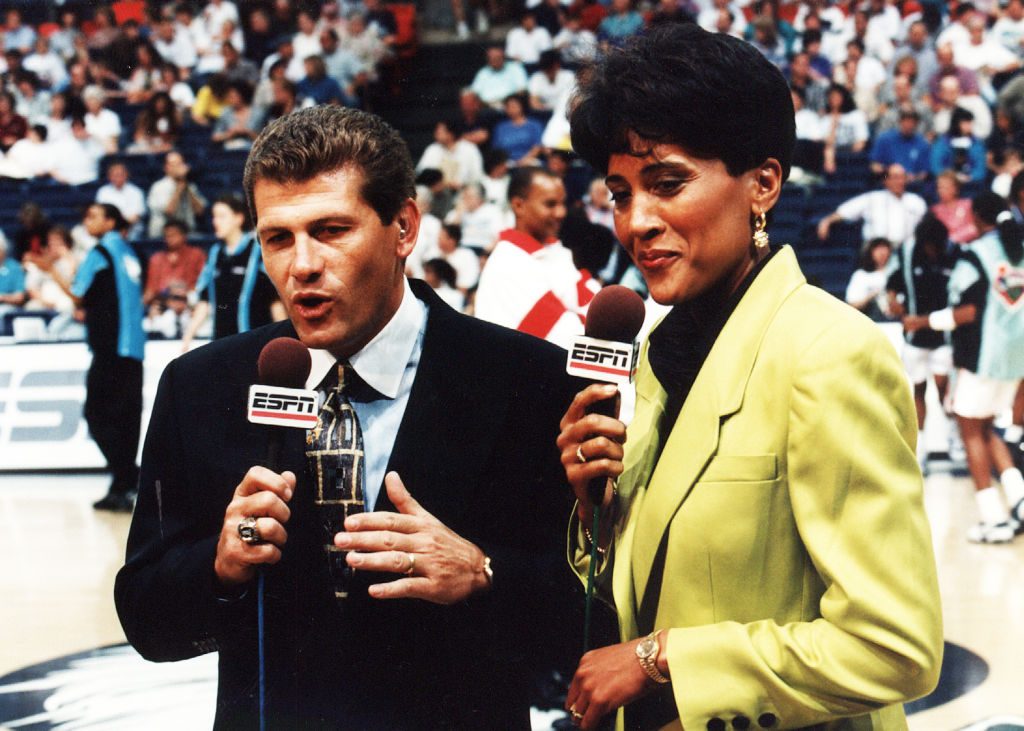
And if it might seem silly to present adult millionaires playing games as high art, ESPN also had a sense of humor. Sportscenter, its nightly news and highlight show, featured anchors as reputable for their wit and self-deprecating comic timing as their encyclopedic sports knowledge. Keith Olbermann and Dan Patrick, two former Sportscenter hosts, had an effortless ability to turn out clever turns of phrase, memorable one-liners, and humorous nicknames. A good example of Olbermann’s trademark wit was his description of the infamous boxing match when Mike Tyson bit off a piece of Evander Holyfield’s ear. “Boxing is no longer a sport,” the presenter quipped. “It is a parody of the life of Vincent van Gogh.”
Taken together, anyway, it seemed as if ESPN would continue to advance the aesthetics and storytelling sport. Instead, 30 for 30 was the peak before the fall; a climber clawing at the apex moments before he loses his footing.
Network ratings and revenue peaked at the start of the 2010s. Competition from streaming services and alternative media led to the loss of younger viewers, who even among sports fans often don’t want to watch entire games, instead preferring highlight reels on social media. All this put immense pressure on Disney, ESPN’s parent company, to cut costs. The downsizing culminated in 2017, with mass layoffs of writers, on-air personalities, production crew members, and just about anyone else Disney deemed expendable. “It is really tricky in a cord-cutting environment to see a growth opportunity for ESPN,” one former ESPN executive told The New York Times.
From there, and pressured by the flatulent spread of fratboy sporting podcasts, ESPN began a frantic race to the bottom. The viewer who turns on the network today will need a strong stomach to endure hour after hour of loudmouths bloviating endlessly about any sports-adjacent subject that they believe will go “viral”. This leads to incessant repetition of tired debates, for instance whether Michael Jordan or LeBron James is the “greatest” basketball player of all time.
The hosts and commentators, sitting in studios with enough lighting to perform a root canal, also inject a bizarre amount of emotion into broadcasts. “Debates” often end in hysterics with former athletes and so-called “journalists” screaming over each other, their voices cracking, their veins bulging from their foreheads. The typical ESPN program, then, is an entry in the Real Housewives series: all millionaire talking heads peacocking as tough guys as they struggle to regulate their emotional responses, as if network executives are engaged in performance art to validate every feminist criticism of the psychologically dysfunctional man.
The master of this darkly stupid artform, and undisputed face of the network, is Stephen A. Smith, a veteran sports journalist who was previously suspended from the network for indignantly asking what a woman did to provoke the NFL star who assaulted her. He’s accumulated a record of monumental errors, sometimes questioning the performance of players who aren’t even on the field.
When Jason Whitlock, a former sports columnist, documented several contradictions and discrepancies in Smith’s memoir, meanwhile, the ESPN pundit replied by calling him a “fat piece of shit”. So he’s not exactly a candidate for a Pulitzer Prize. Yet despite his blunders, Smith is the highest paid personality at ESPN, earning $21 million per year to bug out his eyes and scream like a maniac.
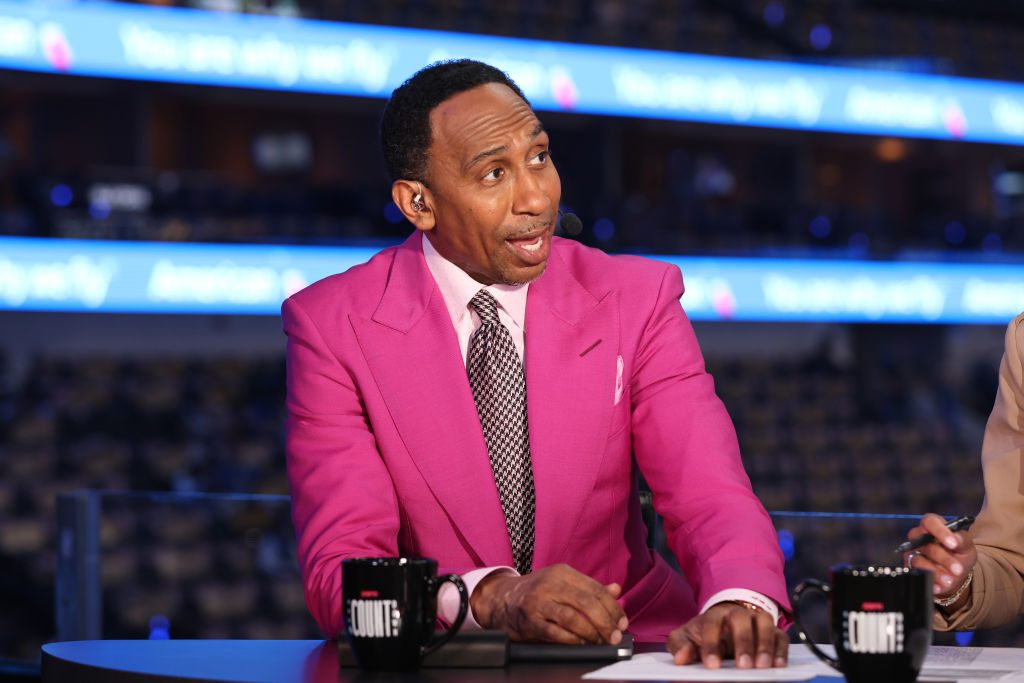
Anyone looking for an indicator of the health of American culture would do well to consider how Smith has parlayed his boorish antics into dramatic acting jobs — landing roles on General Hospital and Law and Order — and, even more absurdly, political relevance. On his political podcast, he has interviewed sitting senators and governors. He has even toyed with a run for the presidency, recently telling friend and fellow egomaniacal nuisance, Bill Maher, that a campaign is “possible” because of his “disgust with the Democratic Party”. Nor is Smith alone: Pat McAfee, a former NFL punter and now lead host of ESPN’s college football programming, is similarly crass. Last year, to give one example, he shamefully repeated a false rumor that a University of Mississippi cheerleader had slept with her boyfriend’s father.
Meanwhile, ESPN still airs news shows and documentaries — but with lower budgets and less time. It’s clear, then, that the network is doubling down on its clickbait scream-fest strategy. Acting out a televisual example of the chicken and egg riddle, viewers are left to wonder if ESPN is merely following the example of a broader culture that has become increasingly crass, ill-informed, and histrionic. Cory Doctorow’s term “enshittification” is too broadly applied to contemporary culture. Yet there’s much truth to his claim that when platforms abandon their consumers and move to maximize profit, they inevitably become worse.
Something similar happened at ESPN. Competition and changing viewing habits were clearly beyond the network’s control. But rather than preserving its standards, and trusting the viewer’s intelligence, it instead surrendered to a world of viral rants that confuses “negative attention” with talent.
And whatever the false allure of social media, it’s clear that ESPN’s public is disappointed. The channel’s ratings are now in freefall, while the McAfee-hosted College Gameday has lost 300,000 viewers in the past year. Overall, the network’s ratings with the much-coveted 18-34 year-old demographic have dropped by 54% in less than a decade. Reporting on ESPN’s falling fortunes in the first week of November, Sports Illustrated ran a story with the headline, “ESPN and the Horrible, Rotten, No Good, Very Bad Week.”
To put it mildly, then, things aren’t going well. The devolution toward idiocy as business strategy is failing. So, how does ESPN plan to recover its losses, while securing its economic future? By surrendering even the pretense of journalistic independence.
Over the past year, the network has announced two corporate partnerships: one with the NFL, and the other with World Wrestling Entertainment (WWE). The strategic relationship will enable ESPN to stream exclusive content from both enterprises on its paid subscription network, ESPN+. It will also create “growth” and enlarge profits for Disney. If viewers are leaving, advertisement revenues decrease. A business relationship with the WWE fills the gap. Yet partnering with the WWE also takes ESPN’s status as a running joke, then injects it with steroids. Daytime hosts like Smith now interrupt daytime coverage of real sports to have shouting matches about “who is the best wrestler of all time”, debating the “athletic” achievements of men who pretend to fight while pretending to be vampires and members of the British royal family.
Beyond the unintentional hilarity, there are serious ethical questions here. The WWE is a company under consistent scrutiny for claims of sexual harassment and drug use — to say nothing of its indifference toward concussions and its now-cozy relationship with Saudi Arabia. There are problems with the network’s NFL deal too. The National Football League is the leading sports power in the US. By entering into a lucrative financial agreement with the company, ESPN has surrendered its ability to report on it with any neutrality or honesty. Fox News regularly faces rightful accusations of bias in favor of the Republican Party, but ESPN’s partnership is the equivalent of Fox signing an exclusive deal with the RNC to broadcast carefully curated content on Hannity.
Compared to war, environmental disaster, and the endangerment of democracy, the stakes of professional sports are quite low. To that extent, the word “entertainment” is in ESPN’s name with good reason. Yet the decline of journalism across all fields threatens the cultivation of an informed citizenry necessary to maintain a free society. Newspapers continue to shut down, creating news deserts throughout the US; expertise competes with opinion, while opinion itself is often little more than invective. Even worse, the tentacles of the multinational corporate octopus reach into every facet of storytelling, reportage, and analysis, shadowing journalism with a bias far darker and larger than anything that derives from party partisanship. To name one particularly brazen example, CBS News recently announced that it would broadcast a series of town hall debates on “things that matter” sponsored by Bank of America. One is tempted to assume that problems with the country’s financial system won’t matter much.
The doom of journalism, whether in athletics and politics, is far from inevitable. In the world of sport, the success of The Ringer, a sports news website and media company, demonstrates that there is still an appetite for high-quality news and analysis. Emerging platforms and alternative media companies show that, like the founding of ESPN itself, healthy innovation is always a possibility. And who knows? The decline of ESPN’s rating could yet act as an invitation to some entrepreneur hoping to give viewers what ESPN once delivered — but now neglects. But it could also act as a troubling omen. If the short-form videos of TikTok continue to influence audience expectations and journalistic output, things will only get worse.