








February 24 2026 - 10:00am
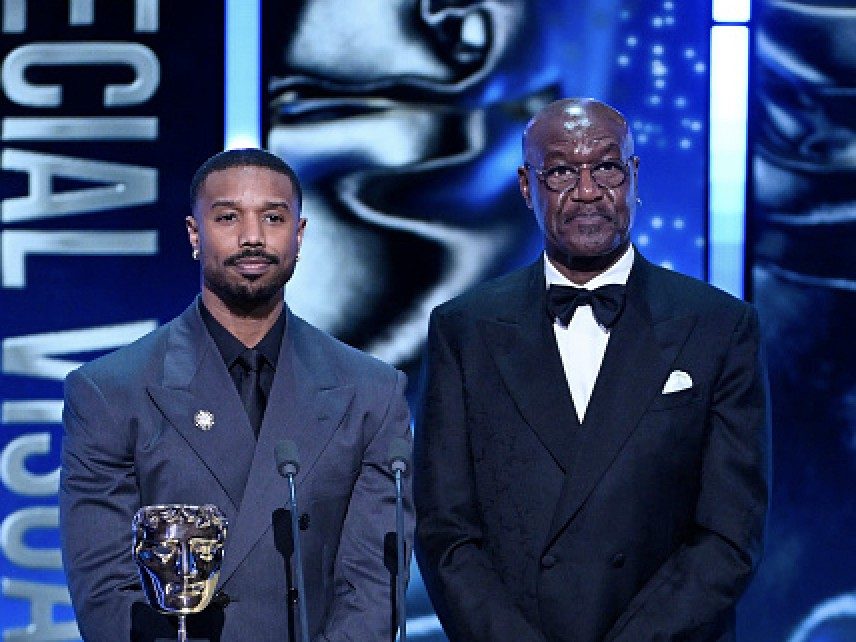
In today’s hierarchy of harm, a mental-health label appears to trump a racial slur. At the British Academy Film Awards (Baftas) ceremony on Sunday night, disability activist John Davidson involuntarily shouted a racial slur from the audience as Sinners stars Michael B. Jordan and Delroy Lindo presented an award. The word was carried across the television broadcast and prompted a later public apology from both the BBC and Bafta for “offensive language that carries incomparable trauma and pain for so many”.
But if this is true, why did the corporation not act sooner and remove the word at the first opportunity? The ceremony was broadcast with a two-hour delay. Editors dipped the sound when Paul Thomas Anderson said “piss”. They cut award-winning filmmaker Akinola Davies Jr’s statement of “Free Palestine” from his acceptance speech, yet left the racial slur in.
At this point, we are left asking: who guards the guardians? When a national broadcaster decides which words the public may hear and which are deemed to inflict “incomparable trauma”, it exercises a moral authority that is inherently subjective and political, and that grants it too much power. The BBC’s track record as an arbiter of what counts as injury, whose pain carries weight, and which narratives deserve protection has been tainted, its decision to describe male rapists as female costing it a great deal of credibility.
Davidson has Tourette syndrome, a neurological condition characterized by sudden and involuntary motor and vocal tics. These are not chosen words but neurological events over which the individual has no conscious control. I Swear, a film based on Davidson’s life and campaigning work, was one of the big winners at this year’s Baftas. His vocal tics were audible throughout much of the first half of the ceremony. Besides the use of the racial slur, he interrupted host Alan Cumming’s opening monologue and shouted “Shut the fuck up” at more than one winner.
Afterwards, Davidson said he was “deeply mortified if anyone considers my involuntary tics to be intentional or to carry any meaning”. He left the ceremony early because he was “aware of the distress my tics were causing”. He thanked Bafta and the BBC for their support and reiterated his commitment to advocating empathy and understanding for the Tourette’s community. Cumming told the audience that Davidson’s tics were involuntary and not an expression of his beliefs, while Robert Aramayo, who portrays him in I Swear, also stressed that people with Tourette syndrome are often judged by reactions to symptoms beyond their control.
For those living with Tourette’s, the condition is far from trivial. Vocal tics can be socially embarrassing, exhausting and stigmatizing. Efforts to suppress them can lead to mounting stress, anxiety and a build-up of internal tension that only dissipates when the tic is expressed.
It is precisely because suffering is real that we should be more precise, not more expansive, in our claims about harm. As a psychotherapist, I increasingly feel like a priest who has lost his faith. Our over-therapized culture has created a climate in which talk of “trauma” saturates public discourse and becomes a ready means of curtailing free speech while heightening perceived psychological harm. Tell impressionable people often enough that they have been harmed by a word or phrase, and many will begin to experience that harm as real whether or not it is proportionate.
A public broadcaster may edit for legality and decency, but it should not assume the authority to define psychological harm for the nation. The ethical weight of language lies in intention. It matters whether words are weaponized and deliberately deployed to demean, or whether they erupt involuntarily from a neurological condition. To collapse those two realities into a single category of “incomparable trauma” is to replace moral reasoning with an overblown therapeutic culture that risks causing more harm than good.
Stella O’Malley is a psychotherapist and bestselling author. She is Founder-Director of Genspect, an international organisation that advocates for a healthy approach to sex and gender.
 stellaomalley3
Join the discussion
Join like minded readers that support our journalism by becoming a paid subscriber
To join the discussion in the comments, become a paid subscriber.
Join like minded readers that support our journalism, read unlimited articles and enjoy other subscriber-only benefits.
Subscribe