









March 30 2026 - 8:00pm
Is the Make America Healthy Again movement big enough to matter in the midterm elections? With the war in Iran raging, Republicans are growing nervous about losing both the House and Senate — and spending the rest of President Trump’s second term bogged down in impeachment hearings. One new poll suggests MAHA could be one cohort that tips the balance in close races.
A splashy Politico poll published Monday painted a bleak picture for the GOP. “A majority of Americans associate MAHA with the Republican Party, but not overwhelmingly, and most believe the Trump administration has not done enough to ‘Make America Healthy Again’ — including a 41 percent plurality of Trump’s own 2024 voters,” the outlet reported. Adults who self-identified as “MAHA” were relatively split on whether Trump has “done enough” to “make America healthy again” with 47% saying he’s not done enough and 45% saying he has.
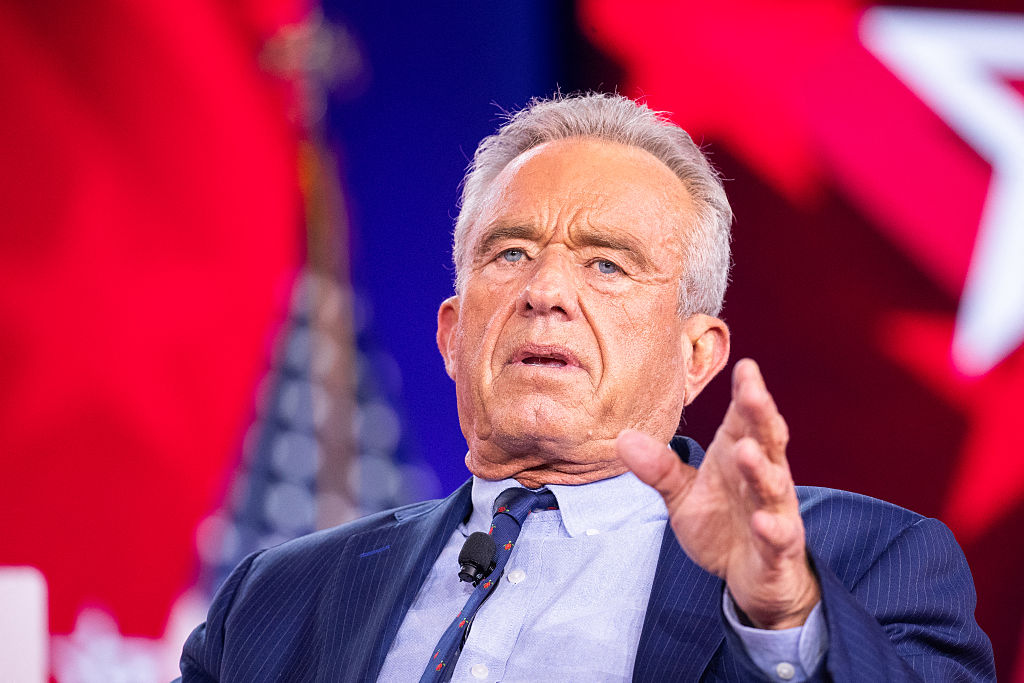
A source close to the MAHA movement responded to the poll by calling for Trump to “let [Robert F. Kennedy Jr] loose.” The source told me: “Bringing in the MAHA voters was brilliant coalition-building, but you have to follow through. These voters don’t want aesthetics about raw milk or even the childhood vaccine schedule change that the medical community will largely ignore without penalty. They want real and meaningful change to how our food is grown, processed, and marketed.”
“Yes,” they added, “this will put Republicans at odds with Big Ag and Big Food, arguably two of the biggest lobbies in town outside of the defense and pharma lobbies, but RFK Jr promised us courage and Trump promised to back him. So let him loose. The perception that Trump has tied RFK’s hands on challenging the interests that are poisoning America’s kids is not helping.”
This raises another problematic finding from Politico’s poll. Respondents, the outlet found, “were more likely, for example, to say the Democratic Party can be trusted to make the country healthier and is more eager to improve health in America, while fewer said the same of Republicans. The GOP, on the other hand, is seen as more likely to be influenced than Democrats by lobbyists for the food and pesticide industries.”
Trump himself is already expressing pessimism about his party’s ability to maintain a majority in the House of Representatives. Experts agree the odds Republicans keep control are slim. Now, though, the Senate seems to be in question.
It’s early and GOP Sen. Susan Collins is perpetually underestimated, but polls in Maine are looking good for Graham Platner. The same is true of Nebraska, where Sen. Pete Ricketts appears to be in a serious contest. The high-profile Texas race is unlikely to flip blue but Ohio and North Carolina are also in question, according to early polls.
Midterms, as the cliché goes, inevitably come down to turnout. MAHA is not most voters’ priority at the polls, but for people who care and expected more from Trump, it’s entirely possible they don’t go above and beyond to support Republicans in November.
Think of an independent mother in Ohio. She voted for Barack Obama, then drifted toward Trump in 2024. What changed wasn’t just party loyalty. It was the sense that something outside the system might finally challenge it. Bringing figures like RFK Jr and a slate of health influencers into the fold gave her that hope.
Did she hear about the glyphosate meltdown on Instagram? Might that make her less likely to carve out time in her schedule on a busy Tuesday morning to drive to her polling place and stand in line for a Republican? What about the 25-year-old gym rat who made the extra effort to show up in 2024 because he liked what RFK Jr told Tim Dillon and Joe Rogan?
These scenarios are easy to imagine. What’s worse for Republicans is that Trump’s historic 2024 comeback coalition, as David Shor found, transformed the electorate into one where “people who didn’t vote shifted from being a somewhat Democratic-leaning group to a group that Trump won by double digits.”
That is to say, close races for Republicans, especially on the Senate map, will either need to keep this coalition together or overcome any losses by making up votes elsewhere and also compensating for a highly-motivated Democratic Party base, which was enough for a “blue tsunami” outcome in the 2018 midterms.
In recent years, Republicans benefited enormously from highlighting Democrats’ cultural extremism. This is obviously going to be an ongoing factor in places like Texas, Maine and Ohio. But will it be enough without key coalitions such as MAHA maintaining the high level of enthusiasm that pushed Trump over the line in 2024? Nothing is impossible, but it’s hard to imagine at this point.
