








January 10 2026 - 1:00pm
Last year, former Downing Street advisor Dominic Cummings wrote of a conversation with senior Gulf State figures. Arab elites, Cummings claimed, were wary of sending their children to British universities. Places like Oxford and Cambridge were, they said, virtual madrassas. Their offspring might return home as rabid Islamists, their heads turned by the many-tentacled Muslim Brotherhood. This prompted a withering response from the usually mild-mannered Rory Stewart, who accused Cummings of “bullshitting.” Then, six months after Stewart’s takedown, the UAE announced it was restricting funding for its nationals planning on attending courses at UK universities, precisely as Cummings wrote.
The highly-organized Islamist Muslim Brotherhood, linked to the Federation of Student Islamic Societies (FOSIS), is increasingly influential on UK campuses. Many Middle Eastern governments view the Brotherhood, which seeks a single Islamic caliphate, as a terrorist group, lamenting its presence in the UK. Stewart is yet to respond to the news from the UAE, but his reaction was telling — Stewart is, after all, an Eton and Oxford-educated former diplomat. In short, he is an exemplar of the infamous Foreign Office “Camel Corps” mindset.
A stubborn strain of pro-Arabist thought persists in the Foreign, Commonwealth and Development Office (FCDO), consistently accused of being soft on hardline groups like the Muslim Brotherhood. For those such as Stewart, engagement, tolerance and diplomacy towards ultra-conservative hardliners will always trump proscription. This, partly, also explains the British Government’s heel-dragging over proscribing the Iranian Revolutionary Guards Corps. Another official review of the Brotherhood, in 2014, found that although it occasionally condoned political violence, it was not in and of itself a terrorist organization. It emerged, unsurprisingly, unscathed.
This is nothing new. As a young special branch officer in the 1990s, I attended an MI5 presentation on the influence of Islamist groups in the UK. French intelligence, famously, dubbed the capital “Londonistan”. Spooks and cops rolled their eyes at Westminster’s indifference to London’s reputation as a viper’s nest of Islamic radicalism, but the Foreign Office line was steadfast — better to tolerate extremist clerics and activists, in order to encourage “influence” and “engagement.” After 9/11, this approach eventually crept into domestic counter-extremism, one where maintaining “community cohesion” was paramount. Activists with controversial views were even invited inside the police as advisors. Meanwhile, initiatives such as Prevent — a recurring target of Muslim Brotherhood campaigning — seem increasingly fixated on the far-Right, incels and anti-immigrant sentiment.
The issue, then, for UK authorities is one of political freedom. What the Gulf States view as sedition, British politicians view as plurality. Whether the Muslim Brotherhood is subverting or merely exercising these freedoms is a matter of interpretation, not helped by the fact that official monitoring of Islamist extremism is almost exclusively focused on acts of political violence. Furthermore, self-radicalized “lone wolf” terrorists have become the primary threat — the very people most likely to be motivated by extremist narratives in the first place.
As for the Muslim Brotherhood? Investigating such groups would require a step change, akin to Seventies-style MI5 operations against the Communist Party. Clearly, for political, ethical and budgetary reasons, this is virtually unthinkable — not least due to the increasing strategic importance of Muslim voting blocs to the British Left. Which means the Brotherhood’s undoubted campaigning and lobbying skills, via an elaborate network of charities, political groups, media outlets and — yes — student organizations have all provided political Islam a foothold in British life. Furthermore, British academia has been strongly wedded to anti-colonialist narratives for the past thirty years, oiling the wheels of Islamist narratives.
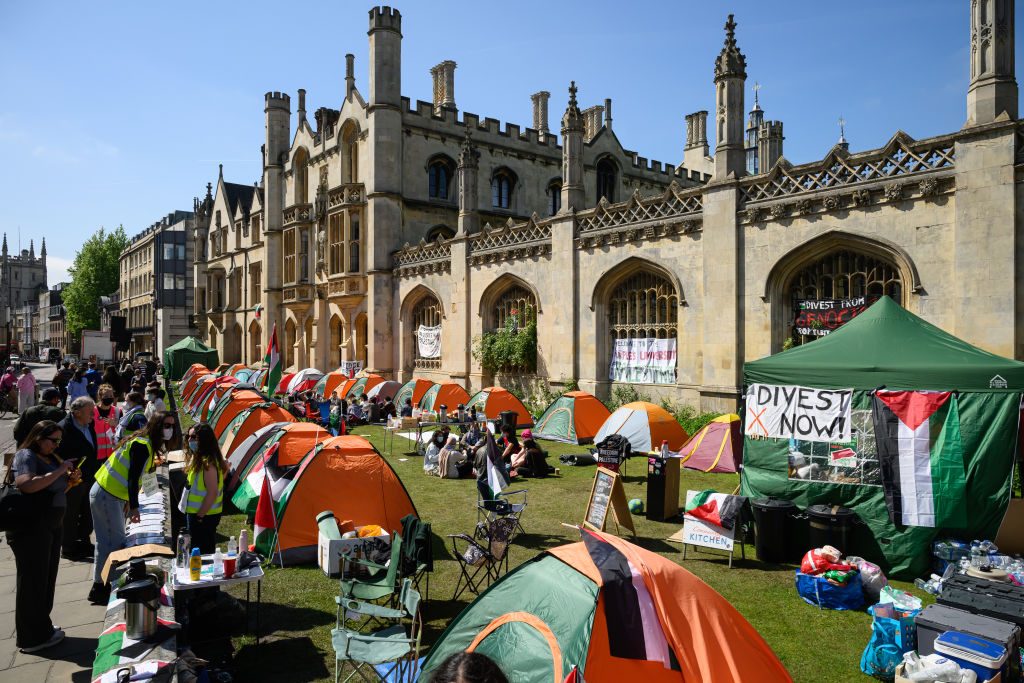
Is it surprising, then, that Gulf State elites view our campuses with open suspicion? They see a country where “Gaza Independents” call the shots with the police. They see parliamentarians bickering over definitions of Islamophobia, allegedly influenced by Brotherhood-linked figures. And, ultimately, they see an impoverished government, more concerned with short-term unrest than long-term stability. And the winners? Extremists of all stripes.
Join the discussion
Join like minded readers that support our journalism by becoming a paid subscriber
To join the discussion in the comments, become a paid subscriber.
Join like minded readers that support our journalism, read unlimited articles and enjoy other subscriber-only benefits.
Subscribe