




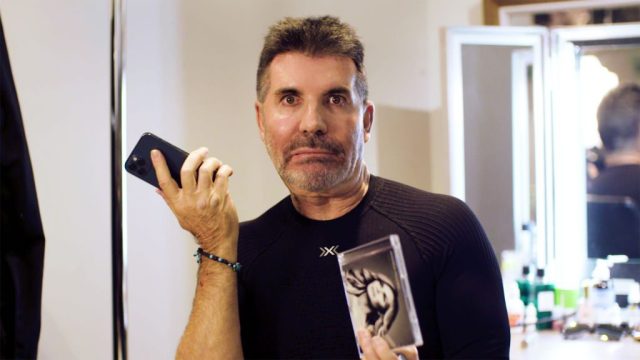
'Cowell is so keen to be seen to be reinventing himself'. Photo by Comic Relief via Getty Images





Cruelty made Simon Cowell into a star. As a talent show judge, initially on Pop Idol, later on The X Factor and the …Got Talent franchise, he specialized in crushing the hopes and dreams of aspiring entertainers who thought that an audition with him would be their big break. “You are possibly the worst singer in the world.” “Whatever the opposite of entertaining is, that was you.” “I have absolutely no idea why you’ve had any encouragement whatsoever.” You could see the recipients’ hearts shatter in real time: it made fantastic television.
It’s easy now to condemn the media of the 2000s as a theater of humiliation. At the time, though, the prevailing concern was that everyone had become too soft. A generation that had been coddled by an “all-must-have-prizes” mentality had grown up entitled, lazy and egotistical. “In today’s celebrity-obsessed world, every youngster wants to be famous,” as Cowell sneered in his 2003 autobiography — called, in an impeccable piece of branding — I Don’t Mean to Be Rude, But… Cowell’s job, as he saw it, was to “prick the bubble of what I regard as this self-absorbed egotism” on behalf of an audience that was sick of the tyranny of talentless wannabes.
But times change and so, apparently, does Cowell. Simon Cowell: The Next Act, which launches on Netflix this week, is yet another talent show format. We watch Cowell, now 66, as he attempts to create a new boyband to follow in the footsteps of One Direction, the X Factor-forged five piece whose global success marked the pinnacle of his starmaking powers. Since the death of ex-member Liam Payne in a drugs-related balcony fall last year, the band has also become a cautionary tale of fame’s savagery. Shortly before he died, Payne reportedly told an onlooker: “I used to be in a boy band — that’s why I’m so fucked up.”
Which helps to explain why Cowell is so keen to be seen to be reinventing himself. The Cowell of 2025 is still tough (“You’ve got to be sort of ruthless,” he says in the trailer), but this is a kinder, gentler kind of entertainment. As he told The New York Times in an interview to promote the new series: “I changed over time. I did realize I’ve probably gone too far… I got that. What can I say? I’m sorry.” To further underline his newfound vulnerability, the series even features his partner Lauren Silverman, with whom he has an 11-year-old son.
The show’s drama rests on the idea that Cowell is putting everything on the line for one more shot at svengali success, but the stakes really are high. The pop culture world that made Cowell has imploded in the past 10 years. He became famous the old-fashioned way: on prime-time TV, with the backing of the tabloids, and the help of disgraced publicist Max Clifford, who had a talent for keeping his clients in the spotlight while squashing stories that might harm their image. In his autobiography, Cowell — playing up the part of the cynical impresario — wrote that “hiring Max was one of the best decisions I ever made”.
At its peak in 2010, The X Factor was watched by over 14 million. That year, The Sun and The Mirror had a combined readership of over 4 million. Today, the red tops probably have a circulation of less than a million — and more people watch YouTube than ITV. In an effort to grasp the elusive younger audience, the next series is introducing the YouTuber KSI as a judge – a sign of where the real power lies in entertainment. The most recent series of Britain’s Got Talent averaged just over 5.5 million viewers and the last big act to come from a Cowell show was Little Mix, who won The X Factor in 2011.
Meanwhile, the less said about Clifford the better. In 2014, he became the first man to be convicted of historic sexual offenses under Operation Yewtree, and died in 2017 while serving an eight year sentence for indecent assault. The schtick of Cowell’s shows was that they were laying bare the mechanics of the entertainment business, and turning the public into entertainment insiders. While there is no suggestion whatsoever that Cowell has ever been involved in sexual impropriety, cases like Clifford’s revealed a depravity that had been concealed beneath the glitz all along.
The market has changed, too. South Korea took the manufactured pop model embraced by Cowell and turned it into something even more ferociously disciplined and even more successful. Now, K-pop rules the world when it comes to manufactured bands. In Britain and America, the charts belong to solo girl auteurs such as Chappelle Roan and Charli XCX — artists whose fans love them precisely because they write, record, perform and create their own image with no need for a puppet master like Cowell.
Even his own creations have turned against him. Jade, formerly of Little Mix, launched her solo career last year with the song “Angel of My Dreams”, a delirious satire of the pop industry, including the line: “sellin’ my soul to a psycho.” Cowell had signed Little Mix to his own label, Syco, so it was pretty obvious who she was referring to. How sharper than a serpent’s tooth it is to have a thankless child, Cowell might have thought, if he were given to quoting King Lear, which he probably isn’t. But how apt it is for an aging ruler of a fallen kingdom.
Meanwhile, the tongue-lashing style Cowell perfected is now sorely out of step with contemporary concerns about mental health. In 2019, the TV presenter Caroline Flack — who, among other gigs, had once hosted The X Factor — killed herself in the midst of being prosecuted for assaulting her boyfriend, a case that had captured ferocious and, according to her family, unfair press attention. Her final Instagram post read: “In a world where you can be anything, be kind.” #Bekind has since been adopted as a social media watchword. It’s an injunction that would preclude making teenagers cry for entertainment.
And then there was Payne’s death, which happened during the filming of Simon Cowell: The Next Act. In his New York Times interview, Cowell talks about his shock and sadness — “It was just awful, awful.” But when the interviewer presses him on whether what happened to Payne is a sign of the inherent toxicity of fame, Cowell does something curious. He starts discussing his own relationship with celebrity. “I honestly don’t know what is harder: trying to be famous or managing your fame,” he says.
“Not every day has been amazing, but I’m glad I did what I did,” he continues. “I signed up for it because obviously there was something inside of me saying, I want to be well known. And I would do it all over again.” Is this the self-exculpation of a deeply cynical man? Cowell got to make his choices as an adult with a successful career in the music business behind him. One Direction were still children when they first came into contact with Cowell’s empire. Payne was just 14 when he first auditioned, and 16 when he returned to the show and was cast in 1D.
No one so young could have known what he was letting himself in for. But even so, Cowell is telling an awkward truth about fame. We tend to talk about it now as a kind of violence done to its subjects, which it is, but it’s a kind of violence that almost never happens to people by accident. To become famous you have to want it, and want it painfully. Want it enough to sacrifice anything — including, most of all, the possibility of ever having a normal life. Want it as much as Cowell wanted it.
Cowell knew precisely how to pierce the souls of his auditioners because he was, like them, hungry for fame. He could be sublimely cruel, because he could sympathize completely with the hopefuls before him. Maybe time has softened him. Maybe fatherhood has blunted his edges. Maybe the death of Payne has given him a reckoning. But he’s still on TV because he still wants fame, and for the aspirants on Simon Cowell: The Next Act, that means he can still be a dangerous man.
