







 Prefer us on Google

June 28 2026 - 4:00pm
If — or when — Andy Burnham is anointed leader of the Labour Party, he will be the first prime minister to have studied English literature at university. Whereas Keir Starmer was happy to admit in an interview that he doesn’t have a favorite novel, and that he doesn’t even dream, Burnham is a literary man. He has read all of Shakespeare, told the New Statesman that his favorite novel is Middlemarch (“a classic English student answer”), and his favorite poets are Tony Harrison and Philip Larkin.
Once upon a time, our prime ministers were all readers and writers: Harold Macmillan joked about going to bed “with a Trollope”, and Benjamin Disraeli wrote 12 novels — most notably Sybil, a vast condition-of-England novel about the suffering of the working classes living in urban squalor. And who could forget Boris Johnson’s overlong farce, Seventy-Two Virgins?
But what will it mean now to have a reader as our leader, at a time when English as a subject finds itself at a nadir? Earlier this week, the University of Exeter announced proposals that could see up to 25% of its English faculty lose their jobs. Last month, the University of Hertfordshire dropped its English course entirely, saying it was “no longer financially viable”. According to The Week, “between 2011 and 2021, the number of students studying English literature at university fell by a third,” while “across UK universities, undergraduates studying any type of English degree dropped by 19 percent between 2019-2020 and 2023-2024.” Could Andy Burnham save the English degree?
English is a comparatively young academic subject, beginning in the so-called “civic” universities of London and the North, including UCL, King’s, Manchester, Leeds, Sheffield, Birmingham, Liverpool and Nottingham. The pioneers of English were followers of Matthew Arnold seeking to institute “culture” as an antidote to “anarchy”. But from its very first days, the subject suffered from an identity crisis: how do you turn the leisure pursuit of reading into an academic subject that is verifiable and examinable? Then, as now, English was seen as a doss.
Burnham studied English at Fitzwilliam College, Cambridge, from 1988 to 1991, where he was taught by the academic John Mullan. The subject then would have been broadly unchanged from the Cambridge English Tripos of the Twenties, the most successful attempt to establish English as a rigorous academic subject. A key figure then was F.R. Leavis, who saw this training in reading as a moral imperative that was crucial for the preservation of a “minority culture” threatened by “mass civilization”.
But Burnham presents himself as more sympathetic to mass culture than Leavis. In fact, he told the New Statesman that studying English “kills your love of reading” as “it can lead to over-analyzing everything”. How far Burnham would go to prevent the further implosion of UK universities is as yet unknown – but so, too, are many of the rest of his policies.
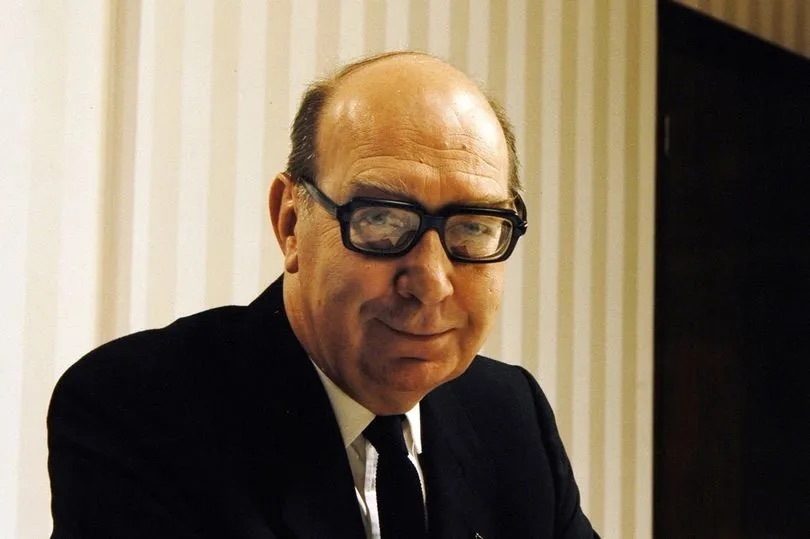
How might Burnham’s English degree serve him as he prepares to enter the top job? He credits his skill as a communicator to his love of Shakespeare, so he will be familiar with manipulation, betrayal and tragic missteps. But there is perhaps no better preparation for inheriting the country that Starmer will leave him than for Burnham to re-read Larkin’s 1972 poem “Going Going”, a portrait of national decline that could well have been written 10 minutes ago:
On the Business Page, a score
Of spectacled grins approve
Some takeover bid that entails
Five percent profit (and ten
Percent more in the estuaries)
Of course, if Burnham is to find success at No. 10 and turn things around, he will need more than just words. Otherwise, as Larkin put it, “that will be England gone.”