









January 3 2026 - 5:00pm
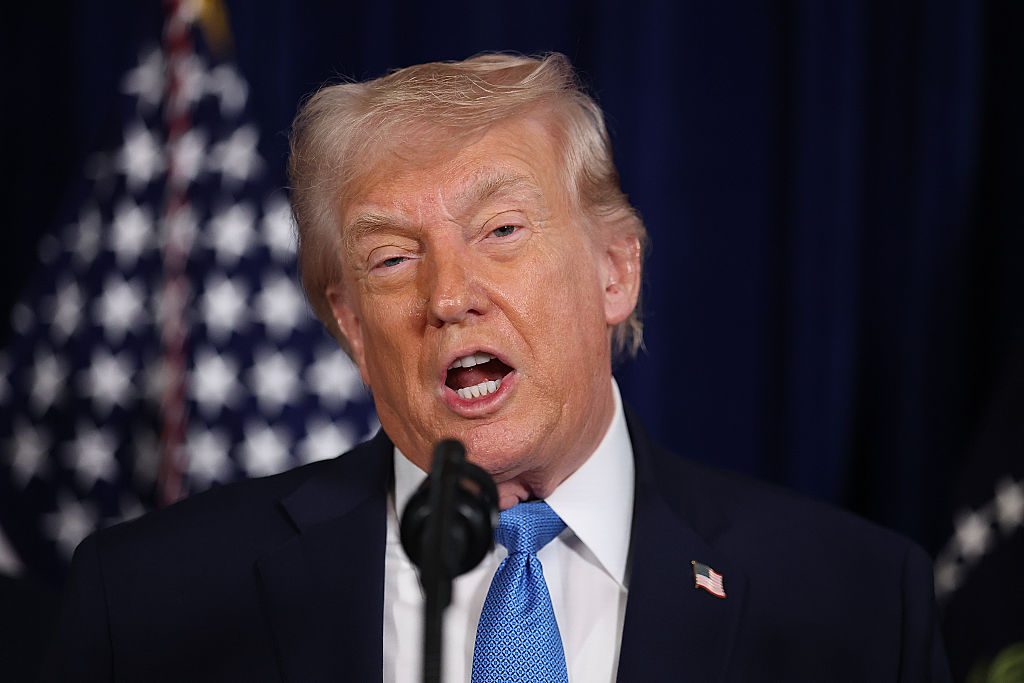
Donald Trump’s operation to take out — excuse me, exfiltrate and arrest — Venezuelan President Nicolás Maduro late last night has produced few objections from MAGA World. Speaking at a press conference which began in the last hour, the US President credited American military power by “air, land and sea”, and said that the US is “going to run” Venezuela until “such a time that we can do a safe, proper and judicious transition” of power. A few Trump-aligned pundits such as Glenn Greenwald are agitated but, on the whole, the reaction has been nothing like the eruption of MAGA dissent that greeted the build-up to and aftermath of Trump’s decision to join Israel’s 12-Day War against Iran last summer.
So, what gives? The short answer is that Venezuela is much closer to the US homeland than the Islamic Republic. The Latin-American nation is associated with the domestic drug and immigration crises, and falls within the expansive vision of hemispheric security that has prevailed among Americans going back to the early republic. Those factors all but guarantee the operation’s appeal to MAGA’s Jacksonian impulses.
First, there’s the domestic appeal. It’s true that Venezuela under Maduro wasn’t a major source of fentanyl, the drug that kills tens of thousands of Americans — many of them in Trump’s low-income rural heartlands. Nevertheless, it isn’t inaccurate to describe the country as a narco-state, given its deep ties to both regional cartels and Leftist groups which are often indistinguishable from cartels.
An extensive trafficking network operated within the Venezuelan military, according to the US government, often in conjunction with the brutal Tren de Aragua gang. More cautious assessments suggest that senior commanders in Maduro’s armed forces were involved in the drug trade, which also has a nexus with human trafficking. In short, the Venezuelan President more than earned his reputation in MAGA World as a sort of kingpin-statesman.
Illegal migration is related. Some of the most notorious instances of migrant criminality associated with the Joe Biden wave have involved Venezuelans who came to America illegally. These include two separate assaults, in January 2024 and April 2024, on NYPD officers that garnered national attention. Maduro had earlier agreed to receive his deported nationals, but the MAGA theory of the case is that a friendlier regime in Caracas will make it easier to facilitate their return.
That brings us to the question of hemispheric security. For well over two centuries, American leaders have sought to limit Old World geopolitical influence in their hemisphere. In the 19th century, that meant resisting the encroachments of European imperial powers through the Monroe Doctrine. In the 21st century, it’s the likes of Russia, Iran, and China — Maduro’s allies — that must be kept out.
Earlier generations of American leaders have intervened in and held territory over far less. Jacksonville, Florida is so named because Andrew Jackson, then a major general in the Army, took it forcefully from a feckless Spanish Empire on the half-justified grounds that the Spaniards were failing to prevent Indian attacks launched against the United States from the territory. Chinese influence in Venezuela, invited by a defiantly anti-American regime, is a much more serious menace by comparison.
Put these elements together, and it’s not hard to see why MAGA would largely support this operation. But as the Iran contrast demonstrated, the movement is more than willing to dissent. And even if Venezuela doesn’t descend into chaos — the early signs are hopeful — there might still be reason to worry that the second Trump administration is putting too much emphasis on foreign affairs as the President approaches his lame-duck phase.
Then again, that’s true of most modern presidents once they find themselves in a weakened position. And as far as hyperactivity on the world stage goes, Trump’s Maduro operation has clear and limited goals which fit within the long-held logics and traditions of American foreign policy.
Sohrab Ahmari is the US editor of UnHerd. His next book, on The Triumph of Normal, is forthcoming from HarperCollins.
 SohrabAhmari