








March 14 2026 - 1:00pm
In politics, strange alliances are nothing new. The meme of “Queers for Palestine” has become a shorthand for the kind of ideological incongruity that the Israel–Palestine conflict can produce. Yet it is far from the only unlikely alignment now emerging around the issue.
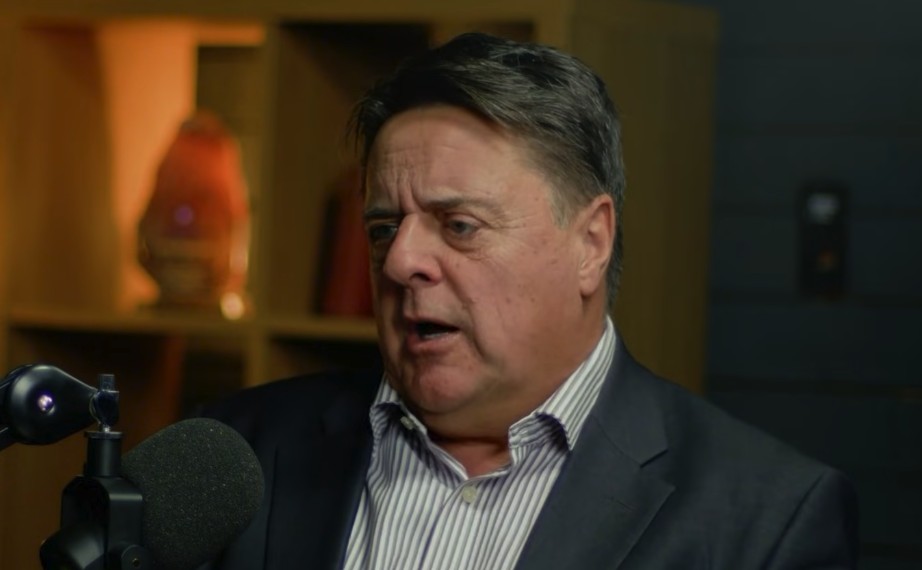
Mohammed Hijab, the prominent Islamist influencer who recently declared bankruptcy after losing a libel case against Douglas Murray and The Spectator, this week described former British National Party leader Nick Griffin as “the most educated, consistent and correct far-right figure in modern politics”. Hijab was referring to a 2012 clip in which Griffin referred to the English Defence League as a “Zionist front”. The clip has circulated widely in pro-Palestinian online spaces, including being approvingly shared in October 2025 by the notorious British-Palestinian doctor Rahmeh Aladwan, who was suspended from the NHS the following month over antisemitic remarks.
Hijab’s admiration is peculiar, to say the least. Griffin has spent decades denouncing Islam as “a wicked, vicious faith” and “a cancer”. In ordinary circumstances, praising an avowed racist and anti-Muslim bigot would be unthinkable. Yet a shared hostility toward Israel, Zionism and Jews appears to make other considerations secondary.
This phenomenon is not confined to fringe Islamist figures. Even the progressive Muslim broadcaster Mehdi Hasan has repeatedly expressed a grudging admiration for Right-wing podcaster Tucker Carlson, who has repeatedly criticized Israel’s conduct in Gaza. “Are we allowed to like Tucker Carlson for 48 hours?” Hasan asked on social media. “You can like a white supremacist just for a little bit while he’s the only person doing journalism in this moment.” The remark was tongue-in-cheek, but it captured something real about the strange coalitions the conflict has produced, and how moral and political red lines go out of the window when Israel is concerned.
For years, critics warned about the so-called “red–green alliance” between sections of the far-Left and Islamist movements. Despite profound disagreements on issues such as women’s rights, sexuality and secularism, elements of the progressive Left were willing to bracket those differences in pursuit of shared political goals of opposition to Israel and hostility to Western foreign policy.
In Britain, that dynamic has taken on increasingly visible forms. Green Party leader Zack Polanski, who describes himself as a “gay Jewish” politician, gave an interview last month to 5Pillars, an outlet widely regarded as an Islamist outfit. The site’s Blood Brothers podcast has repeatedly featured figures including Nick Griffin, white nationalist activist Mark Collett, and cleric Sheikh Haitham al-Haddad, who has described Jews as the “enemies of God”. Britain’s press regulator Impress previously ruled that 5Pillars had encouraged hatred and abuse toward minority groups. The platform has also published sympathetic coverage of the Taliban, praise for Iran’s theocratic government, and conspiratorial rhetoric about global Jewish influence.
One suspects that if Reform UK leader Nigel Farage appeared on a program that routinely hosted Nick Griffin, the reaction from Britain’s liberal commentariat would be immediate and ferocious.
White nationalist movements remain deeply hostile to Islam in theory. Islamists, for their part, reject the racial hierarchies that underpin white identity politics. Yet when the conversation turns to Israel and Jews, many from these otherwise antagonistic camps appear increasingly willing to tolerate or even amplify one another’s rhetoric.
What makes these moments of strange ideological convergence worrying is that they blur moral boundaries which once seemed clear. Extremists rarely regain influence overnight. More often, they re-enter the conversation through moments of tactical usefulness, when their rhetoric happens to align with a wider political mood. In this case, opposition to Israel has become the bridge across which actors from otherwise hostile ideological worlds are prepared to meet, as if there is no difference between support for Palestine on humanitarian grounds and support geared towards explicitly antisemitic ends.
The danger is that, in the process, figures and ideas which should remain unequivocally discredited gradually lose their stigma. It signals that the boundaries of acceptable discourse are shifting, allowing even the most repellent ideas to edge back toward legitimacy and, in turn, move the center ground closer towards them.
Inaya Folarin Iman is a writer and broadcaster. She is founder and director of The Equiano Project.
 InayaFolarin
Join the discussion
Join like minded readers that support our journalism by becoming a paid subscriber
To join the discussion in the comments, become a paid subscriber.
Join like minded readers that support our journalism, read unlimited articles and enjoy other subscriber-only benefits.
Subscribe