









September 12 2026 - 4:30pm
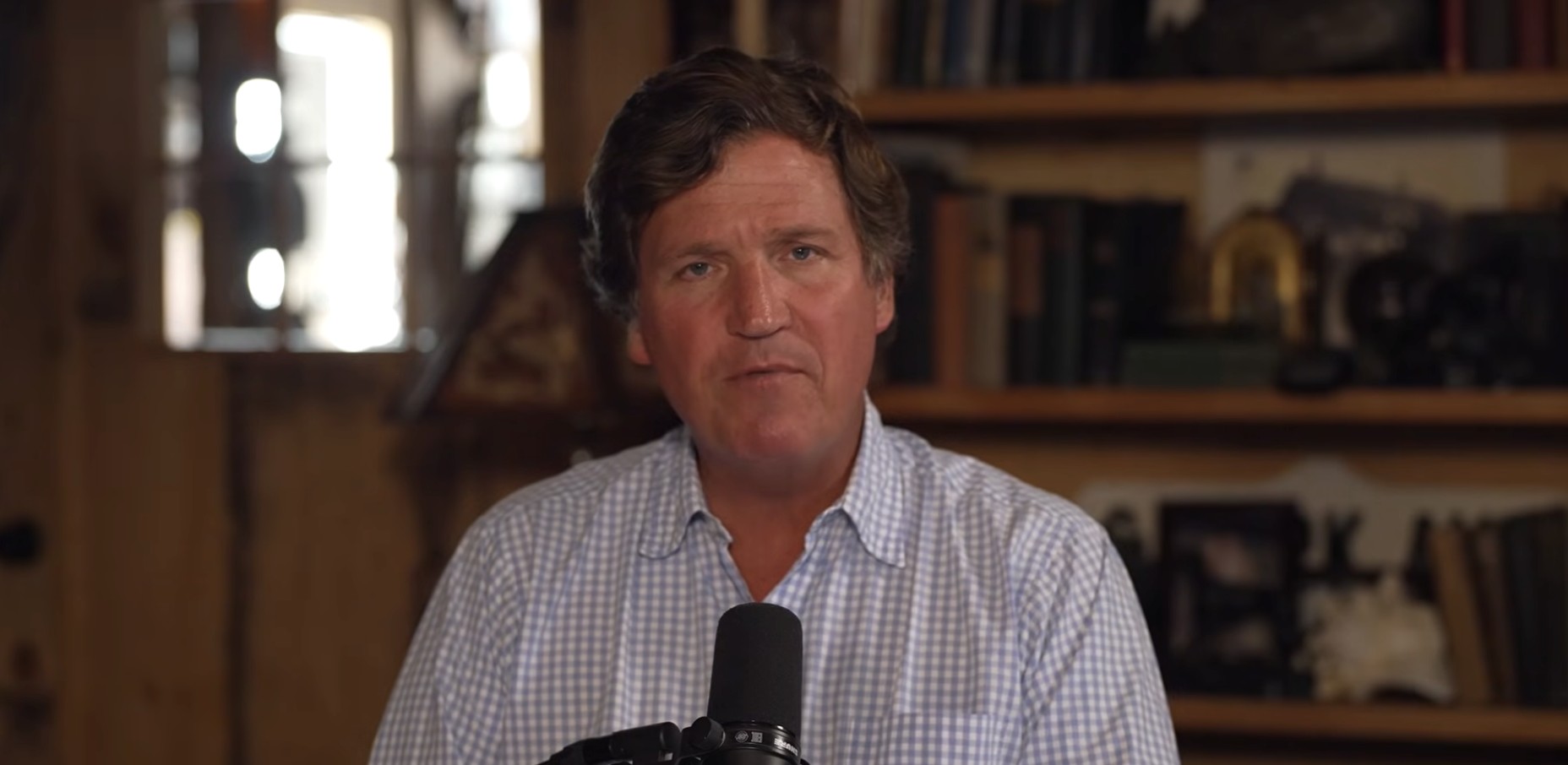
Tucker Carlson once again finds himself defending Abdul El-Sayed, the Bernie-backed Democrat running for Senate in Michigan. In his Friday newsletter, Carlson offered support for a resurfaced remark El-Sayed made in 2021, contending that Americans “fail to center” the millions of people “scarred” by America’s response to 9/11. Once a Trump supporter, Carlson is now using his large platform to poke holes in Republican campaigns.
“There is nothing remotely crazy about those remarks,” Carlson wrote. “They are approximately as scandalous as a weatherman declaring that clouds carry rainwater. El-Sayed did not celebrate airplane hijackings or cheerlead Al-Qaeda; he simply said that the U.S. conducting terrorism of its own in response to 9/11 was not exactly an appropriate reaction. He is obviously right.”
The former Fox News host’s intervention could complicate the Republican case against Mike Rogers, a conventional conservative challenging El-Sayed for the Senate. Rogers and other Republicans have sought to make El-Sayed’s comments about 9/11 a central line of attack, but Carlson has given conservative voters an alternative interpretation from a commentator they already know and, in many cases, have followed for years.
This should concern Trump because Carlson is not attacking the Republican case from the political Left; he is doing so from within the broader Right, where his arguments may be more difficult for conservative voters to dismiss as simply partisan. That is important to note because it means that GOP talking points that would once have gone largely unchallenged in conservative media are now being picked apart by one of the Right’s most prominent commentators.
Whether that translates into lower enthusiasm for Rogers, weaker Republican turnout or fewer votes in Michigan in November remains an open question. But the fact that Carlson sided with El-Sayed over Rogers speaks to his foundational conviction that interventionist American foreign policy has done much more damage than Washington is willing to admit. The post-9/11 wars in Iraq and Afghanistan weren’t only embarrassing quagmires that destabilized the region but must be remembered as deeply unjust adventures that slaughtered innocent civilians.
For Carlson, however, the problem runs deeper than the failures of any particular war. His most important break with the Right came when he condemned America’s use of nuclear weapons against Japan, arguing that it was wrong to kill civilians even in the pursuit of victory. Seen in that light, his opposition to Trump’s Iran War is not a temporary disagreement with the president. He sees it as MAGA reverting to an older American habit: allowing fear of an external threat to override the moral limits on what the United States is prepared to do abroad. The same logic that once turned communism into an existential threat, and later produced the wars in Iraq and Afghanistan, can, in Carlson’s view, turn pre-emptive violence into a form of self-defense.
Not only did this worldview wreck our foreign policy, the argument goes, it also wrecked our economy, our culture, and our national soul. This explains Carlson’s willingness to jump off the sidelines and describe the El-Sayed campaign as “literally Trumpian” or defend El-Sayed’s 9/11 audio against Rogers.
El-Sayed’s Left-populist critique of the American response to 9/11 shares a foundation with Carlson’s. US foreign policy was unjust — not only because it harmed Americans, but because the damage wreaked upon civilians was wholly disproportionate.
