








January 7 2026 - 1:30pm
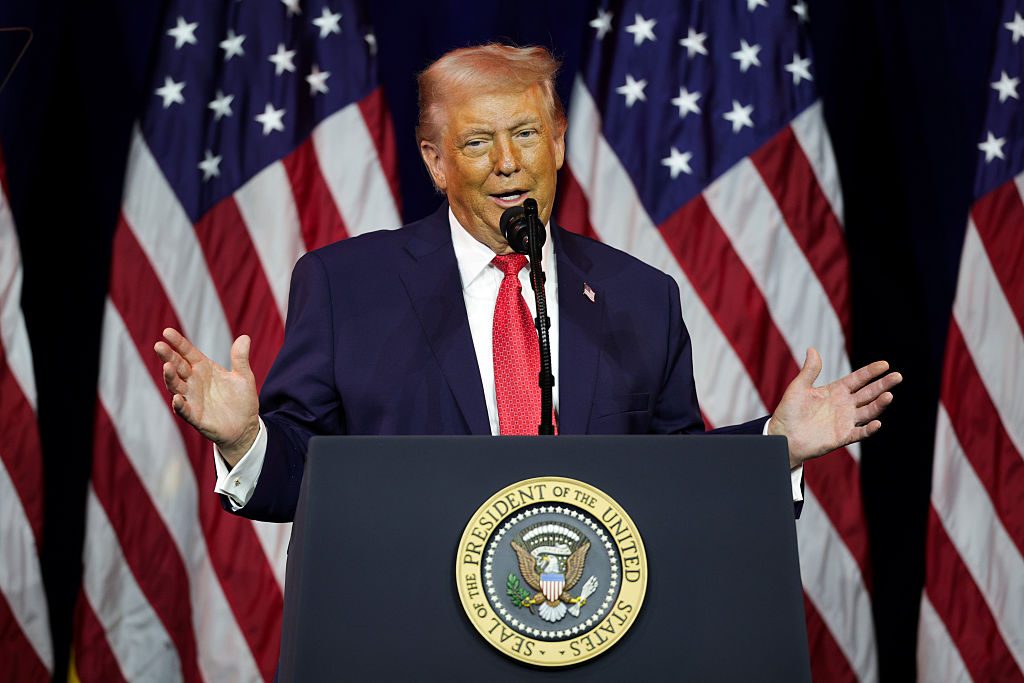
President Donald Trump’s refusal to rule out using military force to seize Greenland is foolish. It undermines Nato by alienating Denmark, an ally that lost a comparatively large number of soldiers supporting the US in Iraq and Afghanistan. More fundamentally, it betrays the core American value of supporting democratic sovereignty.
Despite the rhetoric of the President and his aides, and the resulting media panic, Trump isn’t going to launch a military attack on Greenland. For a start, plans for an attack would leak almost immediately because of the disgust they would provoke among those developing them. The US military would be loath to attack a close ally, thereby undermining the post-1945 US-led international security order. With the exclusion of the Vice Chairman, who would remain in office to uphold the principle of civilian control over the military, Chairman of the Joint Chiefs of Staff Dan Caine and the other Joint Chiefs would resign in protest. General officers and field grade officers across the military would join them. Senior non-commissioned officers too.
What’s more, an overwhelming bipartisan majority in Congress would also reject an impending or actual US attack for many of the same reasons. An invasion would trigger an immediate political crisis and, quite likely, a constitutional crisis, as Congress would swiftly move to limit the President’s authority to use force in Greenland. Following Congressional action and Trump’s inability to identify a credible national security threat requiring the use of force, the Supreme Court would then likely issue an emergency ruling (supported by precedents such as the case of Youngstown Sheet & Tube Co. v. Sawyer) requiring Trump to abandon his plans. And while the President might be supported by the most fervent elements of his base, a strong majority of Americans would reject military action. Many in MAGA would also reject military action, perceiving this attack as the ultimate manifestation of Trump’s previously lamented “stupid wars”.
Trump knows at least some of this. He is not a fool. He knows that attacking Greenland would effectively end his presidency, either via a move to expel him under the 25th Amendment (attacking Greenland could justifiably be described as an act of madness) or by restrictions from the legislature and judiciary that prevented or ended his military action.
Instead, what he really wants from Greenland is the Danish territory’s independence from Copenhagen. Hence why the President has tasked the US intelligence community with spying on that independence movement. In the event of Greenland’s independence from Denmark, Trump could then feasibly negotiate a new agreement with the territory to allow for his military and energy ambitions. He has hinted at this strategy when he says Greenlanders would be incredibly prosperous as part of a new American alignment. How might Trump pursue it?
Well, the Political Action Group of the CIA’s Special Activities Center could be directed to conduct covert influence operations in pursuit of independence. This might entail secret funneling of money to pro-independence candidates and the bribing of politicians to adopt pro-American positions. Even here, however, Trump would face big challenges.
While polls suggest that Greenlanders would heavily support independence if a vote was held, there are no current plans for such a vote. Moreover, a covert action campaign might well backfire in that it would probably be detected by the capable Danish intelligence services. Trump’s rhetoric appears to have offended Greenlanders’ already robust sense of freedom and destiny. Disclosure of a covert action campaign could be catastrophic. The moderate pro-independence Democrats won Greenland’s parliamentary elections last year, in part by emphasizing that the territory was not for sale.
In the best case, then, Trump can hope for a future independence vote that allows him to offer vast American investments in return for relatively unrestrained military and energy access to Greenland. But taking the route of military force or forcible covert action would lead the President’s only to his own political destruction.

Join the discussion
Join like minded readers that support our journalism by becoming a paid subscriber
To join the discussion in the comments, become a paid subscriber.
Join like minded readers that support our journalism, read unlimited articles and enjoy other subscriber-only benefits.
Subscribe