









January 9 2026 - 3:45pm
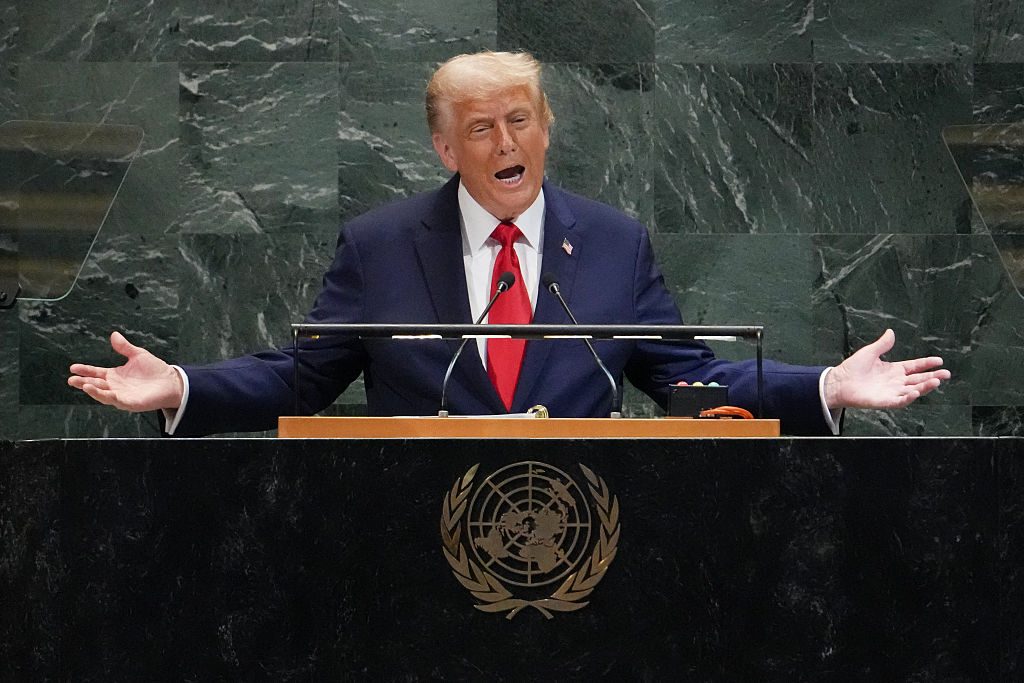
“66 is the path of a people in flight, refugees from dust and shrinking land […] 66 is the mother road, the road of flight”. So wrote John Steinbeck in The Grapes of Wrath, referring to Route 66, America’s most famous road. Donald Trump’s decision earlier this week to leave 66 international organizations puts one in mind of Steinbeck’s haunting description of Americans on the move. This time they are not fleeing the destitution of Depression, but the spoils of multilateralism.
The decision will have significant subsequent effects — other countries will follow or water down their agendas, fearful of the US President’s reaction. During Trump’s first term, America left the UN Climate Accord along with several other international deals, including the Trans-Pacific Partnership, Unesco, the UN Human Rights Council and others. But these did not make a dent in the fabric of multilateralism.
This round of recent departures is different as we are already seeing the effects. Earlier it was reported that the US will be exempt from the OECD deal to set a 15% global minimum corporate tax, following negotiations by the Trump administration. The problem here is not primarily the departure of the US itself, but that other skeptical countries were pressured into accepting it will feel emboldened to follow.
The same is true for other treaties the US is withdrawing from. If the US quits an international organization, one of two things will happen. Either the cause itself will wither, or someone else will take over. For example, Saudi Arabia emerged as one of the big players at the COP30 summit in Belém, Brazil. You might think that the US withdrawal from the international stage would open up an opportunity for the Europeans. But the Europeans are not in a position to fill the gaps. Not only do they not want to anger the US leader, but they are not sufficiently united.
The list of the 66 includes many UN agencies and commissions that are active in the areas of climate, labor, and migration. Non-UN organizations include the Partnership for Atlantic Cooperation and the Global Counterterrorism Forum. Secretary of State Marco Rubio called them “redundant in their scope, mismanaged, unnecessary, wasteful, poorly run, captured by the interests of actors advancing their own agendas contrary to our own, or a threat to our nation’s sovereignty, freedoms, and general prosperity.”
Joe Biden reversed some, but not all, of Trump’s exits. He re-entered the climate agreement and canceled the WHO and Unesco exits. The prospect of a reversal by a future US administration brings no joy to these organizations. For starters, no organization can keep functioning if their largest member constantly goes in and out of the door. And the Republicans seem on average keener to leave these organizations than the Democrats seem keen to re-enter them.
The break from multilateralism is a slow process — just as the build-up was too. It is at the level of these organizations where a lot of hidden work gets done. The Trump administration recently slapped a visa ban on five Europeans, including members of the German NGO, Hate Aid, a non-profit organization that tracks digital disinformation. It is recognized by the EU as a so-called trusted flagger and wields enormous influence on what can and can’t be said. The NGOs are not lobbies. They have semi-official governmental functions in the multilateral world, but they do not answer to voters.
If the US leaves a large number of these organizations, they will have fewer resources available as a direct result. And they will struggle to implement their recommendations if the world’s largest economy has denounced their activities.
There are around 300 intergovernmental organizations and some 45,000 internationally active NGOs. The recent US withdrawal — which focuses on climate, migration, and labor — is a huge step and probably not the last one either. As the Washington Post reported this week, the Trump administration will remain a member of organizations that are relevant for global competition, like the International Telecommunication Union, the International Maritime Organization and the International Labour Organization. But these are old institutions that predated the era of multilateralism. Now that America is picking and choosing, it looks like that world is returning.
This is an edited version of an article which first appeared in the Eurointelligence newsletter.
