









September 7 2026 - 10:30am
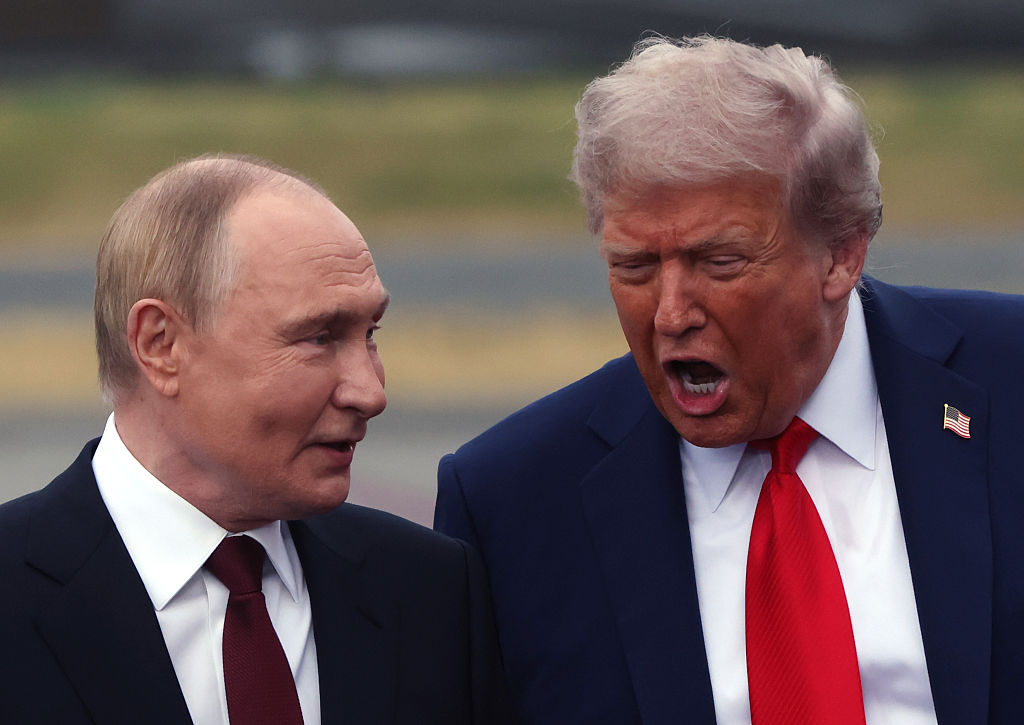
That Nobel Peace Prize was hardly going to win itself. While peace talks over Ukraine had appeared to stall, the White House is now apparently back on the job. Following discussions over the weekend with Russian President Vladimir Putin in Moscow, US envoys Jared Kushner and Steve Witkoff then headed to Kyiv for meetings.
What is the point of this flurry of diplomatic activity? On Friday, Donald Trump suggested there was a new US “idea for peace”, yet did not disclose any details. America appears to be firmly in the ideas stage, with Kremlin aide Yuri Ushakov saying that US representatives “formulated a whole range of considerations regarding ways of settlement”. Yet those ideas are not new; sources told the FT that the Americans only brought updated versions of earlier documents. Rather than developing one specific plan, America’s strategy appears to be brainstorming various solutions, seeing which ones the Russians react to positively, and going to Kyiv to do the same with the Ukrainians.
This does not augur well. The Russians are still engaging in maximalist messaging, stressing their “tangible advances in the combat zone” and confidence in achieving their battlefield goals. Meanwhile, a Kremlin source said that Putin will not accept an agreement on the frontline until he has captured the whole of the Donbas, no matter how long that may take. The US discussion of “compromises”, followed by Zelensky’s own understandable public refusal to turn over the Donbas to Putin, suggests that discussions will continue to stall.
This is not the only sign of a confused American strategy which does not correspond to the reality at hand. Ushakov noted that “economic issues and potential major, mutually beneficial Russian-American projects were discussed”, implying that the Americans are still conflating their own reset with Russia with the broader peace process and further proving susceptible to the Kremlin’s strategy of luring in Trump with lucrative deals. It follows on from MAGA figures close to the President heading to the St Petersburg Economic Forum this summer.
America’s own messaging does little to reassure Ukraine that Kushner and Witkoff are neutral intermediaries striving for peace rather than Putin fanboys on the holiday of a lifetime in Moscow. Witkoff offered gushing gratitude to the Russian leader for accepting them and delight that they were creating “incredible memories” together, rather than ending a conflict that has so far claimed hundreds of thousands of lives.
That is not the end of the US disarray. It remains unclear whether the Lindsey Graham Sanctions Act will go through and if America will supply Ukraine with Patriot interceptors. This could be a suitable moment for the White House to use such fluidity to put pressure on the relevant actors, making promises or threats as necessary. However, it does not appear to be that thought through, with the prospect of Ukraine making its own interceptors likely to take years.
CIA director John Ratcliffe visited Moscow last month to deliver a cold reality check to his counterpart about Russia’s disadvantageous battlefield position, combating the overly optimistic projections that Putin has been receiving from his own generals. The Russian President, who would not believe the words of an American spy, has been content to send young Russian men to their deaths en masse, and his strategy has centered around clinging on even when achieving minimal gains.
Besides, Ratcliffe was brought into the process partly to assuage Ukrainian concerns that Witkoff and Kushner were too close to the Russians. As such, America is not speaking with one voice, but two — one harsh and rooted in fact, the other friendly and hoping the day ends in a troika ride. That duality allows Putin to spread confusion as he drags negotiations into the winter, taking advantage of Ukraine’s lack of interceptors to pound its cities and erode civilian morale.
Why is America doing all this now? Little progress is happening with a settlement to the Iran conflict and, as Trump’s approval rating drops to a record low, he needs something to show voters in the lead-up to November’s midterms. When Witkoff and Kushner walked into the Kremlin with a range of possible solutions, their real puzzle wasn’t “how can we resolve the Ukraine war?” but “how can we make our boss back home look successful?”
