









August 31 2026 - 1:00pm
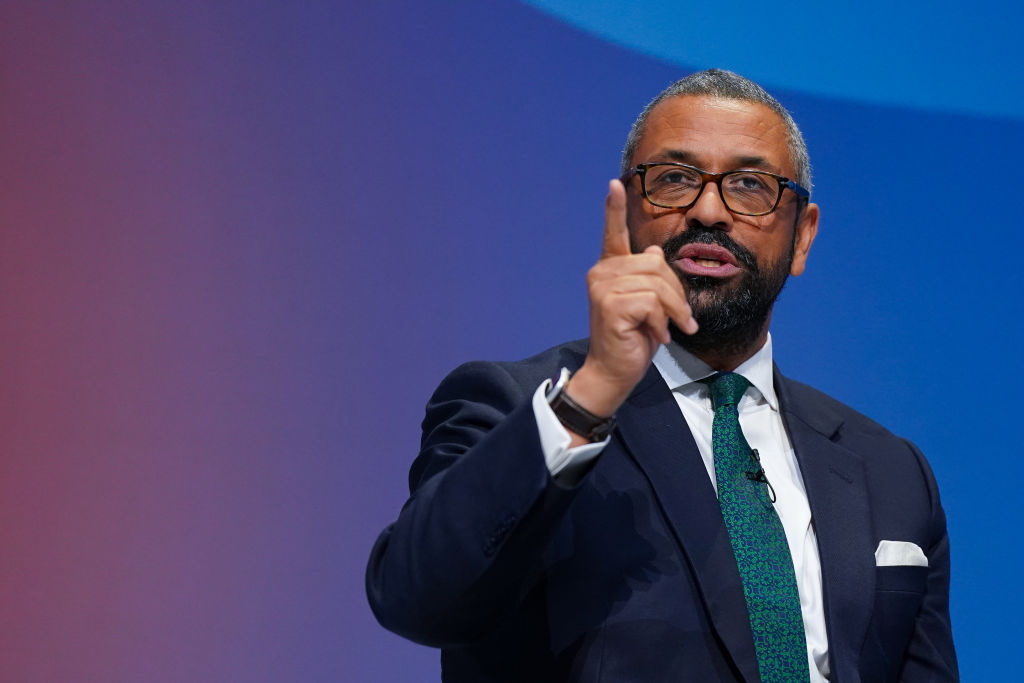
Where, if anywhere, will the Conservative revival begin? James Cleverly, the former home secretary, foreign secretary and Tory leadership hopeful, is banking on an unexpected answer to that question: London. He’s announced that he is running to be the city’s mayor in the 2028 election, and is giving up his place in Kemi Badenoch’s shadow cabinet to launch his campaign.
On the face of it, Cleverly’s decision is eccentric. Even as the Conservatives won a landslide victory in the 2019 election, their vote share declined in London. Five years later, when voters went back to the polls, the party was reduced to a rump of outer London constituencies. Since the heyday of Boris Johnson’s mayoralty from 2008-16, the capital has appeared increasingly inhospitable for the Conservatives.
But scratch beneath the surface and a rationale for Cleverly’s decision begins to emerge. Compared to the slump in Tory support across much of the country, voters in London — from an admittedly lower base — have actually proved quite resilient. In this year’s local elections, the Conservatives even made net gains across the capital. They took enough seats off Labour to regain control of Westminster and become the largest party in Wandsworth and Enfield, while holding every council they already controlled, from Harrow and Hillingdon to Bromley and Bexley.
This relative success was boosted by the weakness of their rival on the Right, Reform, in the capital. Back in May, Nigel Farage’s party topped the polls in England as a whole, but within the M25 it was fourth in vote share and fifth in seats, winning just one council. When London’s voters were looking for an alternative to Labour on the Right, they plumped for the Tories. And in mayoral contests, that matters.
The electoral system used to elect mayors asks voters to express a first and second choice, with the second preferences being reallocated among the top two candidates. In Greater Manchester, where voters recently elected a new mayor to replace Andy Burnham, Reform finished significantly ahead of the Tories. In London, recent history gives the Tories reason to hope that Cleverly, one of the party’s most charismatic campaigners, will reverse that dynamic. If his chief rival for the mayoralty is Sadiq Khan, whom more Londoners think is doing a bad job than a good one, Cleverly could even emerge as a credible threat to Labour.
Between Cleverly and the top job in City Hall are some major risks, however. The most immediate is an early election. Cleverly’s constituency is in Essex, where Reform won a landslide majority in the council elections earlier this year. Farage & Co would relish a parliamentary battle in which they could portray the incumbent as more interested in London than Braintree, and Cleverly would have to think hard about whether he could run a mayoral campaign and a constituency campaign at the same time.
If he avoids that quandary, the next risk would be if his campaign fails to take off. He could, after all, finish behind Laila Cunningham, the already-announced Reform candidate. Although the Tories led Reform in the capital’s council elections, a recent Savanta poll put the insurgents two points ahead of the Conservatives in London. (Both were behind Labour by double digits.) And a third place finish would leave Cleverly weaker than when he started the campaign.
In putting himself forward to be London’s next mayor, Cleverly is rolling the dice on both his own, and the Conservatives’, political future in the capital. But if he can pull it off, he’s unlikely to be disappointed with what it does for his political career. Just ask Boris Johnson. Or Andy Burnham.
Lee David Evans is an historian of the Conservative Party and the John Ramsden Fellow at the Mile End Institute at Queen Mary, University of London. He is the author of Coronations & Defenestration: Choosing (and losing) Tory Leaders and the co-host of the podcast Since Attlee & Churchill.
 LeeDavidEvansUK