









June 22 2026 - 10:00am
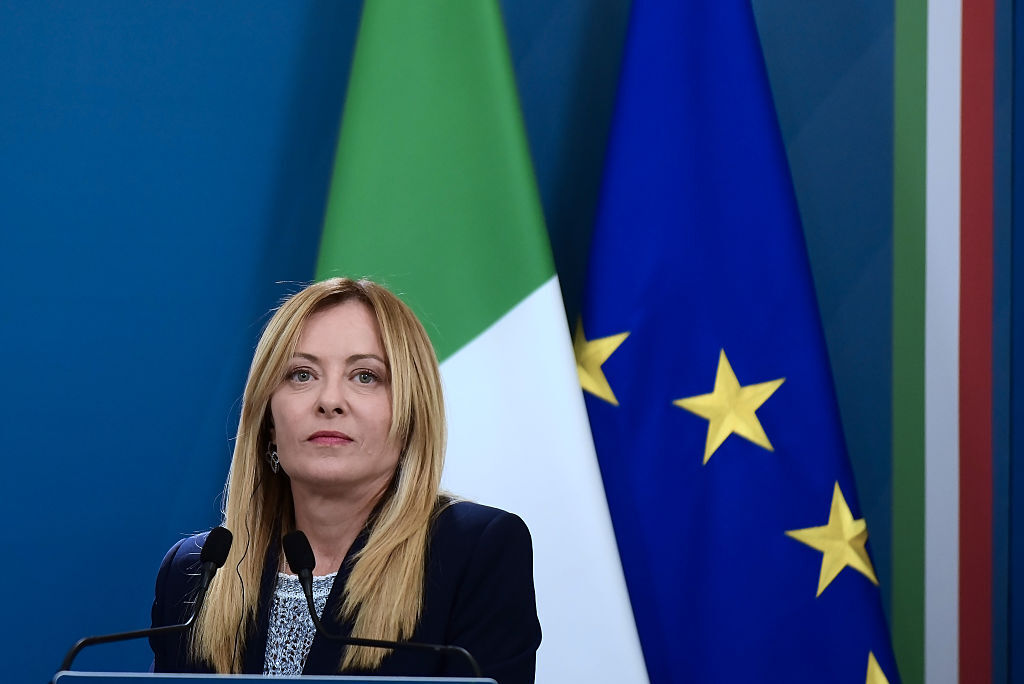
The period of unusual stability brought to Italian politics by Giorgia Meloni’s Right-wing coalition is under threat. Former army general Roberto Vannacci — nicknamed Il Generale by supporters — is mustering an anti-establishment force to split the vote on the Right, with his National Future party this week polling higher than Matteo Salvini’s League party (from which it split earlier this year) for the first time, on 6%.
Vannacci’s focus on “remigration”, including a proposed quota for migrants in Italy set at 4% of the population, puts him to the Right of the ruling coalition. For Meloni, he represents a dilemma that is increasingly common among European nationalists: how to retain anti-establishment credibility once in power, in the face of accusations of “selling out” from insurgent political forces?
Since the election defeat of Hungary’s Viktor Orbán in April, Meloni has become the leading light of nationalism within the EU. Still, notwithstanding her instrumental role in forcing the bloc to the Right on migration, she is arguably in danger of becoming tainted by association with Ursula von der Leyen and other EU leaders. Among conservatives for whom hostility to Brussels is a key marker of authenticity, Meloni’s successful navigation of the bloc’s bureaucratic machinery is suspect.
For emerging nationalist leaders like Vannacci, Meloni and her Right-wing peers in government elsewhere on the continent have failed in their core task of fighting for sovereignty and national identity within the EU. “Either you are with us from National Future, guardians of nationalism and citizenship, or with von der Leyen, [Mario] Draghi, multinationals and globalism,” Vannacci doomily proclaimed last week. The increasingly ideological, ethnocentric nature of Right-wing thought leaves successful leaders like Meloni open to accusations of betrayal, creates opportunities for those professing a purer form of nationalism, and risks a damaging descent into the kind of factionalism and infighting typically associated with the ideological Left.
This pattern can be seen elsewhere in Europe, with Right-wing fragmentation especially prevalent in countries where religion provides a deeper ideological basis for socially conservative thought. Poland — a society which is arguably even more grounded in Catholic belief than Italy — is a cautionary tale. The country’s United Right, dominated by the Law and Justice party, claimed 44% of the vote in 2019; now in opposition, it polls at around 27% and continues to bleed votes to the anti-establishment Confederation Freedom and Independence (13%) and the ethnonationalist Confederation of the Polish Crown (9%).
In Hungary, meanwhile, the scale of Orbán’s defeat in the spring was partly attributable to a splitting of the Christian nationalist vote. The emergence of the rival Our Homeland movement, which won around 6% of the vote in both 2026 and 2022, can now be understood as an early warning sign of Orbán’s fading appeal. The veteran leader’s singular political achievement until that point had been his ability to retain, for 16 years, an anti-establishment authenticity that was at odds with his significant personal power and authority.
Right-wing unity prevails to a greater degree in countries where an establishment “firewall” has succeeded in keeping nationalist parties out of government. The factionalism that is a corollary of the ideological Right gaining power has not yet afflicted the AfD in Germany or France’s National Rally; lessons from Poland, Italy and Hungary suggest that once the firewall is broken, it surely will.
In Britain, a similar dynamic is at play. Rupert Lowe’s justification for splitting the nationalist Right — his belief that Reform UK is “managed opposition” — reflects a view among some voters that Nigel Farage’s party has lost credibility by welcoming former Tories tainted by power. The damaging impact of this fracture on the Right’s electoral chances was plain to see in the Makerfield by-election campaign.
With success breeding discontent for anti-establishment forces, the conflict between the responsibilities of power and the increasingly uncompromising demands of frustrated voters is a circle that Right-wing parties in Europe must learn to square. If not, they will never be safe — as Meloni is now finding out — from their own shadows.