








March 15 2026 - 1:00pm
Against the backdrop of Canada’s Arctic frontier, Prime Minister Mark Carney announced this week a massive new $35 billion investment in upgrading the country’s northern infrastructure and defense capabilities. The package encompasses improvements to roads, bases, and airports.
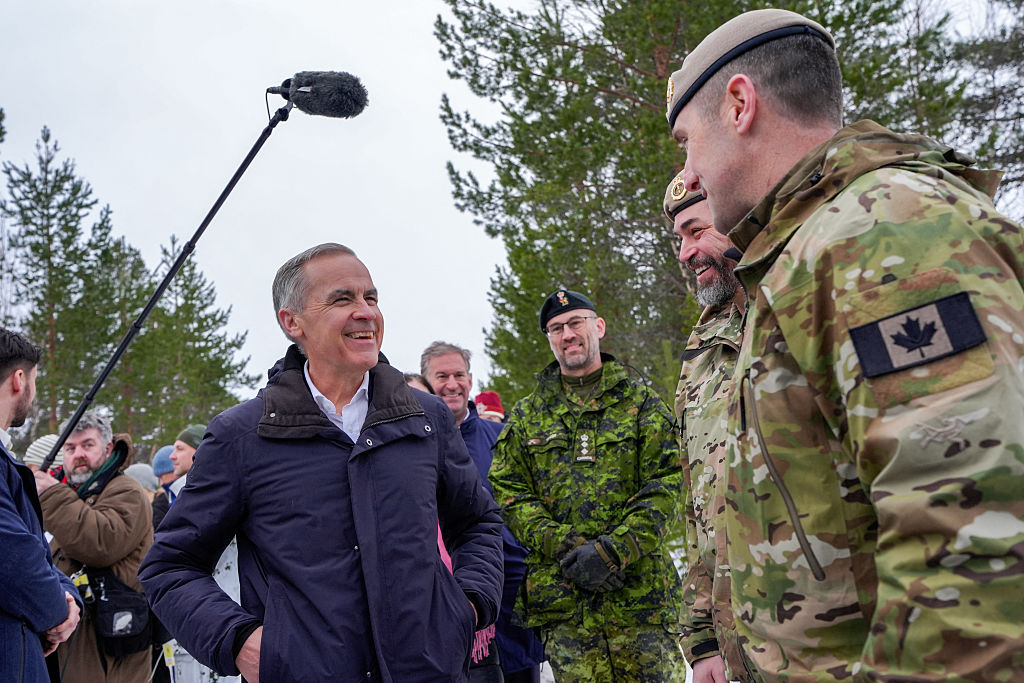
Carney, who was born in Fort Smith, the Northwest Territories, along the 60th parallel, announced that Canada “will no longer rely on others to defend our Arctic security or to fuel our economy. We are taking full responsibility for defending our sovereignty.” The PM’s subsequent trip to Norway, ahead of a Nato wargaming exercise, underlined the strategic importance of the Arctic to his agenda. So too did events at home. The lone MP from the Arctic territory of Nunavut crossed the floor from the opposition to the government benches — another reminder that developing the Canadian North is becoming central to the Carney government’s priorities.
The moves come as Canada faces continuing pressure to ramp up its military spending commitments from the US, its ally in both Nato and the North American Aerospace Defense Command (Norad). But even as Washington has cited the threat of Russian and Chinese incursions into the continent to justify its heavy-handed push to shore up North American security, polling suggests Canadians are increasingly wary of the US itself. Many now see their southern neighbor as the primary threat to the country’s safety and independence. Though Washington has since turned its attention to yet another intervention in the Middle East, the shadow of the Trump administration’s January attempt to acquire Greenland still looms over Canada’s strategic thinking.
Any realistic assessment will show that the prospect of Canada as a self-sufficient security bulwark is still quite a distant one. But the country’s policymakers are already scrambling to lay the foundations for such a transition. This week’s Arctic investment package comes on the heels of an earlier defense industrial strategy unveiled by Carney last month, which aimed to wean Canada from dependence on US partners. Carney’s $35-billion spending commitments include funding for new airfields that are outfitted to service not just US-made F-35s — which would have been the traditional option for Ottawa’s military procurement needs — but also Swedish Gripen fighters, that are now seen by many Canadians as a safer alternative to US-made aircraft (rumored to have “kill-switches”).
Though Carney cannot say it out loud yet, the unspoken premise of his government’s emerging northern strategy is clear: Canada must avoid being boxed in by a hostile power — namely the United States — in its own sprawling Arctic backyard. That is precisely the scenario that would emerge if US Secretary of War Peter Hegseth’s vision of a “Greater North America” were ever realized.
Receding Arctic ice means the region’s vast, largely untapped resources will come into play in the decades ahead. At the same time, the emergence of new polar shipping routes could eventually make the Arctic as valuable to the global economy as the South China Sea or the Strait of Hormuz is today.
With such high stakes, Carney is right to assert that Canadians can no longer afford to entrust their defense to anyone else; with tens of billions of dollars at hand, the test is whether he can turn that lofty ambition into long-term action.
 1TrueCuencoism
Join the discussion
Join like minded readers that support our journalism by becoming a paid subscriber
To join the discussion in the comments, become a paid subscriber.
Join like minded readers that support our journalism, read unlimited articles and enjoy other subscriber-only benefits.
Subscribe