









June 15 2026 - 11:00am
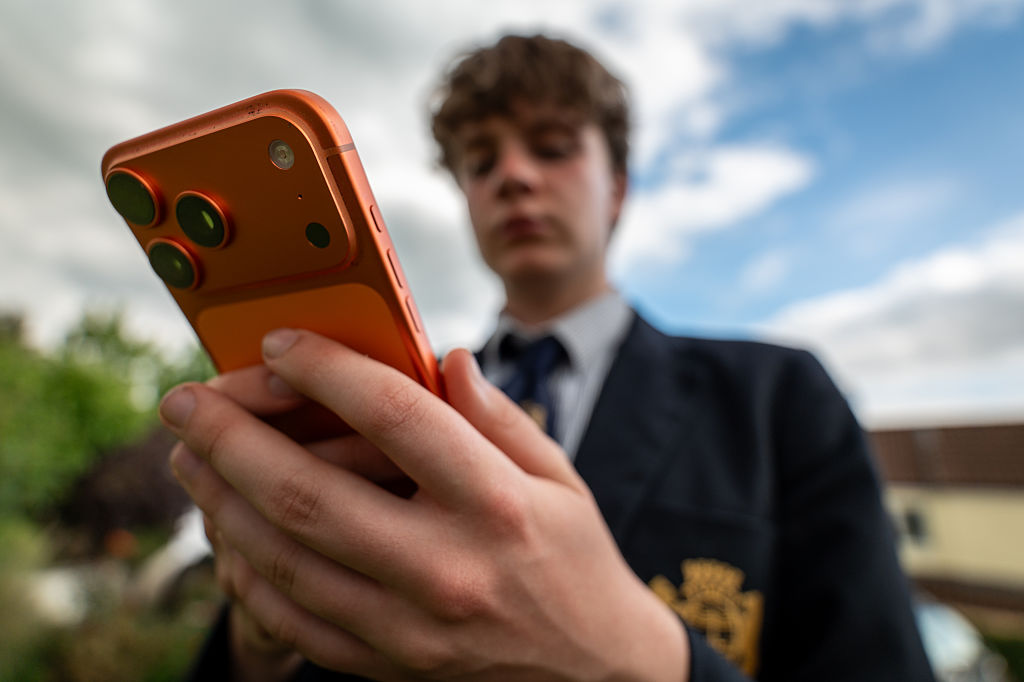
This morning, Keir Starmer announced new curbs on social media for children and teenagers, primarily including banning under-16s from various platforms by spring 2027. Speaking from Downing Street, the Prime Minister declared that a full, outright ban was the “right thing to do” as it was making children “unhappy”. In the Government statement was a list of social-media platforms banned, including Snapchat, TikTok, YouTube, Instagram and X, but not primarily messaging apps like WhatsApp and Signal. It was also suggested that the Government was considering further restrictions for under-18s down the road, including curfews and breaks from internet scrolling.
Will it work? Or will teenagers find ways around the restrictions either by using other websites or by finding workarounds for the age restrictions, as has been the case in Australia? Even if partially effective, the measures could have some funny downstream consequences, particularly if they cause a large influx of schoolboy trolls into Bluesky. The social media app and became a refuge for ultra-progressives following Elon Musk’s purchase of Twitter. It has since become notoriously dogmatic in its Left-wing outlook, and reportedly aggressive toward perceived ideological enemies. Bluesky reportedly won’t be included in the restrictions. It’s difficult to establish how much of younger Gen Z and Gen Alpha lean to the Right, but regardless of politics, a generation marinated in Italian Brainrot all lean anarchic, and a forum invasion by the massed trolling firepower of this cohort would likely have entertaining consequences.
Though the larger question is whether Starmer even cares how effective the Bill is at keeping children safe, or whether it’s just another step toward ending internet anonymity. This has long been a prize for those who view freedom of speech as an impediment to orderly governance. And, indeed, today’s measures carry more than a whiff of careful planning to this end.
The legislative foundation is already a fait accompli, thanks to changes passed into law in the Children’s Wellbeing and Schools Act, earlier this year. This Act created an open door for the Government to ban “harmful” online features in the name of children’s safety, without further legislation.
In response, most of the reporting on the ban “for teenagers” has focused on which sites might be restricted. Less attention has been paid to possible mechanisms for doing so, and it’s still unclear after the announcement. But unless you want kids to just lie about their age, enforcement would either have to be via parental authority — unlikely given Labour’s congenital nanny-statism — or some kind of digital gatekeeping. In the latter case, in order to work, the age — or, in other words, identity — verification process would have to encompass everyone, not just teenagers. In effect, then, this would tie social media usage to named individuals, using an official ID and/or face scan, functionally ending online anonymity.
What could possibly go wrong? Is this an acceptable price to pay for keeping children safe? Complaints about “two-tier” criminal justice and institutional political bias are already rampant. Evidence from the Online Safety Bill strongly suggests that these measures would swiftly be weaponized along similar lines. The swift turnaround between the Belfast unrest that followed the attempted beheading of Stephen Ogilvie and Liz Kendall’s announcement of further restrictions on digital communications during “times of crisis” should leave no doubt in anyone’s mind of the robust link that now exists in the Labour Party consciousness between unfettered digital conversation and public disorder. It feels less like Labour want to keep kids safe than to jam the lid down on a pressure-cooker of discontent they’re incapable of addressing in substance.
Having seemingly convinced themselves that Labour’s unpopularity is caused not by people’s “lived experience” but entirely by Elon Musk and the online “far-Right”, it’s not hard to see the appeal of being able to identify individuals blamed for “whipping up” discontent. Online “child safety” measures that would, as a byproduct, supply officials with faces and IDs for any individual online poster must be like catnip.
And whether the real precipitating factors in public discontent can be persuaded to go away, simply by restricting people’s freedom to speak openly about them, is another matter. And it’s just as possible that those driven off the public internet will simply become less visible, less traceable, and more dedicated.
