








January 8 2026 - 1:15pm
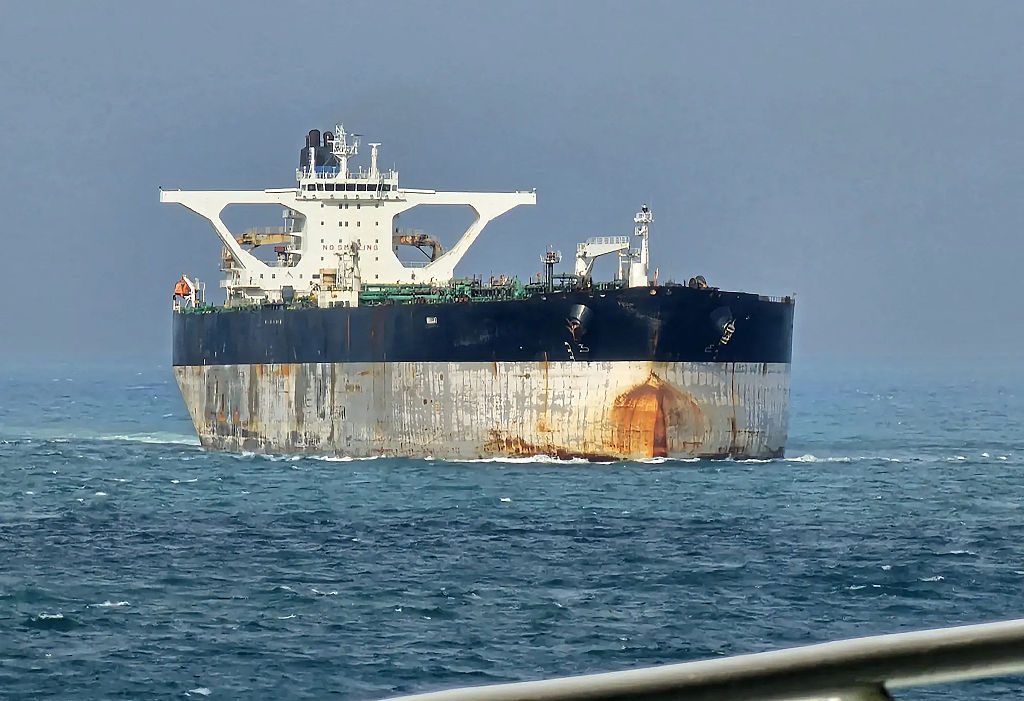
After a pursuit lasting two weeks, the United States finally seized the Bella-1, an old, rusted oil tanker, in the North Atlantic on Wednesday. US officials celebrated the vessel’s capture as a triumph, noting that the tanker, which recently registered under the Russian flag, was wanted for violations of American sanctions on Venezuelan and Iranian oil. But proud rhetoric aside, this was hardly a strategic win for the US.
The spectacle of the world’s most powerful military force chasing a slow-moving oil tanker across the high seas was amusing to watch, but it was not a show of strength and competence by Washington. Moreover, the tanker itself was empty, raising questions about why the US would waste already scarce military resources in its pursuit, and what officials will do now that they control it. The action’s legality is yet another valid question, but not one about which the Trump administration is very concerned. The ship’s loss does not hurt Russia in a material way, but threatens US-Russia negotiations over the end of the war in Ukraine at a fragile and critical moment.
That the vessel had sought Russia’s protection adds a more significant geopolitical wrinkle to an otherwise farcical episode. Indeed, sources report that Moscow had dispatched a submarine to protect and escort the vessel as it tried to escape, but US forces moved in to board the ship before it could arrive.
There is only one real explanation for why Washington chose to move on the Bella-1 now: because it can. In the wake of the successful and daring raid on Caracas that resulted in the arrest of Nicolás Maduro, the administration feels emboldened to stretch its power to its limit. This is most true in the Western Hemisphere, where the “Trump Corollary” to the Monroe Doctrine is best interpreted as a desire to remove any impediment to the exercise of US military, economic, and political will.
After declaring that America would “run” Venezuela and take its oil, for example, Trump threatened military action against Colombia, Cuba, and Mexico. He warned that Venezuela, still shaken by the assault hours before, might see boots on the ground, and declared that Washington needed to acquire Greenland, whether by force or by purchase. And it is no mistake that the seizure of the Bella-1 occurred between Iceland and Scotland, on the boundary of Trump’s self-declared domain.
Trump seems to want all the benefits of global hegemony — the ability to act unilaterally and with impunity — without any of the costs, such as the responsibilities of underwriting the global security or economic order. This strategy will fail for two reasons. First, it’s not sustainable. As evidenced by the lackluster capture of the Bella-1, there are now clear limits to Washington’s military power, both in absolute terms and in relative terms, as other countries, especially China, continue to catch up.
Second, an approach based only on coercion and threats will create new enemies while alienating friends and destroying attempts to stabilize long-troubled relationships with countries like Russia and China. It also leads to unproductive uses of military power and unnecessary confrontations. Seizing the Bella-1 achieved little, but it may have set back talks with Russia on Ukraine and strategic stability and could have risked military escalation if the Russian submarine had arrived earlier.
Going forward, President Trump and his advisers ought to think less about what the military can do and more about what it must do to protect the nation’s interests. Restraint, not action, should be the ultimate show of American power.
 jekavanagh
Join the discussion
Join like minded readers that support our journalism by becoming a paid subscriber
To join the discussion in the comments, become a paid subscriber.
Join like minded readers that support our journalism, read unlimited articles and enjoy other subscriber-only benefits.
Subscribe