









January 16 2026 - 7:00am
Yesterday morning, Robert Jenrick was facing political ruin. His defection plans rumbled, he was sacked in the most humiliating manner by Kemi Badenoch. A noncommittal reaction from Nigel Farage then gave the impression that Jenrick had been kicked off one ship without securing space on another. So not just a rat, but a drowned rat.
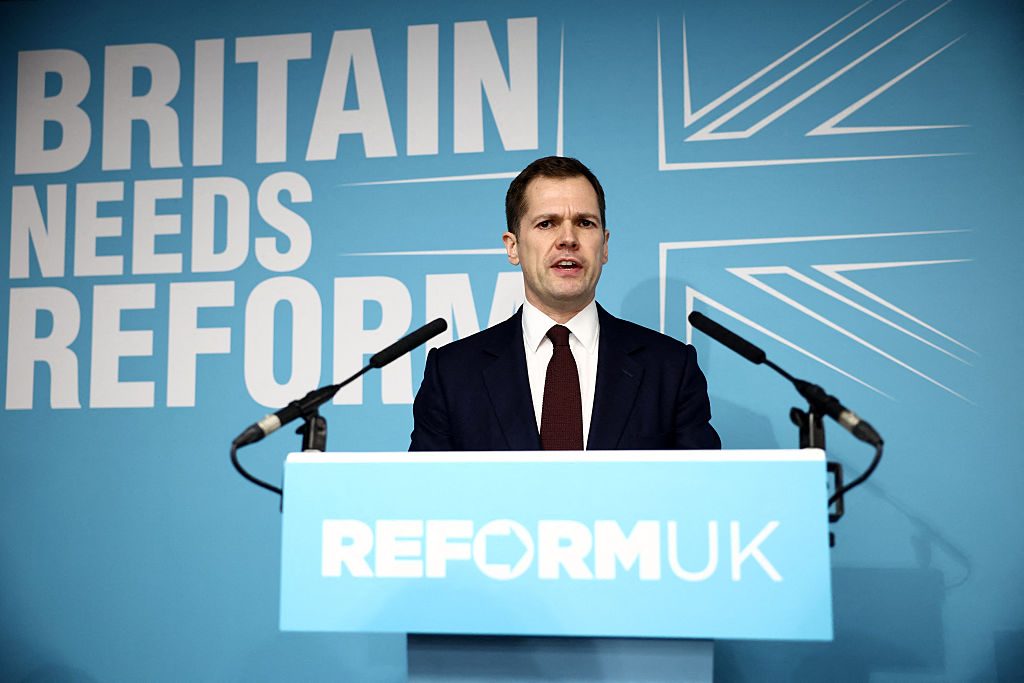
But within hours came an extraordinary turnaround. It may not rank as the greatest political comeback of all time, but it is possibly the fastest. Even if Farage had been keeping his options open, by 4:30pm he was on a stage in front of the media ready to welcome Jenrick with open arms.
Admittedly, it didn’t start well. Jenrick was late to his own defection, failing to appear when his new party leader introduced him. After that additional embarrassment, Jenrick really needed to give the speech of a lifetime. But fortunately for him — and a relieved Farage — that’s exactly what happened.
Jenrick began with a blackpilled stream of statistics: on wage stagnation, the housing crisis, the energy crisis, welfare dependency, the national debt, the tax burden, A&E waiting times, unsolved crimes and out-of-control immigration. Then came his verdict on those who’ve presided over Britain’s national decline: “They run this country like they hate it.”
But who was he referring to? Not solely the current government: “Both Labour and the Conservatives broke Britain.” To underline the point, he revealed that the Shadow Cabinet had privately debated whether or not Britain is broken. While he argued that it was, most of his ex-colleagues disagreed. He also claimed that a few of them took a third position: “It is broken but we can’t say so because the Conservative Party broke it”.
This gets to the heart of the Tory dilemma: they can’t regain relevance without telling the truth, but they can’t tell the whole truth without incriminating themselves — or at least their predecessors in government.
Of course, they could have made a decisive break with the past during the first part of Badenoch’s leadership and, before that, during the 2024 leadership contest. But, as I’ve argued before, that vital reckoning was deliberately suppressed.
The weakest part of Jenrick’s speech was his excuse for not saying all of this at an earlier date — for instance, when he was one of the leadership candidates in 2024. As he’s now in the mood for revelations, he’ll hopefully say more about the post-election stitch-up that smothered genuine debate in the Conservative Party.
For the moment, today has left both Badenoch and Farage strengthened. In her case, it’s because she acted decisively: a defection that should have weakened her authority has strengthened it. But in Farage’s case, Jenrick has refocused attention on the charge that does the Tories more damage than any other: that they’re not sorry enough for what they did in government.
True repentance is never easy and isn’t meant to be. Foolishly, the Tories thought they could skip over the process this time round, but all they’ve done is outsource it to an external contractor. The regret, the recrimination, the anger and the tears — almost all of that has found expression within Reform UK instead of the Tory civil wars of previous post-defeat eras.
Better out than in? Well, no — not when it also leaves the party without half its core support.
Peter Franklin is Associate Editor of UnHerd. He was previously a policy advisor and speechwriter on environmental and social issues.
 peterfranklin_