









June 1 2026 - 6:00pm
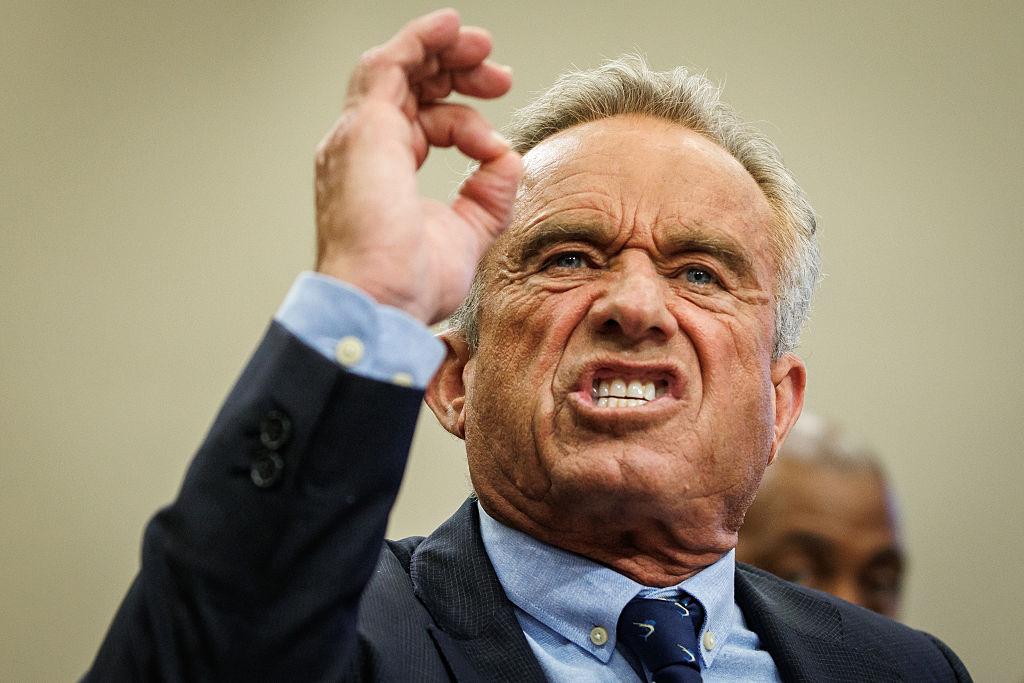
“Doctors would often tell patients, ‘It’s your imagination. It’s something else. There’s no such thing as Lyme disease,’” rasped Health and Human Services Secretary Robert F. Kennedy Jr at a New Hampshire press conference on Friday. On its face, this was a strange pronouncement: who are these doctors denying the existence of an illness first identified in the Eighties? But in the fraught world of tick-borne diseases, Kennedy’s words signaled a fundamental change in the government’s position.
Lyme disease is a bacterial infection transmitted when a tick, having acquired the bacteria through earlier feeding on a carrier animal, latches onto a human. The bacteria then pass into the bloodstream, and a few days later symptoms appear. While the presentation of illness may be varied, the standard of care is not. The view of mainstream infectious disease doctors and official bodies such as the CDC is that a course of oral antibiotics will eliminate the bacteria.
Proponents of the chronic Lyme theory disagree that this is the universal way to end the disease. They argue that the bacteria can find their way deep into tissue, where they can lurk for months or years before causing a renewed infection, and that treating them often requires extreme measures. Most often, this means long courses of powerful antibiotics, but it can also include bespoke supplements and off-label medications.
It is the official distinction between Lyme and chronic Lyme that has collapsed. The former is generally still accepted by the medical establishment, while the latter is not. For Kennedy, chronic Lyme is real and legitimate, and so to contest it is to deny the disease itself.
At the press conference on Friday, he made it clear that chronic Lyme would no longer be relegated to the medical fringe. Kennedy pledged a new raft of measures aimed at combating the prevalence of the disease in American society. He had with him on stage two people he identified as Lyme disease activists. In addition to more accurate tests for the disease and tick reduction programs, he announced a collaboration between the HHS and the International Lyme and Associated Diseases Society (ILADS), an organization dedicated to increasing public awareness of chronic Lyme and guiding physicians in its treatment. The heart of this guidance is that a holistic assessment should be used to diagnose the disease, and that clinician judgment is generally preferable to a uniform treatment protocol.
This reorientation from the programmatic and the bureaucratic to an approach with a patient-by-patient plan highlights the appeal of Kennedy and the broader MAHA movement. Whether one believes the cause of symptoms is a lingering infection, lasting damage caused by an infection that has been eliminated, or something else entirely, people who still suffer from the disease after conventional treatment have long felt failed by an establishment that has little to offer. In theory, a more MAHA medical system would focus on patient testimony, which could enable their doctors to find solutions.
But it’s far easier to rage against an uncaring bureaucracy than to reform it. Kennedy’s plan calls for better tests, the repurposing of existing medicines, and the development of new treatments. Yet improved tests could fail to detect active infection in people claiming to suffer from chronic Lyme disease. This extra research could also end up like intravenous antibiotics which, when compared to a placebo, show no particular efficacy for treating symptoms and come with serious complications. There is also the chance that this extra research points to a variety of physical and psychological conditions, distinct from the actual disease and related to the coverage surrounding it.
All treatments come with financial costs, and many come with some amount of physical risk. A medical system has to balance these against the potential benefit to the patient. For their part, medical authorities have to delineate which treatments have a solid evidentiary base and which do not, and sometimes that means placing certain approaches out of bounds entirely. Kennedy has demonstrated his willingness to erase the old lines. But to do his job, he must now draw new ones.