









January 7 2026 - 3:45pm
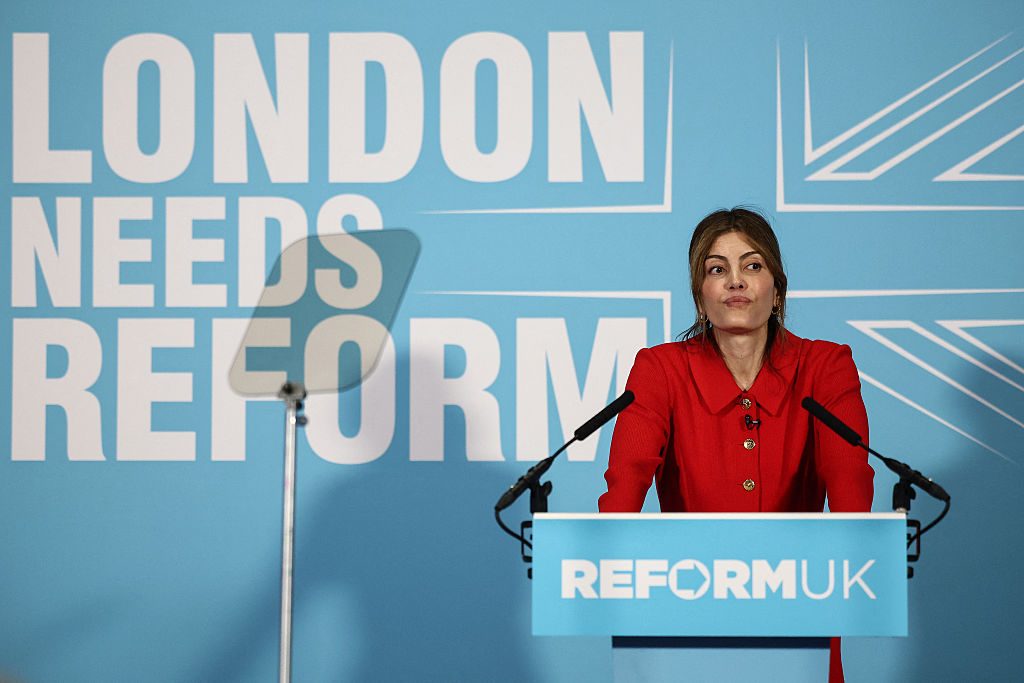
Reform UK has named its London mayoral candidate: former Westminster Councilor and Crown Prosecution Service prosecutor Laila Cunningham. Cunningham’s pitch was designed to put clear teal-colored water between Reform and Labour’s Sadiq Khan, with promises to scrap the controversial Ulez scheme and confront unions representing Transport for London (TFL) drivers and staff. However, her main pitch was on crime, citing familiar bromides concerning the city’s decline into lawlessness.
At a press conference today, she attacked the Mayor’s alleged stalling on allegations of grooming gangs and demanded that Met Commissioner Mark Rowley be fired. Tough talk, but what impact can Reform hope to have in what remains a strongly Labour-supporting city? And, despite the governing party’s decline nationally, the city remains strongly Left-of-center, with the Greens polling especially well.
Cunningham’s pitch is aimed squarely at the outer “donut” of traditionally conservative boroughs orbiting central London, including places such as Havering, Bromley and Uxbridge. She may be serious in her pitch for City Hall, but does her policing strategy hold water? The former councilor cuts a common-sense figure, with strong woman-on-the-Clapham-omnibus sensibilities around law and order. She has proposed a Rudy Giuliani-esque, zero-tolerance approach clearly influenced by Nineties New York.
Yet, for a former CPS prosecutor, Cunningham’s understanding of policy seems hazy. At a recent debate on crime, it was clear that the Shadow Home Secretary and Croydon South MP Chris Philp had a superior understanding of policies such as facial recognition and stop-and-search. Yet, the Conservatives are tired and unloved. The electorate is increasingly fractious and impatient. Cunningham’s “back to basics and damn the experts” approach may hold a subversive appeal to suburban Londoners sick and tired of crime.
Nigel Farage’s party knows that crime and the perception of disorder and lawlessness on the capital’s streets is a weakness for the Mayor (even if the homicide rate is at an all-time low). Khan has been largely hands-off when it comes to policing, delegating most of his responsibilities to Kaya Comer-Schwarz. Schwarz, a former Islington councilor with a background in safeguarding and charity work, is a cookie-cutter law and order liberal.
The Mayor’s predictably soft position on issues such as stop-and-search makes Comer-Schwarz an unlikely figure to take on a more muscular offering to combat the Reform threat. Reform will continue to exploit this, given that City Hall is firmly in the grasp of Left-wing academics and activists. This is the context in which Cunningham’s calls for the Met’s Rowley to resign should be seen. There is precedent: after all, then-Mayor Boris Johnson similarly dispatched another liberal police chief, Sir Ian Blair.
Like other areas of Reform policy, then, Cunningham’s offer on policing appears policy-light but emotion-heavy. Time will tell whether this represents naivety or cunning, but Reform-sympathetic policy figures assure me that the party’s well aware of its strategy.
As illustrated by yesterday’s disastrous performance by senior officers from West Midlands Police who were questioned on the decision to ban Maccabi Tel Aviv fans from attending a match against Aston Villa, policing appears hopelessly compromised by sectarian interests.
Power-hungry populists would be foolish not to exploit such a vacuum. Yet history teaches how the sugar rush of pulling down rotten institutions is no substitute for hard-nosed, detailed policy prescriptions to make them functional again. And so the question remains for Reform, both nationally and in London: do Nigel Farage’s political shock troops have as much appetite for detail as they do combat?