









August 5 2026 - 4:00pm
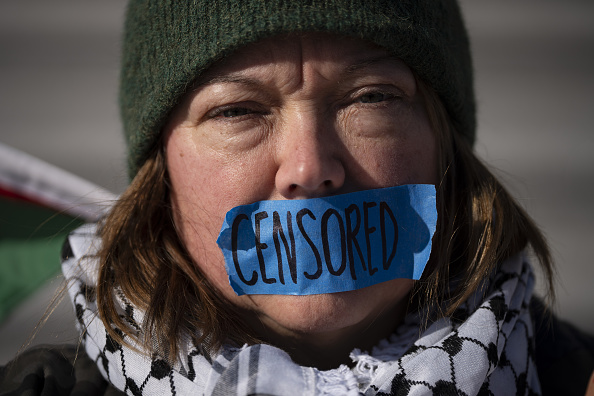
Almost half of Britons think that “misinformation” is a label used to silence people, according to new research. A Focaldata report found that 43% of respondents believe the label is used to “silence opinions the powerful don’t want discussed”, while 41% believe it is used in good faith to flag false information.
| Almost half of Britons believe that “misinformation” is a label used to silence people |
| Percentage of respondents who agreed with the statement, by 2024 general election vote |
 |
The research also showed a deep skepticism of fact-checkers, with almost one-third of Britons viewing them as politically biased. Focaldata found that 31% think they are more likely to flag misinformation from one side of the political debate than the other. By contrast, 26% regard their work as fair, while a further 18% believe that they flag whatever is convenient for powerful people, regardless of politics.
Recent data has suggested that misinformation is an increasing concern for Britons. A report from the ONS this year found that 78% of respondents thought that the biggest issue facing future elections was the spread of misinformation and disinformation.
Since winning the 2024 general election, the Labour Party has cited misinformation as a key problem facing British society. In the wake of the nationwide riots that followed the Southport murders in the summer of 2024, then prime minister Keir Starmer pointed to social media misinformation as a cause of the disorder.
In August 2024, the then education secretary Bridget Phillipson launched a review into the school curriculum aimed at teaching students how to spot misinformation online. Phillipson suggested that the aim of the policy was to “arm our children against disinformation” and to tackle “putrid conspiracy theories”. In November of the same year, Peter Kyle, the then secretary of state for Science and Technology, expanded on the government’s position and said disinformation was “one of the most serious issues of our time”.
The debate over misinformation has also had an impact on the British media. A 2025 Reuters Institute report found that 61% of Britons considered the social media platform X to be a “major misinformation threat”. In July 2026, the recently appointed Director-General of the BBC, Matt Brittin, suggested that the Corporation could be used to counter misinformation online. Speaking to a government committee, Brittin said that the BBC could act as a “disinfectant” against online misinformation. However, he added the Corporation would need more funding and a “whole bunch of technical investment” to achieve this.