








December 13 2025 - 2:00pm
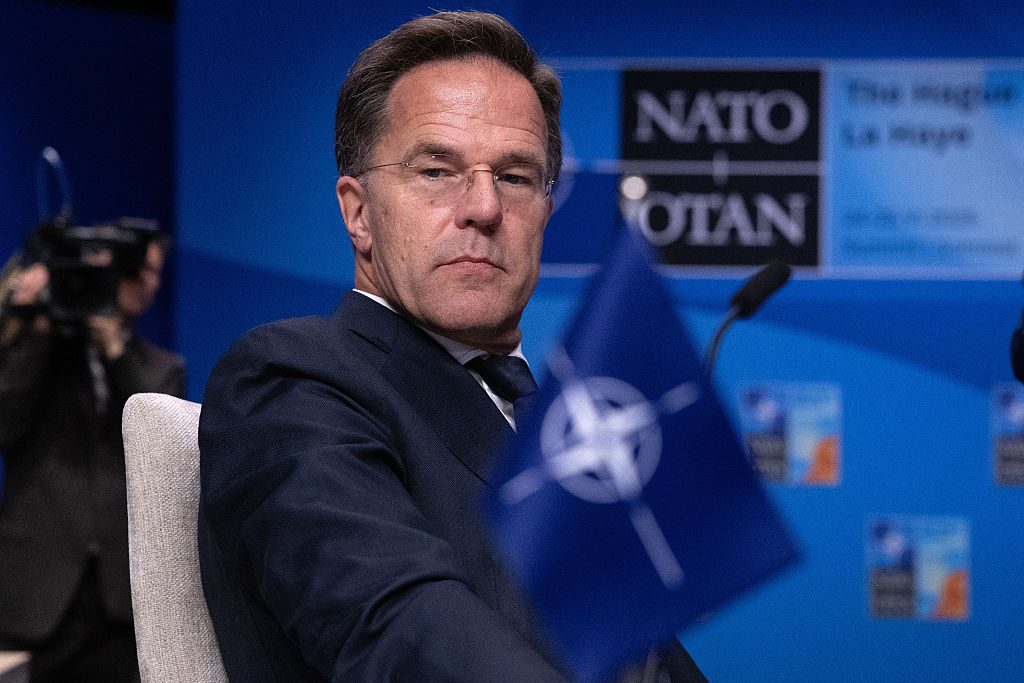
This week, Nato Secretary General Mark Rutte said that “We [Nato] are Russia’s next target. And we are already in harm’s way”. He warned that “we must be prepared for the scale of war our grandparents or great-grandparents endured”. But does he truly believe that?
If not, then he is deliberately lying to Western democratic electorates, and poisoning the public debate. But it is even more worrying if he does believe it. It would be evidence that European security elites have fallen into a condition of paranoid hysteria that is impervious to rationality.
We must hope he does not believe it. For while Rutte is wrong to scaremonger, he’s right that Europe needs to strengthen its defenses. And a case can be made that given European economic stagnation and acute budgetary pressures, the only way to get electorates to spend more on the military is to convince them that the Russian bear is coming for them.
Even when it comes to rearmament however, there are dangers in exaggerating the imminent Russian threat. This encourages a rush to spend money quickly, and as the tragicomic history of British military procurement over the past generation demonstrates, the reasons for our problems with manufacturing arms go well beyond lack of money.
Leaving aside staggering levels of carelessness and incompetence (and the seeming inability of our systems to hold even one senior officer or official responsible), the UK and most European countries have let our wider industrial bases shrink to the point where they cannot support efficient military sectors. To rebuild our industries will take many years. In the meantime, to throw huge amounts of money at weapons will mean huge amounts of waste and delay, or simply buying them from the US.
And this is unnecessary. For the idea of a deliberate, premeditated Russian attack on Nato “within five years” is simply nonsense. President Vladimir Putin has repeatedly denied any desire or motive to attack Nato, unless Russia is attacked first. On this, at least, there are reasons to believe him.
Russian officials and experts last year emphasized to me that Russia’s threats against Nato were intended to deter the alliance from getting directly involved in Ukraine. Fearing nuclear escalation, one official said: “Look, the whole point of all these warnings […] has been to stop Nato from joining the fight against us in Ukraine, because of the horrible dangers involved.” He added: “Why in the name of God would we ourselves attack Nato and bring these dangers on ourselves? What could we hope to gain? That’s absurd!”
And where is Russia supposed to get an additional army from? Unless Ukraine collapses completely, the size of the peacetime Ukrainian army being proposed by Moscow is 600,000 men, presumably backed by numerous reservists. If Russia attacks the alliance, then Ukraine will certainly take the opportunity to try to recover its lost territory.
Moreover, any such attack by Russia would completely contradict its political strategy towards the West, which is to deepen the growing divisions both between the US and Europe, and between European establishments and the populist oppositions of Right and Left. Any direct Russian attack on Nato would wreck this strategy by reuniting the West in opposition. Why would Moscow have spent such efforts wooing Trump only to face him or his successor with a choice between war or humiliating retreat?
And what could Russia hope to gain compared to the huge risks involved? Apart from the danger of escalation to nuclear war, the Ukraine War has demonstrated the immense contemporary superiority of the defensive. Russia has developed new weapons and tactics, but not ones that produce a breakthrough. Moscow cannot possibly hope to win a war of attrition with Nato countries whose combined GDP is more than 20 times that of Russia. It would be thus easy for Nato to adopt a defensive posture in the Baltic States and eastern Poland which would make any Russian attack immensely costly to Putin.
All that said, there is of course a real risk that clashes or accidents could lead to an unintended spiral toward direct war. This could for example begin with European seizure of Russian cargoes on the high seas, leading to naval clashes and a Nato blockade of the Russian exclave of Kaliningrad. But that is an argument for prudence, not paranoia. The wild exaggerations uttered by Rutte and his like act against such prudence and make an unintended disaster more likely.
Anatol Lieven is a former war correspondent and Director of the Eurasia Program at the Quincy Institute for Responsible Statecraft in Washington DC.
 lieven_anatol
Join the discussion
Join like minded readers that support our journalism by becoming a paid subscriber
To join the discussion in the comments, become a paid subscriber.
Join like minded readers that support our journalism, read unlimited articles and enjoy other subscriber-only benefits.
Subscribe