








January 12 2026 - 7:00am
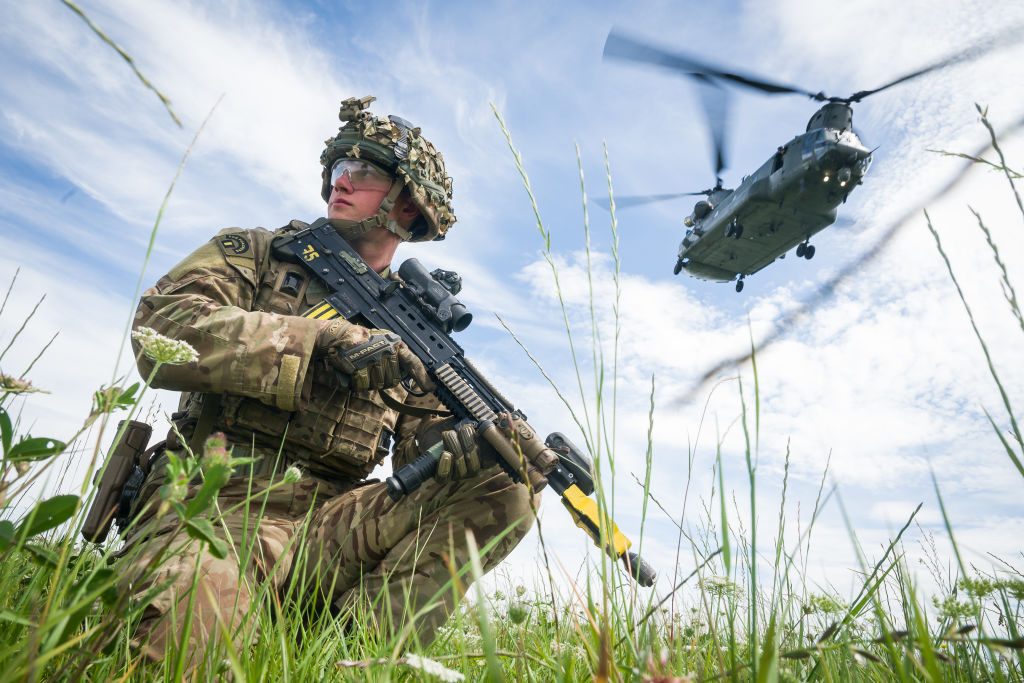
Britain may send thousands of troops to Ukraine as a peacekeeping force, but they could be forced to take the bus, given that the country’s last military helicopter factory is on the brink of closure.
Reportedly, the Westland Factory needs a definitive answer from the government by the end of March on a make-or-break contract. If it closes, Britain would become dependent on foreign suppliers for military helicopter production. That the world’s sixth-largest defense spender has only a single domestic military helicopter plant is, frankly, shocking. Yet this is just another sad footnote in Britain’s national equipment and munitions crisis. In 1915, the last Liberal Government fell over a “shells scandal” that saw troops on the Western Front put at risk due to a shortage of artillery. Now, shortages are not scandals but business as usual.
Readers with long memories may have clocked that the factory in question was once at the heart of a scandal that nearly brought down Margaret Thatcher in 1986. The “Westland Affair” was nominally about whether Britain’s sole helicopter producer, Westland, should merge with a US company or become part of a European conglomerate. In the end, the argument was largely beside the point: whichever option prevailed, Britain was still choosing to outsource a core element of its national security.
Supporters of the Euro conglomerate option at the time claimed that working with European partners would make British production more resilient. The fact that the Westland Factory is now owned by Italian firm Leonardo demonstrates that whether it is American or European, assets solely owned overseas are never truly reliable.
Instead of spending more but having control, we have seen the UK’s productive capabilities diminish. Shipping stopped in Portsmouth. Tank production ended in Newcastle. Billions of pounds have flown out of the country instead of creating jobs and infrastructure at home. It is only in Britain that ever larger sums are spent on defense while capabilities are reduced.
If the Westland Factory closes, Britain will lose its only fully integrated helicopter manufacturing facility. The UK would then rely entirely on US or European firms to produce new helicopters, limiting the British military to repairs and maintenance. Yet the UK is unlikely to be a priority: Trump’s vast US arms expansion and the EU’s new mega-defense fund mean Britain could find itself at the back of the queue — precisely when we need these capabilities most.
Moments of instability like this reveal the emptiness of Britain’s policy of being a “bridge” between the United States and Europe. To serve as a bridge, a country must maintain independent capabilities that do not rely on either side. Without them, Britain risks being caught in a strategic vice, squeezed between both powers rather than connecting them.
Choosing not to produce domestic helicopters, leaving the economy dependent on overseas capital, and neglecting investment in the national industry inevitably leads to silence. Standing up for national values is not about signing international statements but about committing to British-designed and built equipment. Moving beyond the “Westland” era ensures that when the next crisis arrives, action is possible.
Andrew O’Brien is the former Director of Policy at the think tank Demos and currently Head of Secretariat of the Independent Commission on Neighbourhoods. He writes in a personal capacity.
 ADOBrien88
Join the discussion
Join like minded readers that support our journalism by becoming a paid subscriber
To join the discussion in the comments, become a paid subscriber.
Join like minded readers that support our journalism, read unlimited articles and enjoy other subscriber-only benefits.
Subscribe