









May 8 2026 - 4:30pm
In the 1998 comedy film Waking Ned, for complicated reasons, the main character Jackie O’Shea ends up giving a eulogy for his best friend while the latter is still alive and well, just a few feet away. “What a wonderful thing it would be to visit your own funeral,” he says. “To sit at the front and hear what was said, maybe say a few things yourself.”
People are apparently starting to take that idea seriously. The Telegraph reports an increase in so-called “living funerals”, where people who have yet to head for the undiscovered country gather friends and family to pay tribute. This may prove to be little more than a fad, but to some degree, it is simply the logical extension of the now-common idea that a funeral should be a celebration of the deceased. After all, if we are going to celebrate someone, doesn’t it make sense for them to be present when we do so?
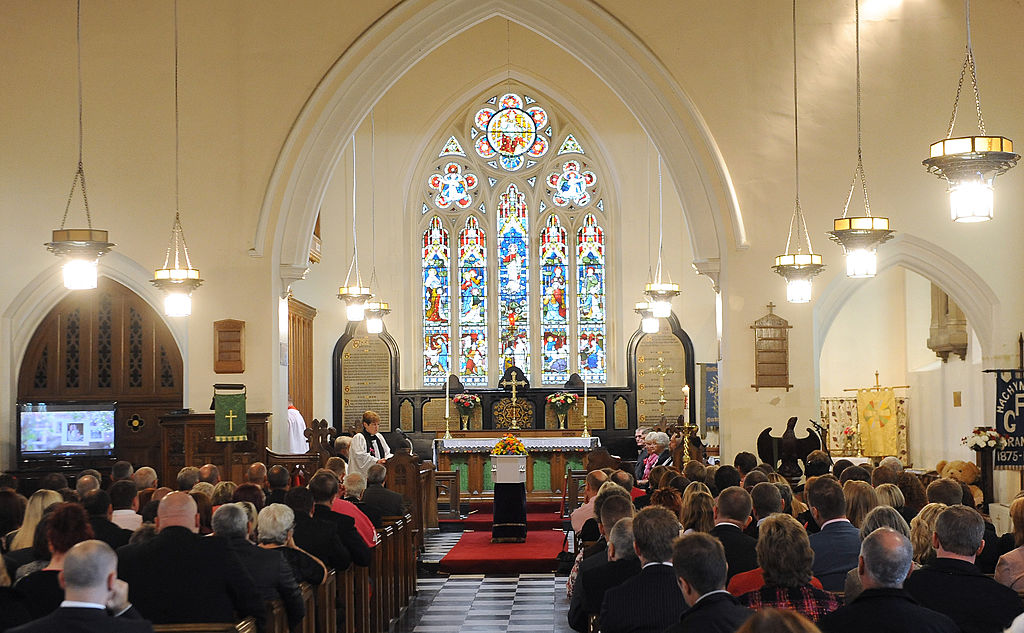
The process of secularization is clearly part of the explanation here. The traditional Christian funeral helped people confront death, emphasizing its inescapability but also giving them comfort and hope by looking forward to the resurrection. By commending the soul of the deceased to God’s mercy, it emphasized the frailty of human life — our moral weakness and need for forgiveness. The ancient rituals set out how we ought to behave and feel during those raw, grim days following the death of a loved one. Many modern people, formed by individualism and religious skepticism, will find this conformist and authoritarian, but equally, it did remove personal pressure by providing a “social script” for managing grief and loss.
Now we are on our own, and we construct new rituals, such as the self-consciously cheerful send-off, with guests instructed to wear bright colors and eschew sadness. But the idea of a “living funeral” seems particularly fraught. For one thing, listening to people pay you the kind of lavish tributes normally reserved for the dead risks engendering a certain self-satisfaction. In the 21st-century West, there is no shortage of people telling us to love ourselves more, go easy on ourselves, and indulge in some self-care. We do not need more opportunities to seek out praise. As King Lear discovered, inviting family and friends to do so raises the prospect of insincerity and flattery.
We also need to be careful not to promote an incomplete understanding of what a life well-lived truly involves. In day-to-day terms, virtue is often illegible to most of our acquaintances. It consists of patience with difficult people and small acts of self-denial, sacrifice and forbearance that our families may not notice, even when they are the beneficiaries. There is a very poignant poem on this theme, “Those Winter Sundays” by Robert Hayden, which speaks memorably of “love’s austere and lonely offices”. The danger of living funerals is that they cement and perpetuate the performative aspect of the good life, the notion that to be a good person we must undertake publicly acceptable deeds, that we can be judged on appearances and signals.
The older approach, with its insistence on the divine perspective and the explicitly leveling liturgy — “We brought nothing into this world, and we can certainly carry nothing out,” as the Book of Common Prayer says — is more humble and more realistic. There is nothing wrong with eulogies per se, and nothing wrong with praise of goodness, but there is an admirable equality in all of us going into the great unknown, accompanied by the same simple words.
