









September 14 2026 - 1:00pm
Attempts to minimize the impact of unwanted election results are not the hallmarks of healthy democracies. Yet this is precisely what the European Union establishment appears eager to do, led by France, where presidential elections next April threaten to leave Emmanuel Macron’s legacy in tatters.
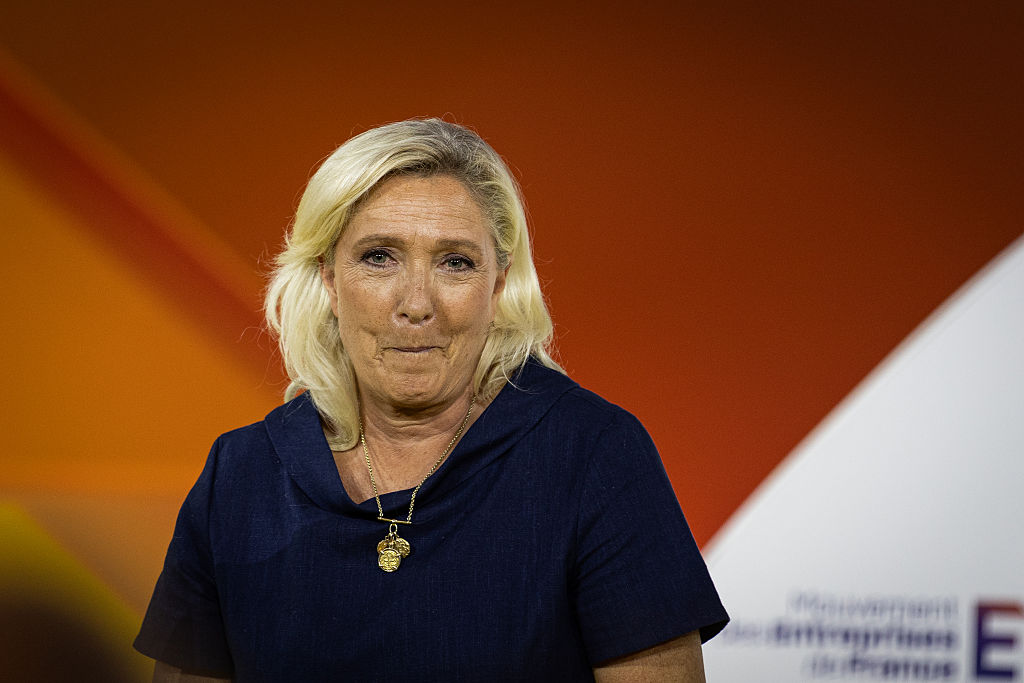
With National Rally leader Marine Le Pen the favorite to win the presidential vote, the Élysée Palace is reportedly urging other governments to help rush EU legislation through by the end of the year. This is an apparent attempt to sideline the wishes of electorates by baking in major EU decisions before the next French administration can influence them.
In the words of one diplomat, there is a perception that “the window for getting things done” in Brussels is closing and that, in the face of the national populist threat in France and elsewhere, “the European project is extremely fragile.”
EU centrists have good reason to be afraid. While some of Le Pen’s more radical positions have been watered down in recent years, true Euroskeptic leadership in one of the bloc’s two linchpin states would profoundly reshape Brussels power dynamics.
In this context, the French focus is on finalizing the EU’s new seven-year budget. While Germany — the bloc’s other economic powerhouse — has spearheaded a group of northern states calling for cuts, Berlin will share France’s urgency following Alternative für Deutschland’s sweeping victory in Saxony-Anhalt’s state election earlier this month. The specter of populist nationalism hangs just as heavily over the glass dome of the Bundestag as it does in the corridors of the Élysée Palace.
With elections also looming next year in Spain, Italy, Poland, Slovakia, Greece, Finland and Estonia, the EU establishment is realizing that the defeat of Viktor Orbán this April may have been a false dawn for EU integration. Urgent calls are now being made for the acceleration of plans to remove states’ veto rights in foreign and defense policy, and a narrow window of opportunity has been spied for further EU enlargement. Yet urgent action has never been the EU’s strong suit, even in the face of what centrists perceive as an existential nationalist threat.
Instead, faced with the irrepressible, hydra-like nature of populist nationalism, centrists have fallen back on a growing fear of elections themselves — a mistrust that they also encourage among voters. Elections are routinely cast by national and EU authorities not as opportunities for voters to express their freely held views, but as grim information battlegrounds creating openings for malign actors to take “our democracy” — as those in power describe it — hostage.
The EU’s “Democracy Shield” unveiled last year emphasizes this threat. A strategy for countering disinformation, its three key pillars — regulating the digital information space, strengthening democratic institutions and independent media, and boosting engagement through “media literacy” initiatives — are noble intentions that may also provide means and methods for discrediting undesired results, while institutionalizing a lack of faith in the ability of ordinary voters to make up their own minds.
Supporters of parties such as the AfD or the National Rally are, meanwhile, othered and vilified as gullible at best or outright treacherous at worst. In the aftermath of the Saxony-Anhalt election, Polish Prime Minister Donald Tusk furiously asserted that “only idiots or traitors” in Poland would celebrate the result. German Chancellor Friedrich Merz responded to defeat not with empathy, but by hurling invective at AfD leader Alice Weidel during a bitter war of words in parliament.
Faced with voters they no longer understand, establishment parties console themselves that it is in fact the electorate that has lost touch with reality, that the warping of the democratic process in the digital space makes elections themselves a threat to democracy. French attempts to expedite EU legislation are motivated by this same dread, and they reveal a fallback strategy. If establishment parties can’t stop an explosive nationalist shift in 2027, they can at least limit its fallout.