







 Prefer us on Google

May 10 2026 - 8:00am
Labour has been plunged into an existential crisis as the results from this week’s local elections roll in, with Keir Starmer’s leadership increasingly under scrutiny. The results in Birmingham, in particular, suggest that it is not only provincial voters abandoning the party in droves, but that major cities, too, are beginning to turn their backs on the government.
It is true that Labour had been expected to suffer great losses, but some polling had been off the mark. One poll exaggerated Reform UK’s popularity in the city, as well as underestimating the performance of the Green Party and the Liberal Democrats, exposing the limitations of small-scale samples for a specific city or town in an era of considerable voter volatility.
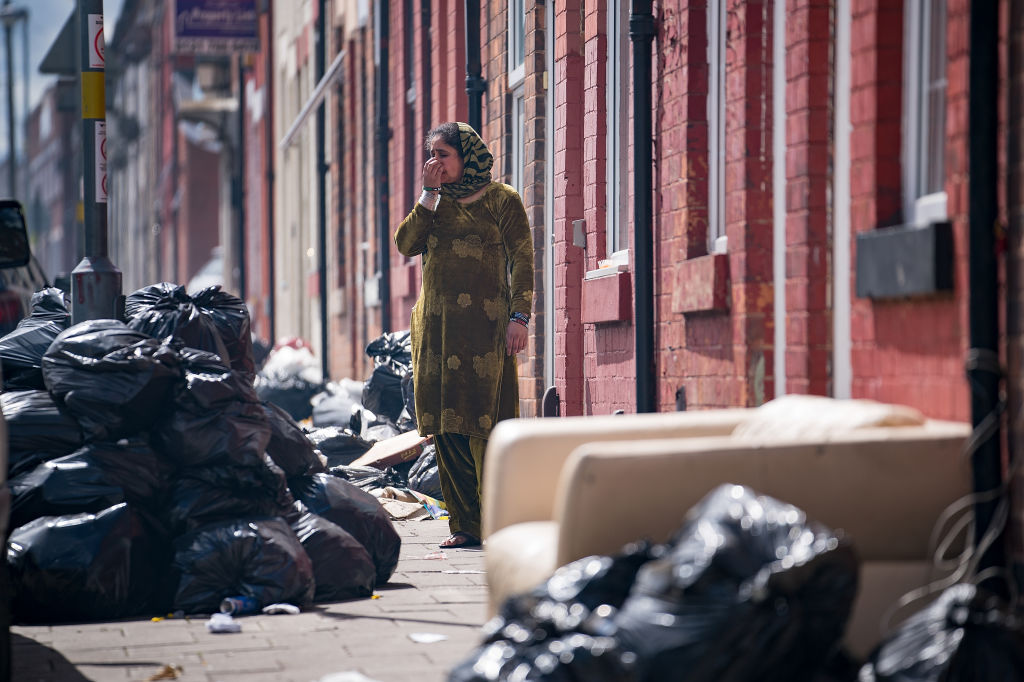
The actual result for Labour was still disastrous as Birmingham City Council slipped from the party’s control after it lost 46 councillors. As a result, the local authority has been left under no overall control. The reality is that Birmingham, once a jewel of the Industrial Revolution and a flagship of local democratic governance, has been driven into decline under 14 years of Labour rule. The party’s tenure was marked by soaring council tax, effective bankruptcy and bin strikes that left streets buried beneath piles of rubbish. It is no exaggeration to say the city now appears on the brink of failure.
While the 2024 Social Mobility Commission’s “State of the Nation” report considered Birmingham to be “middle-ranked” in terms of growth and innovation, it considered conditions for childhood in the city to be “unfavorable”, painting a dire picture of the city’s prospects for future generations. It also placed it in the least favorable group when it came to employment opportunities for young people, joining the likes of Middlesbrough, Stockton-on-Tees, and Redcar & Cleveland.
Birmingham’s local Labour Party has often blamed cuts made by central governments under the Conservatives, but there are also clear cases of economic and financial mismanagement. For example, the Labour-controlled council’s miscalculation on equal pay liability — where female staff such as teaching assistants and care workers claimed to be underpaid — exposed the sheer degree of mismanagement and incompetence, putting itself at loggerheads with major trade unions such as GMB and Unison.
This also undermined Labour’s reputation for managing industrial relations effectively. Total payouts are expected to exceed £250 million. On top of this, there was an £80 million overspend on the disastrous Oracle IT project, which was designed to streamline payments and HR processes. Labour in Birmingham also sought to diversify the city’s economy by focusing on services, retail, and tourism, which are areas where London is already very much at a major advantage.
But the bigger issues facing Labour in Birmingham are political. Labour has essentially been swept aside by the rising anti-establishment tides of Right-wing populism in the shape of Reform UK on the one side and Left-wing populism in the form of the Green Party on the other. Meanwhile, an emergent “Islamo-populism” represented by the Independent Candidate Alliance (ICA) has also proved to challenge Starmer’s party. These changes have torn apart the party’s key constituencies.
The result is that Birmingham City Council is becoming highly fragmented in terms of party composition, with Reform UK and the Greens making considerable gains. At the same time, the ICA — spearheaded by Akhmed Yakoob and Shakeel Afsar — has made its mark in England’s second-largest city, emerging victorious in Muslim-concentrated wards such as Alum Rock and Bordesley Green. On top of that, the Liberal Democrats remain a notable presence in their own right.
Following Birmingham’s cross-ideological revolt against Labour, the question now is whether the city’s deeply fragmented council can govern in the interests of a city with a proud history but an increasingly uncertain future. While voters from across Birmingham’s social and political spectrum may relish having delivered Labour a heavy electoral blow, it remains unclear whether the result will translate into meaningful renewal as the city enters uncharted political territory.
