









April 8 2026 - 6:00pm
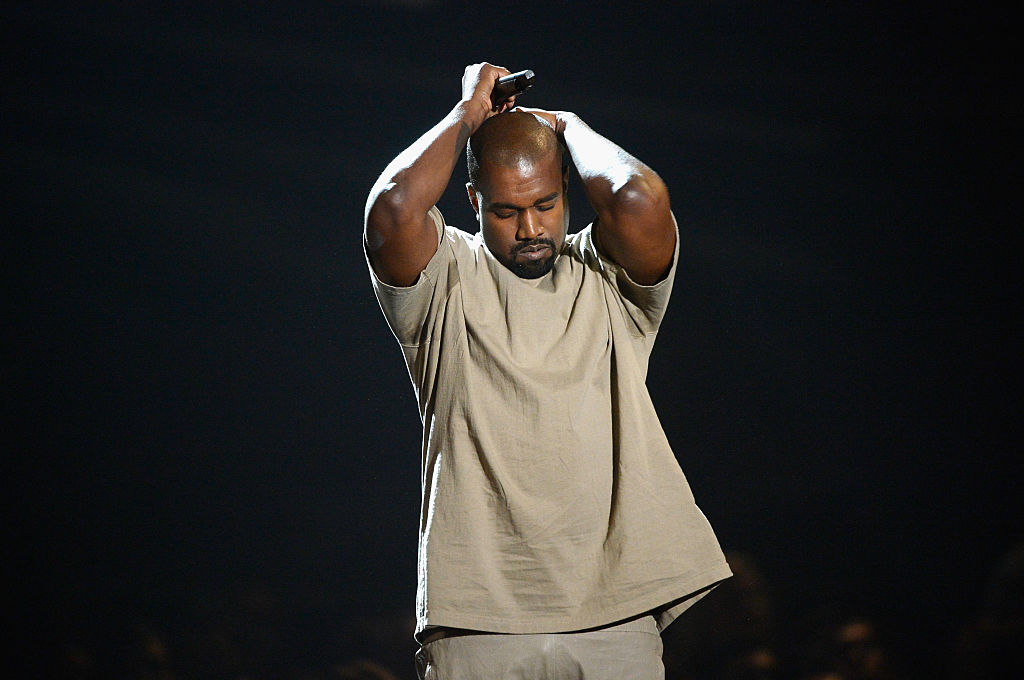
When Kanye West was announced as Wireless Festival’s headline act, social media fractured into familiar camps. Should he be allowed to perform at the event? Should he even be allowed into the country, given his long and well-documented history of antisemitic remarks?
Major sponsors including Pepsi, PayPal and Diageo withdrew, while Prime Minister Keir Starmer criticized the booking. The Home Office then acted, blocking West from traveling to the UK on the grounds that his presence would not be “conducive to the public good”. As a result, the festival has been canceled.
West’s record on antisemitism is a pattern of behavior rather than a singular lapse, and the state carries a responsibility to uphold basic standards in public life. This principle has been applied before, in cases such as Islamic hate preachers Abdullah al-Faisal and Zakir Naik — figures judged to have a demonstrable influence over vulnerable audiences. Yet this decision raises a deeper question about what liberalism now permits, and what it no longer can. The liberal state, whose role was once as a neutral arbiter of rules, is now enforcing moral legitimacy.
It is reasonable for the state to recognize that certain individuals carry greater cultural weight, and to treat their offending speech as a more significant threat to civilizational harmony. Yet the revocation of West’s visa goes beyond the basic enforcement of rules and into the territory of moral judgment.
Traditionally, liberal governance has justified intervention in response to direct and measurable harm, such as physical violence or speech that clearly incites it. This framework presents itself as relatively neutral, concerned with actions rather than beliefs. What we are seeing here is something different.
West has not been excluded for what he is about to do — perform at a music festival — but for what he represents. While he has apologized for his past remarks and offered to meet with the Jewish community in the UK, this decision rests on a different logic. It is a response to moral harm rather than material harm. West, in this telling, stands directly in opposition to British values.
This category is inherently expansive and contested. After all, who gets to decide what — and who — is admissible within the public square? Liberalism has long assumed such questions are best mediated through the marketplace of ideas. Yet the Wireless decision suggests that, at certain points, the state is willing to settle them itself.
When a society cannot sustain its own moral boundaries, it delegates them to power. The instinct behind the ban is understandable. It may even be an inevitable consequence of an increasingly pluralistic Britain that lacks a shared moral language, as institutions such as the family, church and local community have thinned, and techno-liberal conditions have enabled individuals to construct personalized moral worlds. The result is a society in which shared language persists, but shared meaning does not. This comes at a cost. The greater the reliance on state power to adjudicate moral questions, the further liberalism moves from its procedural roots.
The case of Kanye West and the cancellation of Wireless raises a troubling question: was liberal neutrality always an illusion? A society that cannot say “this is wrong” on its own terms will eventually ask the state to say it instead.
