









September 28 2026 - 3:45pm
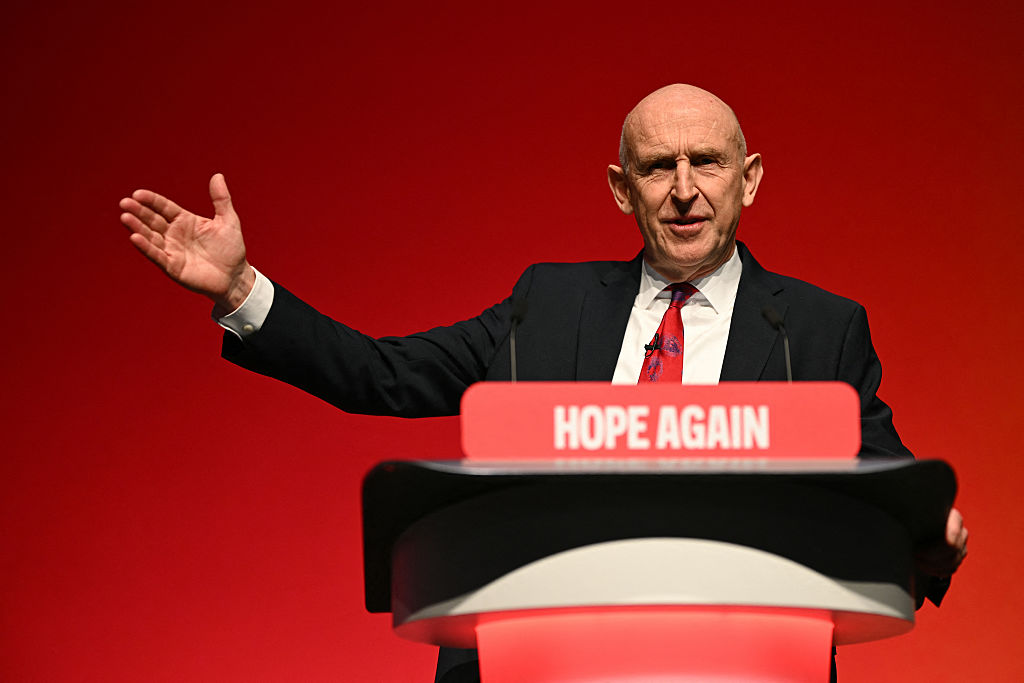
At this year’s Labour Conference, the word “hope” is everywhere. Andy Burnham has said that it is “time for Britain to have hope again”, while Education Secretary Lucy Powell has said her department should be the “Department for Hope”. And in his conference speech today, Chancellor John Healey claimed that he wanted to build a “country that will hope again”. But with constraints on Britain’s fiscal headroom growing and gilt markets spiraling, what vision of “hope” can Healey and Labour actually offer?
The Chancellor was at pains to stress that Britain must break with the past. He ruled out a return of the country’s coal mines and warned that the public investment of the New Labour era would not be coming back either. He instead pledged to pursue his own version of reindustrialization, dubbed a “New Age of Industrialization”, though the details remain fuzzy.
And that is the problem with Healey’s vision. He wants to look forward, but his speech offered little sense of what Britain is actually looking forward to. Indeed, almost everything Healey proposed felt like a continuation of his predecessor’s work. At the heart of Rachel Reeves’s strategy was the concept of the “stability premium”: do not rock the boat and hope investment will flow to Britain in an unstable world. Healey’s strategy appears to be a more optimistic version of the same approach, combining Reeves’s economic incrementalism with Boris Johnson-style boosterism.
None of Healey’s announcements amount to the large-scale reindustrialization he promised. The Chancellor pledged £6 billion for three new floating docks to be built in Britain, part of a previously announced £15 billion defense investment. He also announced funding for apprenticeships, a £210 million High Streets fund and the return of Help to Buy for first-time buyers. These are incremental adjustments to policies that were already in the works. The impression, then, is that Labour is still hedging its bets, offering a glimpse of what October’s autumn Budget may hold: another exercise in buying time.
But will the public have the patience to go along with Labour’s plan to kick the can down the road? Under Reeves, unemployment rose, industrial decline continued, and growth remained weak. Healey is hoping that the global economy will give him better conditions for success, but that feels unlikely given the continuation of the Iran war.
Starmer and Reeves were committed to a “Ming Vase Strategy”, centered on creating the impression of change while offering as little detail as possible. This is how Whitehall, and the Treasury in particular, likes to govern. Healey’s conference speech appears to follow a similar strategy: it uses different rhetoric and a different style, but ultimately draws on the same Reeves approach. Healey is gambling that continuity is, ultimately, the best that Britain can hope for. It is difficult to imagine the public agreeing.
Andrew O’Brien is the former Director of Policy at the think tank Demos and currently Head of Secretariat of the Independent Commission on Neighbourhoods. He writes in a personal capacity.
 ADOBrien88