









June 18 2026 - 6:30pm
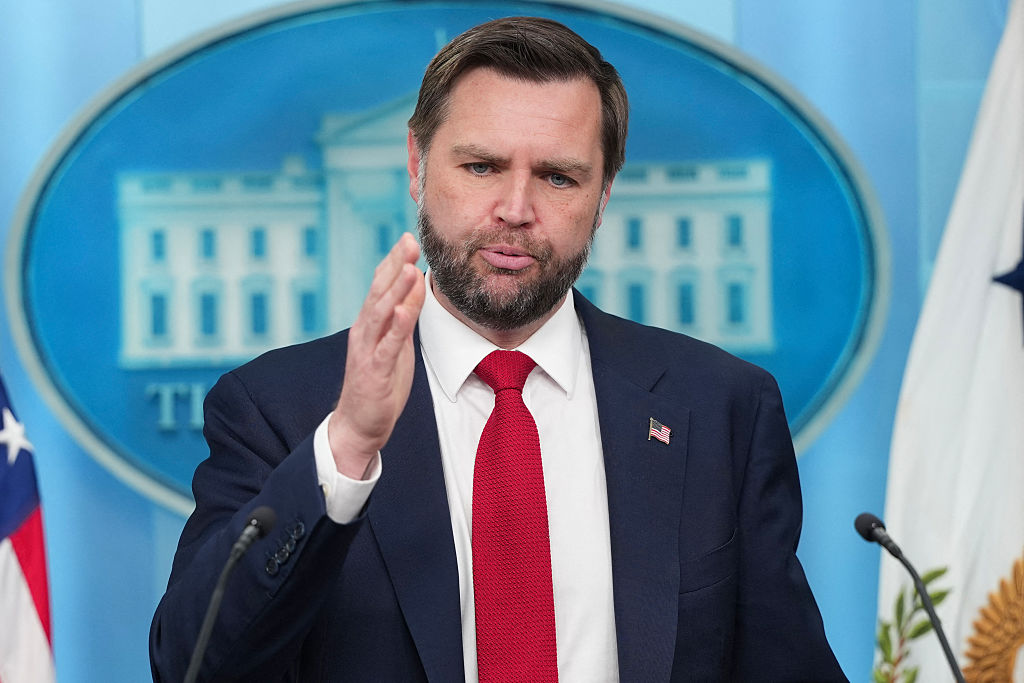
US Vice President JD Vance has said the Israeli reaction to the emerging US–Iran deal is being driven in part by “misinformation” about its terms.
In an interview with New York Times columnist Ross Douthat, Vance defended the agreement as a pragmatic response to shifting regional conditions, and said opposition within Israel is coming from an incomplete reading of the framework.
“Large segments of the Israeli political system and population are very sensitive about this deal,” Vance said. “But I also think they’re picking up on some misinformation about the deal and running with it and sort of panicking about it.”
Earlier today, Vance went further, warning Israel: “If I was in the cabinet of the Israeli government, I might not be attacking the only powerful ally that I have left anywhere in the entire world,” he said. “Bibi, to his credit, has not gone down this path.”
His comments come as US President Donald Trump formally signed a memorandum of understanding in Versailles, France last night. It set out a 60-day ceasefire window, intended to allow time for further negotiations on a comprehensive settlement. The framework includes commitments to ensure the full reopening of the Strait of Hormuz to commercial shipping, as well as the termination of military operations on all fronts, including Lebanon. The agreement also states that Iran will not develop nuclear weapons and outlines a mechanism for addressing Iran’s stockpile of enriched uranium under International Atomic Energy Agency (IAEA) supervision.
The memorandum allows for potential economic provisions, including the possibility of a large-scale reconstruction and development fund for Iran, and a phased process for lifting US sanctions if a final deal is reached. The US, meanwhile, would begin easing certain restrictions on Iranian oil exports and financial transactions during the interim period.
The deal is not legally binding and both sides retain the right to withdraw before a final agreement is reached. US officials have stressed that implementation will be closely monitored and that sanctions relief is conditional on verified compliance.
In Israel, the reaction to the agreement has swung from surprise to outright anger. “It’s a bad agreement in which the Americans are paying with cash, and got, at the maximum, a letter of intent,” said Yaakov Amidror, a former national security adviser to Israeli Prime Minister Benjamin Netanyahu. Elsewhere, Times of Israel editor David Horovitz described it as a “catastrophic capitulation”, while one primetime TV host called the Vice President a “scumbag”. Netanyahu and other senior officials in his government are yet to comment on the agreement.
In his interview, Vance argued that the agreement represents a more favorable position for the US compared with earlier frameworks, including the 2015 nuclear accord negotiated under the Obama administration. He said Iran is now operating from a position of “greater weakness” following sustained military pressure and economic strain.
He also emphasized that any economic benefits for Tehran, including potential access to international investment or frozen assets, would be contingent on behavioral change and verification of compliance. “If Iran actually does all the things that they’re telling you,” Vance said, “that would be a home run deal.”
Pushing back on concerns that Iran could exploit the agreement to rebuild capabilities or finance regional proxies, Vance claimed that the US retains sufficient leverage through sanctions and enforcement mechanisms.
“I fundamentally believe this deal will be good for the entire region and for the world,” he said. “That includes, of course, the Israelis.”
