









May 7 2026 - 6:30pm
Problems are mounting for Argentine President Javier Milei. His cabinet chief, Manuel Adorni, has been accused of illegal enrichment after investigators made skeptical comparisons between Adorni’s modest salary and his private jet flights and elaborate home renovations. Milei’s subsequent vociferous defense of his subordinate reflects an anxiety to maintain the image of an anti-corruption crusader to which he owes his office.
The President can brag about having pulled inflation down from over 200% annually to a still dire 30% last year — an impressive feat, though impossible without help from Donald Trump and the International Monetary Fund. But it has been creeping back upwards for half a year now, and Milei’s approval rating fell by 12 points in April alone.
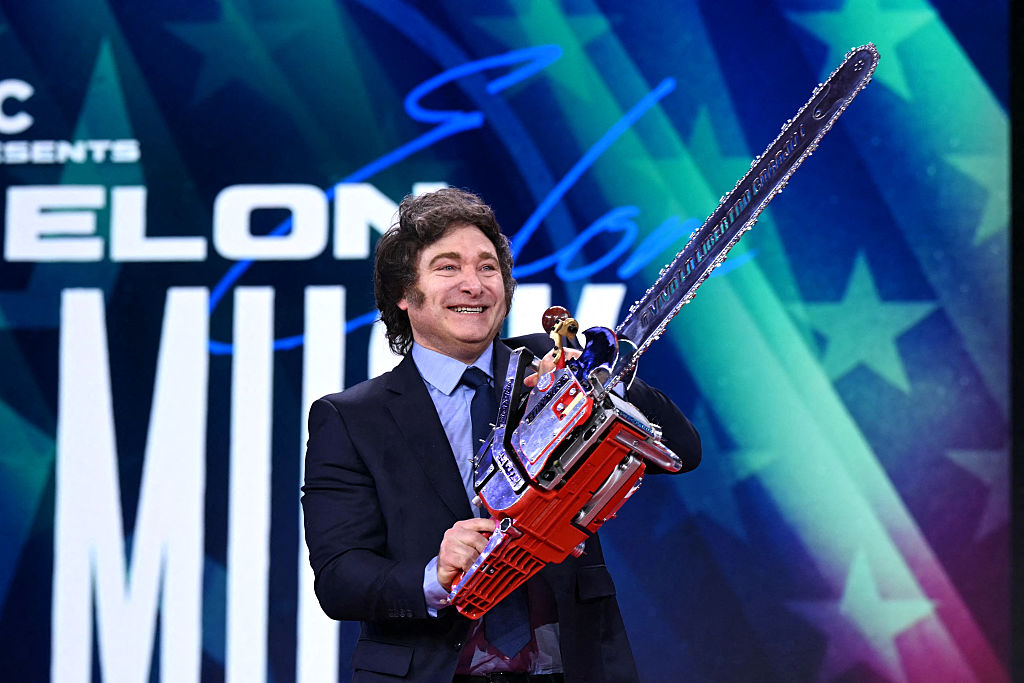
No one thought Argentina would be fixed in a day. Milei himself warned in his inaugural address that there was “no alternative” to deep, painful cuts to public services. But Argentinians don’t want to suffer indefinitely, especially when it is unclear whether a reward is really waiting. The riesgo kuka — which one could translate, not all that loosely, as “shitlib risk premium” — is how Argentine traders and pundits refer to the real possibility that the opposition comes back to power. This new government may then take apart Milei’s chainsaw and reinstate all the policies that put Argentina in the global financial doghouse.
Part of the problem is that much of the country’s real economy is suffering from Milei’s inflation-fighting policies. High interest rates and more imports are hurting the sectors that employ most people, and without much in the way of investment — with financiers fearing the riesgo kuka — Argentine employers are using the greater agility afforded them by a new labor reform to fire workers. For now, a good harvest for agribusiness and a boom in mining and energy have kept the economy from going into crisis mode. This is especially evident in a natural gas pipeline — a convenient thing to have, what with the Strait of Hormuz being shut — built by Milei’s Left-wing predecessor.
Still, Milei has proven his critics wrong before, as happened with his surprise midterm victory last year. Insiders say that if he can keep inflation steady, even without big improvements in the wider economy, he stands a decent chance for re-election next year. After all, he faces a Perónist opposition still in considerable disarray. That said, his government will still need to roll over a large tranche of national debt due next year. Luckily, he is surrounded by Wall Street veterans, and selling bonds is one thing they’re very good at.
What about the broader influence of his government-slashing enthusiasm? Second only to El Salvador’s Nayib Bukele in the realm of Right-of-center Latin American political charisma, Milei’s chainsaw-wielding energy helped inspire the adoption of incentives such as DOGE in the US. Have his recent difficulties dulled the luster of his brand of Right-wing politics?
The Right is certainly doing well across the region. In Brazil, Flávio Bolsonaro, son of former president Jair Bolsonaro and a Milei ally, is tied in some polls with incumbent Leftist Luiz Inácio Lula da Silva. And in Chile, conservative José Antonio Kast recently replaced a young Leftist, Gabriel Boric, in the presidency.
But Milei-style libertarianism has always had a fairly narrow audience in Latin America. The reasons for its success in Argentina are fairly specific to the country. There is widespread disgust not only for the Left but also for a center right viewed as unable to cut through the country’s unique Gordian knot of capital controls, currency controls and generally dysfunctional regulation.
Elsewhere, anti-state thinking has struggled to prosper. Free-market-inclined economist Paulo Guedes had far less influence over the Bolsonaro administration than many Brazilian financiers had hoped. That Right-wing government finished out its days by supercharging welfare payments in hopes that recipients would vote Bolsonaro in for another term.
Or consider the response Chile’s new president Kast received when he opened his administration with an impeccably anti-statist gesture by dropping state subsidies on fuel, which had become a drain on the public treasury after international prices spiked in the wake of the US’s war in Iran. Marchers took to the streets, and Kast’s approval rating immediately dropped 14 points. Everyone’s a free-marketeer until they have to fill up their car.
Nick Burns is associate editor at The Hedgehog Review and was previously editor at Americas Quarterly.
 NickBurns