









November 30 2025 - 6:00pm
Have Japan and China entered a cultural cold war? Last week, a Japanese jazz musician, Yoshio Suzuki, was visited by plain-clothes policemen in Beijing during a sound check for upcoming performances, to be told that the gigs were off. A Japanese “anime singer” was allegedly hauled off stage mid-song this week in Shanghai. And most prominently of all, Ayumi Hamasaki (a sort of Japanese Madonna) had her comeback concert in the same city canceled, a move the promoter blamed on “force majeure”, which can be interpreted as meaning the Chinese authorities ordered it.
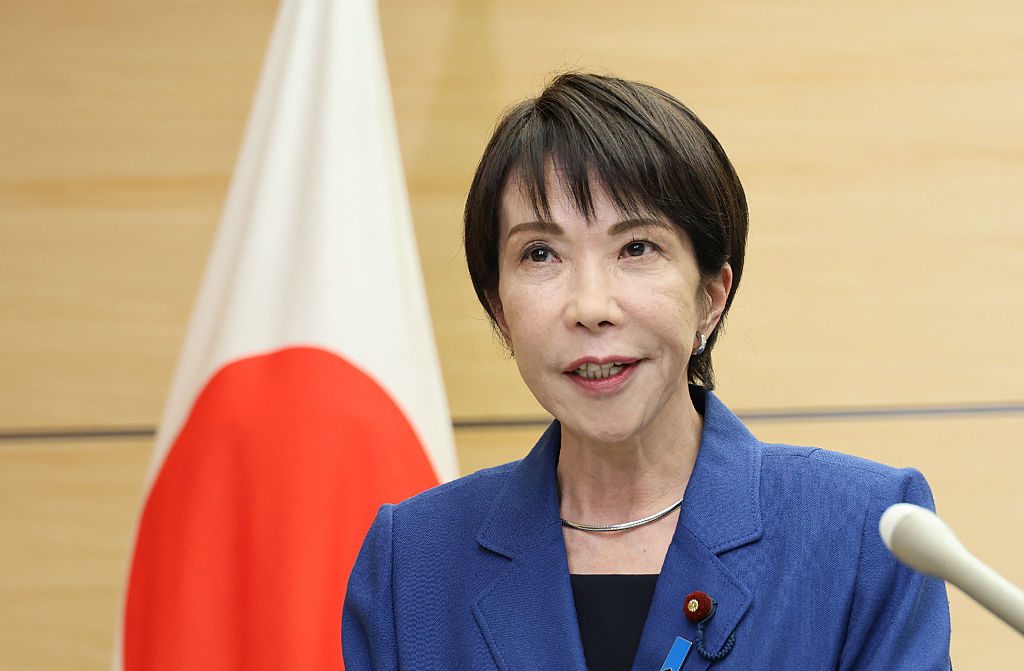
In total, about a dozen concerts featuring Japanese artists have been canceled as tensions rise between the two Asian powers. The reason for the feud? Bullish remarks by newly installed Japanese Prime Minister Sanae Takaichi regarding Taiwan, which China considers its sovereign territory. So bullish, in fact, that US President Donald Trump earlier this week urged her to “lower the volume”. The call came after Xi Jinping had contacted Trump to complain about Takaichi’s comments and reassert China’s claims to sovereignty over Taiwan.
Takaichi told the Diet earlier this month that a Chinese attack on Taiwan would be regarded as a situation “which threatened Japan’s survival”. She then spoke of a “worst-case scenario” having to be assumed, which has been interpreted as a clear signal that Japan would retaliate militarily in such an eventuality.
Beijing was incensed by this and things got nasty quickly. There was a sharp rebuke from Foreign Minister Wang Yi and the Consul-General in Osaka, Xue Jian, responded to Takaichi’s remarks with a social media post which said that “the intruding dirty neck must be cut off without a moment’s hesitation.” Vice Foreign Minister Funakoshi Takehiro summoned China’s ambassador to lodge a formal protest, while other members of the Japanese government and opposition parties have called for Jian to be deported. The post was subsequently deleted.
The Chinese government also issued a travel advisory cautioning visitors to Japan. This led to flight cancelations which prompted Chinese travelers to cancel their Japanese holidays en masse. The result is a bizarre situation in which five-star hotels in Kyoto, the jewel in Japan’s cultural crown, are desperately offering significantly discounted last-minute deals for their luxury accommodation.
What this incident has emphasized is how easily China is provoked by Japan and the bitterness of the relationship. China’s response should be viewed through a long historical lens. There is a mood of deep resentment in China over historical episodes such as Manchuria and Nanking. As former diplomat and China expert Kerry Brown put it: the Chinese never forget and the Japanese, the Chinese believe, too often fail to remember. President Xi Jinping has visited 70 countries in his time as leader but never been to Japan.
Why did Takaichi do it? The simplest explanation would be a diplomatic misstep from a novice leader who hadn’t quite found her feet. Perhaps it was an expression of over-confidence after being buoyed by Trump’s successful visit. Moreover, Takaichi has a track record of being outspoken and occasionally incautious, so it wasn’t entirely out of character.
On the other hand, perhaps she was taking a calculated gamble. Despite the general condemnation from the media, a few canceled concerts and some lost hotel revenue, the people don’t seem to have minded a cold, hard, and bold truth from their leader. After decades of weak, uncharismatic and ineffectual leaders, defensive diplomacy and reliance on the US’s “strategic ambiguity”, a bit of bluntness and confidence seems to have been welcomed. One opinion poll has Takaichi’s government’s approval rate at 71% overall with 56% supporting her stance on China and just 29%.
Regardless of the motivation and the consequences, what should not be forgotten is that what Takaichi said was basically true: a Chinese invasion of Taiwan would be disastrous for Japan. Vital electronic and car parts are imported from Taiwan and nearly 90% of Japan’s crude oil imports pass through the South China Sea. And since over 90% of the world’s semiconductors are produced in Taiwan, it would not just be a calamity for Japan but for the wider world.
Perhaps Takaichi simply felt the time was right for these truths to be told.
