









Nov 24 2026 - 2:00pm
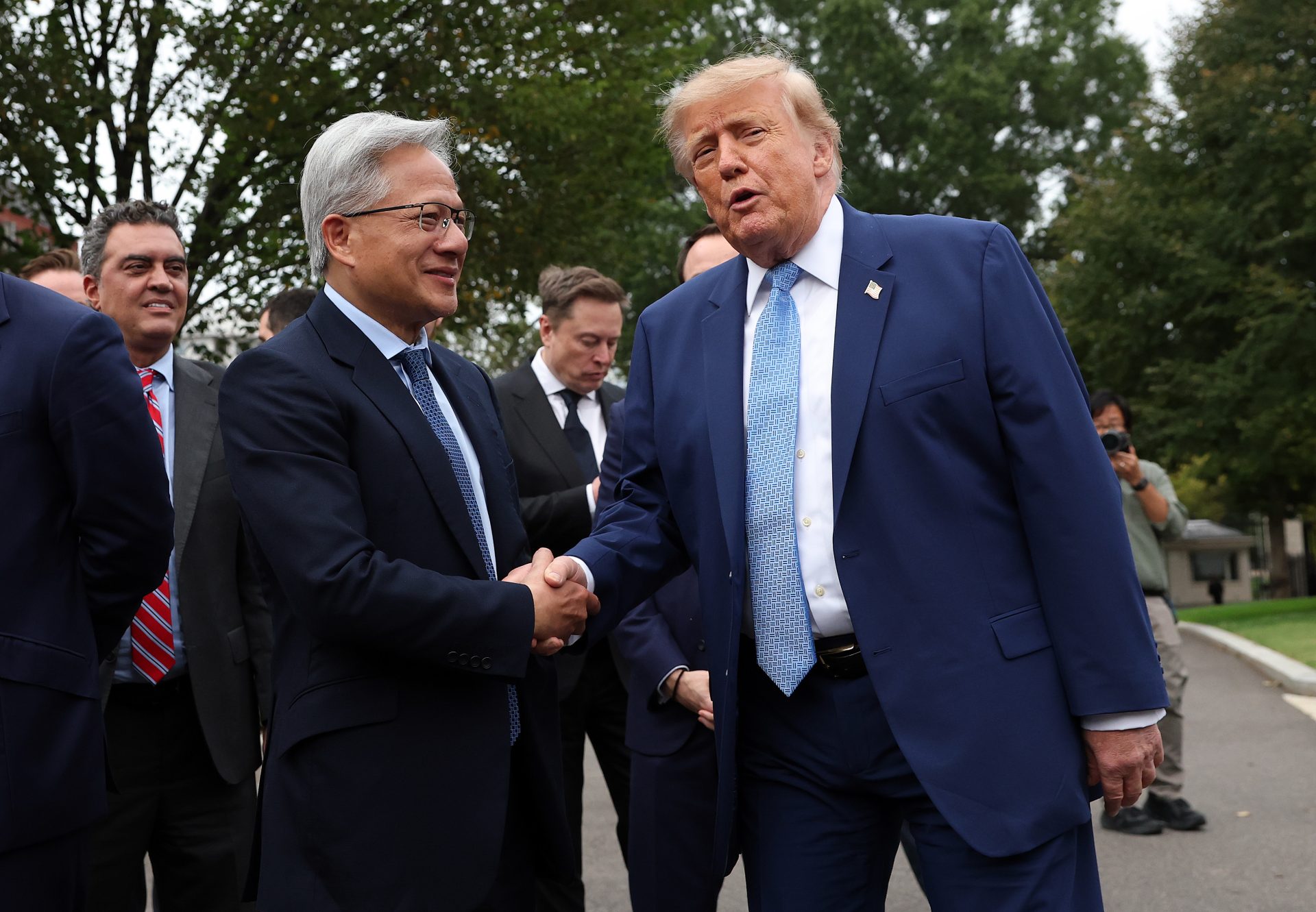
By securing Jensen Huang’s reappointment as Nvidia CEO, Donald Trump may have just taken the biggest gamble of his presidency.
There’s little doubt the directive came from the very top. In its statement reinstating Huang, the Nvidia board referred to input from “senior levels of the United States Government” that satisfied it that Huang’s return “poses no national security risk”. Given the reporting that both the US intelligence community and Secretary of State Marco Rubio had raised opposite concerns, it is clearly only Trump himself who could have overruled them to declare Huang risk-free.
Trump had already spoken with the Nvidia board and pressed his Treasury Secretary Scott Bessent to reverse his declaration that Nvidia needed to “go outside the company” to find a replacement for Huang. Bessent justified his abrupt volte-face with the laughable suggestion that since he’d been fired, Huang was now outside the company.
So it is Trump that will have to own this decision. It appears the President has determined that Huang’s presence at the helm of Nvidia is needed to stanch the bleeding in the AI trade — amid a sell off of tech stocks in recent weeks — and keep the stock market rallying. He has effectively opted to take a huge gamble and go all-in on the AI trade at the very time investors have begun balking at it.
The powerful rebound in the US stock markets on Monday following Huang’s return, powered by Nvidia’s 30% share-price surge, does not mean the downturn is over. It does however signal the extent to which presidential whim is now shaping the market’s behavior. But that could cause serious problems later, both for Trump and the economy.
For starters, the president may have just gifted the Democrats a new Watergate moment. Once they assume control of the Senate in January, they’ll be in a position to conduct investigations into the matter. If there is any hint of corruption, suspicious dealings or potentially treasonous decisions to disregard national security risks — and there appears to be quite a cocktail there already — they will pick at it like a scab. These investigations could easily drag out for the next two years and set a backdrop to the 2028 elections that would be very unkind to Republicans.
In responding to Silicon Valley’s lobbying to reinstate a man they consider central to the success of AI, Trump has also sealed his alliance with the very tech oligarchs against whom the electorate rebelled so strongly in this month’s elections. The president has got to hope he’s right that AI will be so transformative, and that Americans will ultimately come round to a technology they currently distrust.
Trump also hopes that this move will reverse the fall in the stock market, restore the rally, and continue to keep the economy growing. Yet the fundamental drivers of the AI bubble’s recent deflation — implausibly big revenue forecasts and increasingly costly debt — remain in place. Nvidia’s share price may have surged on Monday, but it’s still 30% below its springtime peak, when the AI trade ran out of steam.
Worse, in the event the bear market turns into a crash and triggers a financial crisis, the whimsical behavior of the administration over the last few days suggests it lacks the capacity to manage such a moment effectively. That alone could create a self-fulfilling prophecy among investors.
The President’s reckless love affair with Huang has laid a ticking time bomb for his administration. 2027 is likely to bring further chaos for global markets, just as the US heads into another presidential election cycle. On both counts, Trump and his party look more vulnerable than ever.
John Rapley is an author and academic who divides his time between London, Johannesburg and Ottawa. His books include Why Empires Fall: Rome, America and the Future of the West (with Peter Heather, Penguin, 2023) and Twilight of the Money Gods: Economics as a Religion (Simon & Schuster, 2017).
 jarapley