









Nov 20 2026 - 6:00pm
In the 1973 film The Holy Mountain, a character known as The Alchemist, played by writer-director Alejandro Jodorowsky, assembles seven powerful and wealthy figures who symbolize materialistic society. As they sit around a circular table with a fire roaring in the middle, he instructs them to burn their money. It is only by doing so that they can purify themselves and discover the secret of immortality.
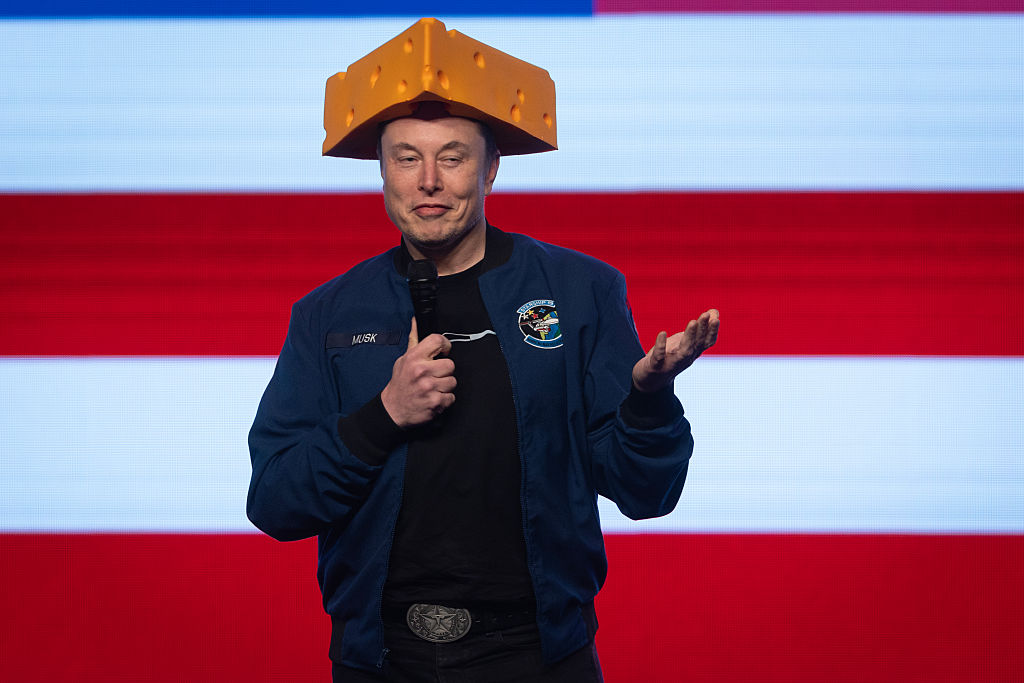
Unfortunately for Elon Musk, when he incinerated close to half a billion dollars during the recent midterm elections, he did not attain any kind of esoteric wisdom. Instead, as he told Andrew Ross Sorkin at the New York Times DealBook Summit this week, he was left feeling “rather foolish” after spending so much money and “not seeing much for it”. Indeed, the candidate who received the largest share of Musk’s political donations, Texas Republican Ken Paxton, lost by 12 percentage points to his opponent James Talarico. According to Musk, the lesson was simple: “It certainly shows that American elections are not just about money.”
Talarico himself made a similar point in his victory speech: “We just proved that all the money in the world is no match for the people of Texas.” And yet it’s not exactly true. Talarico also spent immense sums of money, and his campaign was likewise the recipient of billionaire largesse, receiving millions from Michael Bloomberg and LinkedIn co-founder Reid Hoffman. So perhaps the actual lesson Musk should take away from the experience is one that he already knows from business, which is that all the marketing dollars in the world won’t sell a shitty product, which is about the kindest way one could describe the scandal-plagued Paxton.
While Musk was burning his money, another tech oligarch was getting a very good return on his investment in politics. Google co-founder Sergey Brin donated $132 million to the campaign opposing Proposition 40 in California, which would have imposed a “one-time” 5% wealth tax on billionaires. Had the measure passed, Brin might have been on the hook for $13 billion — though he relocated to Nevada, just in case. With 53% of voters rejecting the legislation, his money is safe in California.
And then there is Michael Dell, who with his wife Susan has pledged $6.25 billion to the administration’s “Trump Accounts”. Under the program, the US Treasury seeds $1,000 each in investment funds for children born between 2025 and 2028. Dell’s gift adds $250 each for a further 25 million children born before 2025 living in zip codes with a median family income of $117,300 or less. He has been sharing thank you notes from children, clearly moved by the experience. But he was also able to get close to the administration without becoming a hate object for Democrats.
Musk has said if he could turn the clock back, he would probably not spend as much money. He has been here before: in April 2025, after spending $25 million backing a conservative judge for the Wisconsin Supreme Court who lost by 10 points, he briefly stepped away from politics.
Still, there is something existential about this for Musk, in a way that does not apply to other billionaires. Before the midterms, journalist Kara Swisher suggested that if Kamala Harris had won the 2024 presidential election the Tesla boss would be in prison, while prominent Democratic politicians are lining up to subpoena him. Despite Musk’s recent emollient remarks about the state’s Democratic governor-elect Gina Hinojosa, the party’s leader in the Texas House has floated the possibility of prosecuting him for possible “crimes against the United States”. With his back against the wall, Musk may find himself once again reaching for his checkbook. And he has lots more money to burn, should it come to that.
Daniel Kalder is an author based in Texas. Previously, he spent ten years living in the former Soviet bloc. His latest book, Dictator Literature, is published by Oneworld. He also writes on Substack: Thus Spake Daniel Kalder.
 DanielKalder