








December 17 2025 - 5:30pm
Two surveys published this month appear to point in opposite directions. At the start of December, polling from the Manhattan Institute analyzing Republican voters found that aging establishment conservatives, once the base of the GOP, are losing their grip on the party of Donald Trump. On the flip side, NBC released a poll on Sunday showing a steady decline in Republicans who consider themselves to be a part of the MAGA movement. According to the poll, the split between MAGA and traditional Republicans is exactly 50:50.
The lesson is clear: without each other, neither the populist Right nor the legacy conservative movement can hope to win and hold office.
The MI survey divides the “current GOP” into two groups. These are “Core Republicans”, with a 65% majority; and “New Entrant Republicans”, first-time Republican voters who make up 29% of today’s GOP coalition. These voters are “drawn to Trump but are not reliably attached to the Republican Party”, and many of them are former Democrats who have changed course for reasons ranging from the economy and immigration to DEI and Covid-era vaccination policies.
Crucially, a major divide exists between these groups on the economy: old-fashioned core Republicans still favor reducing the federal deficit by cutting spending rather than raising taxes, by 71% to 26%. But illustrating the divide between the old upscale country-club Right and the new downscale Sam’s Club Right, the new entrant Republicans — many of them working-class voters dependent on Social Security and Medicare — favor increasing taxes over cutting spending by 48-47%.
Even more ominous for the political future of legacy upper-crust Republicanism is the generational gap in the GOP that the survey reveals on social issues. While a majority of Republican voters aged over 50 favor fighting for “traditional values” as defined by the Reagan-Bush coalition a quarter of a century ago, 19% of today’s Republican voters under 50 favor progressive positions on issues such as abortion and homosexuality.
Meanwhile, according to the NBC poll, voters on the Right who identify more with the MAGA label than with the Republican Party are evenly matched with those who view themselves primarily as supporters of the GOP rather than Trump’s movement. But the slight decline from April to October in self-identified MAGA-firsters likely represents disillusionment with the President more than a revival of pre-Trump conservatism.
Successful American national parties are coalitions of different factions which collaborate to gain power, not dogmatic ideological sects. The diversity of the new Republican Party created by the influx of new voters can be a strength — but only if capable leaders can hold the alliance together. The good news for the GOP is that there are a number of possible candidates in 2028 — including JD Vance, Marco Rubio and Ron DeSantis — who might be able to unite the party’s squabbling factions better than the undisciplined and egotistical Trump.
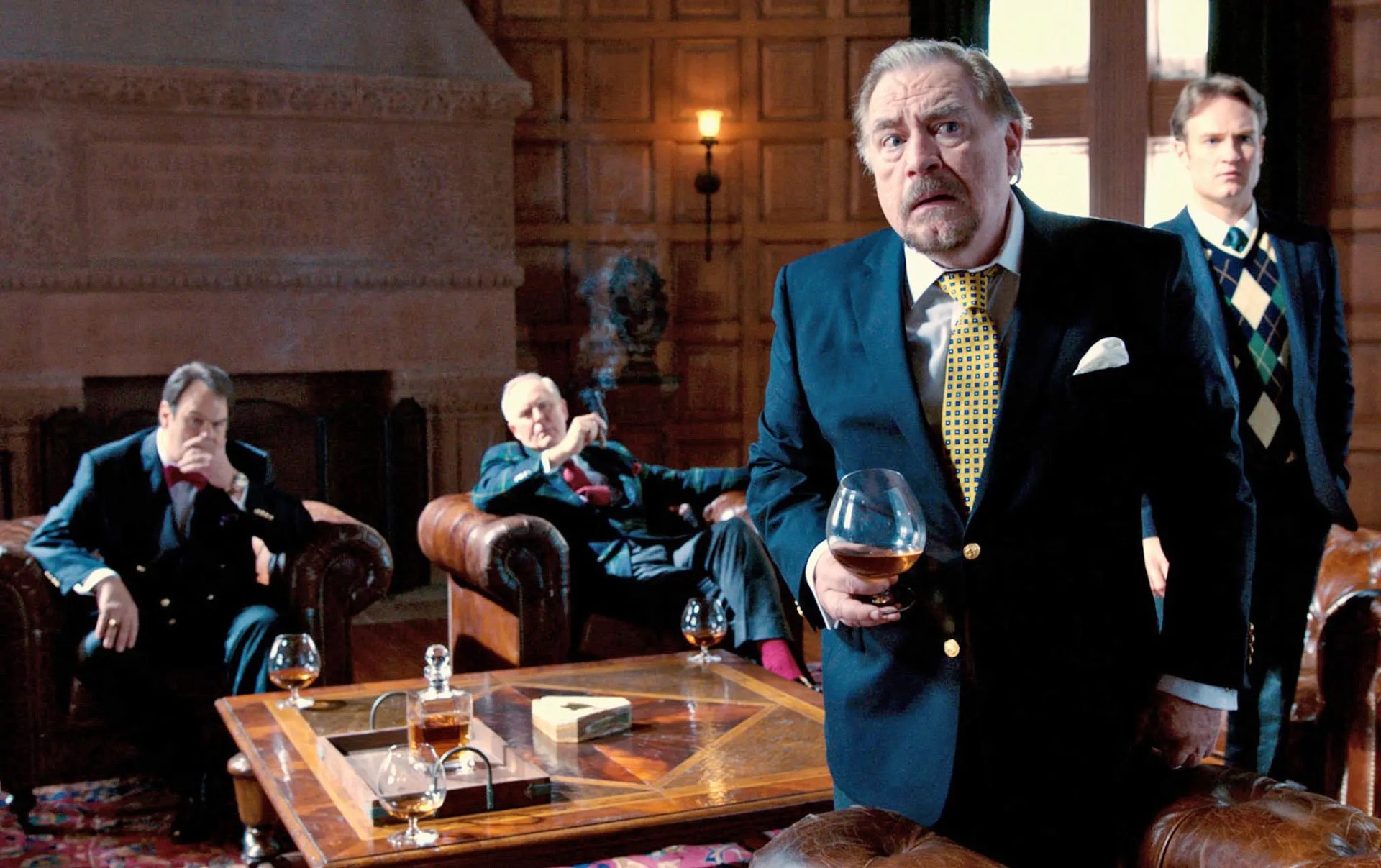
Between now and 2028, however, the 65% of the party which makes up the Manhattan Institute’s “Core Republicans” is shrinking one funeral at a time, and the difference is not being made up by conversions to old Right orthodoxy. The future of the GOP lies in an alliance of pre-Trump conservatives with ex-Democrats and socially liberal, tax-friendly younger Republicans — whether the dwindling Old Guard grumbling over drinks in private clubs likes it or not.
Join the discussion
Join like minded readers that support our journalism by becoming a paid subscriber
To join the discussion in the comments, become a paid subscriber.
Join like minded readers that support our journalism, read unlimited articles and enjoy other subscriber-only benefits.
Subscribe