









March 1 2026 - 4:00pm
The reaction to the US and Israeli airstrikes on Iran has divided the free world. While Canada and Australia exemplified the pro-American position, the EU’s Ursula von der Leyen struck a different note. In a statement on X, the President of the European Commission warned that developments in Iran are “greatly concerning”, while also promising to convene “a special Security College on Monday”.
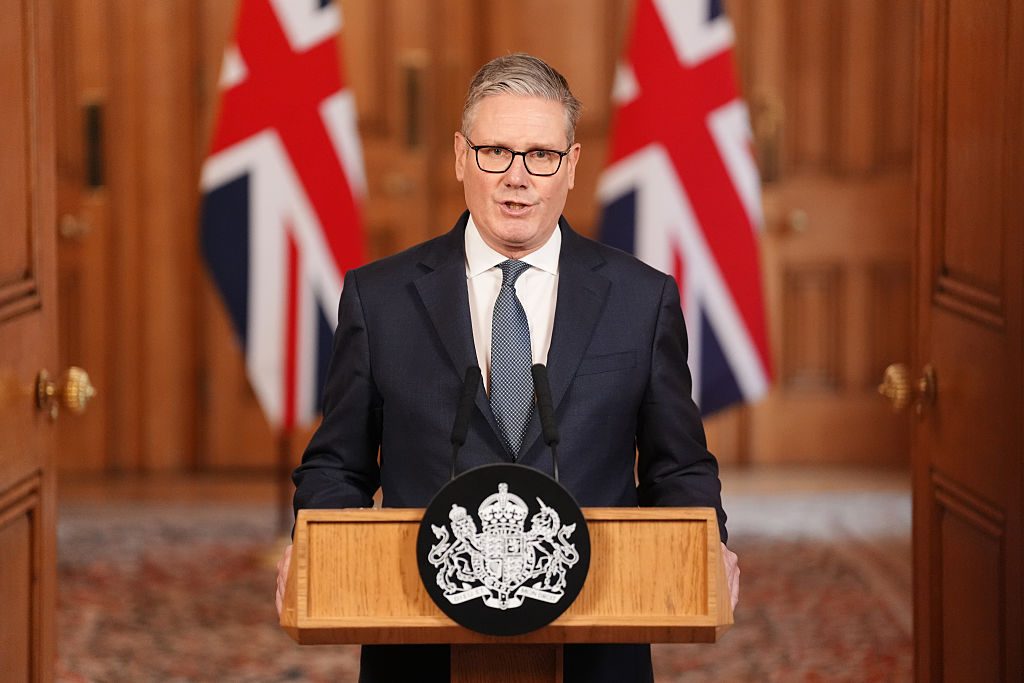
But what of Keir Starmer? Did he choose to stand shoulder-to-shoulder with his fellow Anglosphere leaders or did he join Europe in sitting on the fence?
A statement from the leaders of the “E3” — Germany, France and the UK — made his position painfully clear. Friedrich Merz, Emmanuel Macron, and Keir Starmer agree that the Iranian regime is a terrible threat to our security. However, they’re keen to point out “we did not participate in these strikes”.
The British government’s equivocation could be explained by first looking at domestic politics. While Reform UK and the Conservatives have expressed their support for the American action, the Lib Dems and the Greens are strongly opposed. It’s quite obvious which side Starmer feels most vulnerable to.
Ed Davey believes that Britain shouldn’t be dragged into another Middle East war by the US. This alludes to the 2003 invasion of Iraq, when the Lib Dems under Charles Kennedy opposed Britain’s involvement. For many Labour MPs, the contrast between Kennedy’s principled stand and Tony Blair’s enthusiasm was deeply uncomfortable. Labour lost 11 seats to the Lib Dems in the 2005 general election. Blair still won a third term, but his leadership was destabilized, resulting in his 2007 resignation.
Today, Starmer faces a similar threat from the Green Party. For a start, Zack Polanski’s position is unambiguous: “This is an illegal, unprovoked and brutal attack that shows once again that the USA and Israel are rogue states.” Furthermore, the Greens — unlike the Lib Dems — are running to Labour’s Left on everything, not just foreign policy. That means they provide a natural home for Left-wing MPs most likely to defect. While only two government MPs defected to the Lib Dems during the Blair years, Starmer could be facing an exodus.
What about his own party: are they broadly against or in favor of war in Iran?
The most immediate concern will be over the 24 MPs of the Socialist Campaign Group. SCG members like Diane Abbott, Richard Burgon and Nadia Whittome have already issued statements that are closer to Polanski’s position than Starmer’s. Some Labour MPs take the polar opposite view. For instance, David Taylor has told certain colleagues to “shut up, Iranians don’t want to hear your hypocritical, idiotic opinions”.
Perhaps the biggest headache, though, is posed by MPs like Emily Thornberry who aren’t on the hard Left, but who believe that America’s actions are “illegal”. There’s now growing pressure on ministers to reveal whether or not Lord Hermer, the Attorney General, has taken the same line in his advice to the Prime Minister.
If Starmer were to agree to British involvement in the current conflict, it’s not certain whether he’d have sufficient backing from his own MPs in a Commons vote. The nightmare scenario is that, like Blair before him, he’d have to turn to the Tories for support. Rather than put his colleagues to the test, he’ll keep playing for time. The longer the conflict goes on, the more likely it is he’ll face a crunch decision that could either break the Special Relationship or the Labour Party.
Peter Franklin is Associate Editor of UnHerd. He was previously a policy advisor and speechwriter on environmental and social issues.
 peterfranklin_