









July 28 2026 - 7:15pm
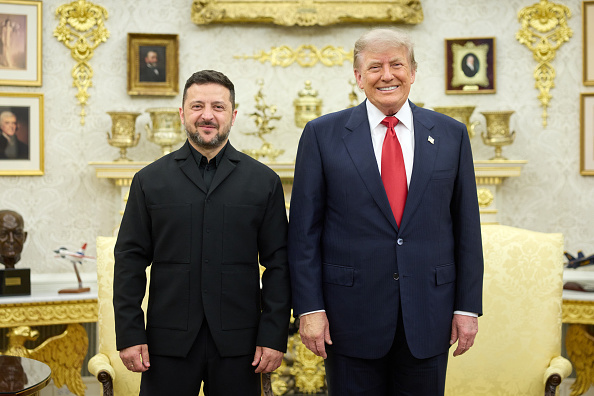
Relations between President Donald Trump and President Volodymyr Zelensky have never been better. Meeting at the White House today, the leaders discussed two items: reinvigorating the US-led diplomacy to end the war in Ukraine and advancing Trump’s pledge to allow Ukraine to develop Patriot air defense systems on its soil.
Ironically, relations between Trump and his other foreign visitor today, Israeli Prime Minister Benjamin Netanyahu, have never been worse. In contrast to Netanyahu, whom Trump has come to see as an obstacle to his efforts to negotiate an end to the war with Iran, Zelensky has earned the President’s admiration for both his personal resolve and Ukraine’s ingenuity in taking on what once seemed an invincible Russian war machine. Zelensky, meanwhile, has mastered the art of whispering in Trump’s ear: flattering rather than criticizing him, lobbying him behind closed doors, and projecting resourceful defiance to the rest of the world. Noticeably absent at this Oval Office sit-down was Vice President JD Vance, with whom Zelensky engaged in a remarkable public feud during a Feb. 2025 meeting.
What Zelensky really wanted from this meeting was greater American pressure on Russia. The Ukrainians are rightly convinced that President Vladimir Putin will not abandon his plans of conquest unless the costs of his war effort grow significantly. Indeed, in an interview with Sky News last weekend, Zelensky warned that Putin was preparing to mobilize up to 500,000 additional troops following the 20 September Russian parliamentary elections. While those troops would mainly be used as meat-grinder material, they could create problems for Ukraine’s far smaller ground force.
Still, the initiative in this war is now plainly on Ukraine’s side. Trump’s complimentary rhetoric illustrates that he believes as much. After a sit-down on the sidelines of the Nato summit earlier this month, Trump observed: “We have developed very good relations. Hard to believe, isn’t it? From the [Feb. 2025 meeting] to today, I think we have built very good relations.”
Ukraine’s greatest success in shifting Trump’s perspective has come via its spectacular strikes on Russian targets inside Ukraine, especially in and around the occupied Crimean Peninsula, and deep inside Russia. Ukraine keeps blowing up warehouses, fuel refineries, strategic bomber aircraft, oil depots, transport ships, warships, and ammunition factories. These attacks undermine Putin’s claim that Ukraine has no path to victory and that the only way to save Ukrainian lives — and preserve the nation’s honor — is for Trump to pressure Zelensky into accepting the Kremlin’s terms.
From his intelligence briefings, also, Trump will be aware of the fuel shortages and economic strife that this war is now causing Russia. Growing economic and social tremors born of inflation, cell phone network and messaging app restrictions, labor shortages and growing uncertainty in the Russian banking sector are all reverberating throughout the country. Trump knows it.
In addition, amid the chaos caused by Iranian drone attacks over the past few months, Ukraine’s proven mastery of drone warfare makes Zelensky seem like a useful long-term partner to America, and not just a wartime leader deserving of respect. This pro-Ukraine optimism on Trump’s part is further facilitated by growing respect for Ukraine in Trump’s MAGA base. Although its impact should not be exaggerated, MAGA influencer Laura Loomer’s recent visit to and high praise for Ukraine illustrates this shift in attitudes.
The question, then, is what Trump will do next. While he is certainly more inclined to support Ukraine, the US President continues to value his relationship with Putin. So while additional US pressure on Russia is likely, through Patriot missile licenses and new sanctions on Moscow, it is unlikely to take the more robust form that Zelensky wants.
