









July 19 2026 - 4:30pm
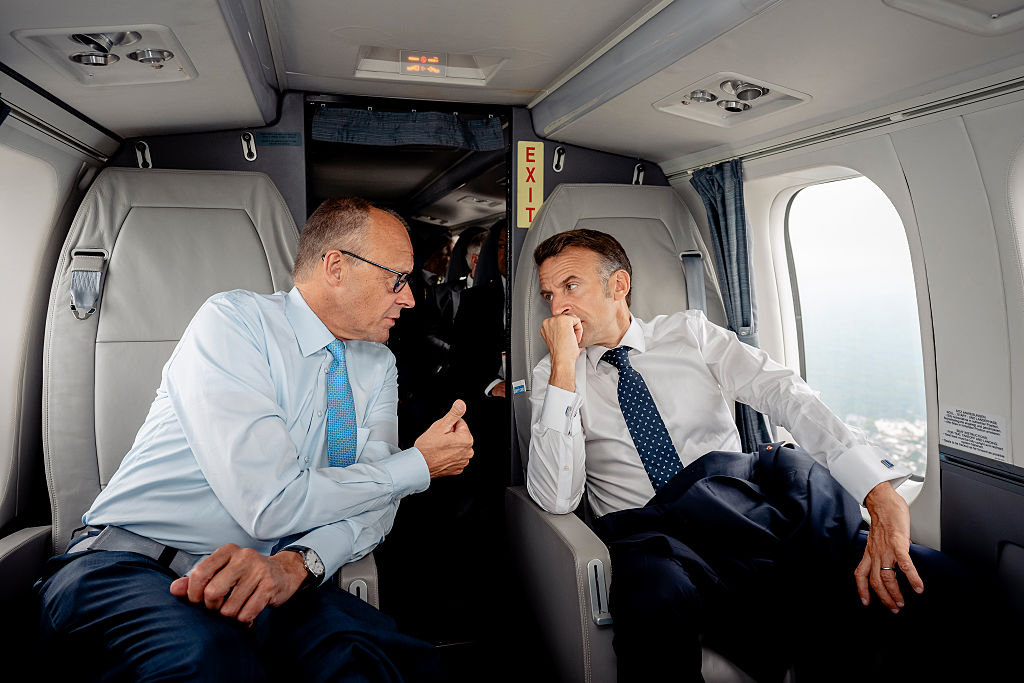
One of the most famous pieces of advice given by the Chinese military strategist Sun Tzu is to know your enemy. In recent weeks, talks have increased among European leaders about placing tariffs and restrictions on the Chinese economy, in response to a growing surplus between their countries and Beijing. On Friday, Friedrich Merz and Emmanuel Macron agreed to push for tougher trade measures on China.
But perhaps the biggest concern in Europe about the Chinese trade surplus is a lack of understanding of Beijing’s recent economic developments. Europeans perceive China as a mercantilist power that uses unfair subsidies, as well as an artificially devalued exchange rate, which deliberately creates industrial overcapacities as a tool to inflict economic damage on the rest of the world.
In this context, what is most interesting about the latest Chinese customs data isn’t the overall increase in the country’s surplus, but instead the collapse of Chinese imports. This is primarily a macroeconomic story. There are some parallels to the eurozone area in the period after the 2008 financial crisis, when the Europeans went into a death spiral of austerity that turned a previously balanced fiscal current account into a large import surplus. As can be seen in Germany at the moment, a structural current account surplus is a sign of looming economic weakness.
The big issue within China’s economy is local government debt, where most of the country’s debt is held. The debate around the future of the Chinese economy is not as open as the West’s, but the discussions that are leaking through suggest there is increased worry about a spiral of debt deflation.
Li Daokui, one of China’s most prominent economists, has tried to debunk the popular idea of a K-shaped economic recovery. This would involve a small number of sectors pulling an otherwise weak economy out of decreasing growth. Li says the Chinese economy has been cooling for over three years. According to his analysis, the country has trapped itself in a vicious cycle where it has generated a boom through local government infrastructure investments, driving up interest rates and blocking economic activity in the private sector. As a result “households hesitate to borrow; businesses are unwilling to convert financial resources into investment; and a large proportion of the money borrowed by local governments simply circulates within the financial system without producing new economic activity, because it is used to repay existing debt.”
Based on Li’s own calculations, the underlying rate of Chinese unemployment is 10.2%, a figure that includes a large number of discouraged workers, who are still looking for work but do not appear in official statistics. It would be fruitless to discuss how China should micro-manage its economic recovery, whether through investment or consumption. For the global economy, either would be preferable to a persistence of the current debt-deflationary spiral.
However, bilateral trade tariffs will not solve the problem. What would help is for China to reduce financial repression, revalue the exchange rate, and use the central government’s balance sheet to reduce the debt burden of local authorities. In turn, Western countries could offer a reduction in trade tariffs and a relaxation in economic sanctions. There is potentially a deal to be made.
So far, it is clear where Europe’s response to China’s increasing trade dominance has failed. Trade tariffs can be effective in reducing Chinese exports to the EU. But they make the underlying collapse in European exports to China worse, as Beijing will surely retaliate. And what is worse is that Chinese imports from the EU may decrease at a faster rate than European imports from China. With complex supply-chain dependencies, it is not clear at all that the EU will come out of this positively. In general, countries with trade surpluses are worse affected by trade wars than those with deficits — but supply chain issues weigh heavily.
It’s highly likely that a trade war between Europe and China would bring victory for neither side. Trade imbalances must be discussed at the global level, with a focus on macroeconomic imbalances rather than on the bilateral trade position.
This is an edited version of an article that first appeared in the Eurointelligence newsletter.
