









August 26 2026 - 10:00am
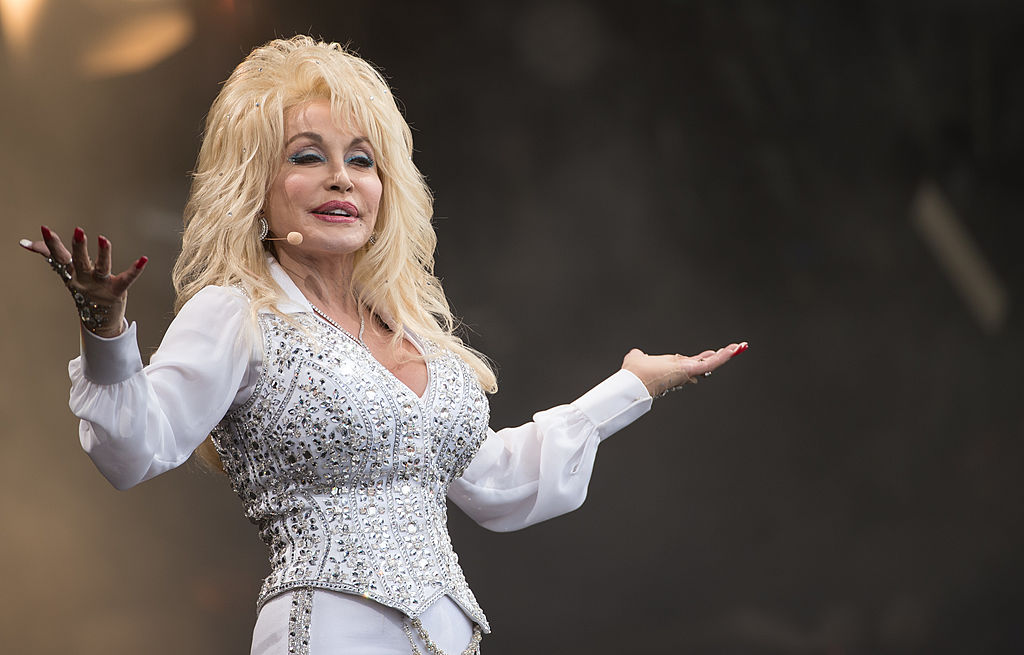
A few years ago, Dolly Parton released an album of unlikely rock covers which included a duet with Joan Jett on “I Hate Myself for Loving You”. I remember listening to it and finding the whole thing deeply strange, even uncanny. The issue was less the genre switch-up than the sentiment: here was Dolly, blessed with a demeanor at once warm and sincere and irrepressibly cheerful, and who had at that point been married to the same person for almost 60 years, singing about hating herself. It was unsettling on an almost existential level — and, of course, thoroughly unconvincing. Dolly couldn’t suppress the joy in her voice.
Hers was a life that was not just remarkable, but astonishing. Parton was born into extreme rural poverty in Tennessee in 1946, the fourth of 12 children. Her father was so poor that he had to pay the doctor with a sack of cornmeal and her home was a one-bedroom log cabin. Electrification only arrived in her corner of the state in 1951, when she was already five years old; running water would take longer. She was, in short, one of the last representatives of an America that has long since vanished and which is quickly passing out of living memory. That world was defined by closeness to extended family, ties to community, the continuity of oral traditions, folk music and a deep religiosity. And also something much older: an ancient rhythm of life dictated by the seasons and the soil.
Those formative years provided Parton with a rootedness that served her for the rest of her life. No matter how famous she became, and despite the extreme artifice of her image, Dolly remained authentic. In songs such as “Coat of Many Colors”, “Jolene”, and “I Will Always Love You”, she delivered pathos without succumbing to country kitsch. She was an astute businesswoman; when Elvis wanted to sing “I Will Always Love You” but Colonel Tom, his notoriously shady manager, demanded 50% of the publishing, she turned him down. That song was to provide for her and her family. As she put it herself: “I just always felt like I knew who I was, and I just try to stay anchored within myself and my beliefs.”
This exceptional strength of character set her apart from peers such as Johnny Cash, Willie Nelson, Loretta Lynn or Tammy Wynette. They had also grown up in poverty, steeped in Christianity and song, but struggled along the way with pills, alcohol, divorce or the IRS. They incorporated those struggles into their songs, and sometimes built their personas around them. Dolly, on the other hand, led a life without scandal that was primarily dedicated to doing good.
She never had any children of her own and so decided to take care of everybody else’s. In 1995, Parton started the Imagination Library in honor of her illiterate father, which has gifted over 300 million books to children since its inception. In the early Nineties, she set up the Buddy Program, where she promised to give seventh- and eighth-graders in Sevier County, where she grew up, $500 each if they graduated from high school; the dropout rate went from 35% to 6%. In 2000, she created the Dolly Parton Scholarship to award $15,000 to five high school seniors in her home county each year. When an academic argued that the Imagination Library was guilty of white saviorism in 2024, the accusation was met with overwhelming scorn and derision.
Profoundly American but also entirely sui generis, Dolly Parton ended her days universally beloved — and deservedly so. We will not see her like again. Then again, we had never seen her like before, either.
Daniel Kalder is an author based in Texas. Previously, he spent ten years living in the former Soviet bloc. His latest book, Dictator Literature, is published by Oneworld. He also writes on Substack: Thus Spake Daniel Kalder.
 DanielKalder