









May 19 2026 - 6:30pm
When I was a boy, my father would take me at least once a week to the Bethlehem Public Library, where I would spend time picking out new books to read, often history or fantasy. I loved reading about great men, whether through battles, expeditions, politics, the American Civil War or General MacArthur. I read George R.R. Martin and wrote him an email in sixth grade. He wrote back, saying I was too young to be reading his books. I was flattered and happy nonetheless.
These adolescent trips to the library were part of my relationship with my dad, and they were part of developing a sense of what it meant to be male, and a sense of what masculine ambition could lead to — good and bad. They were indispensable, in other words.
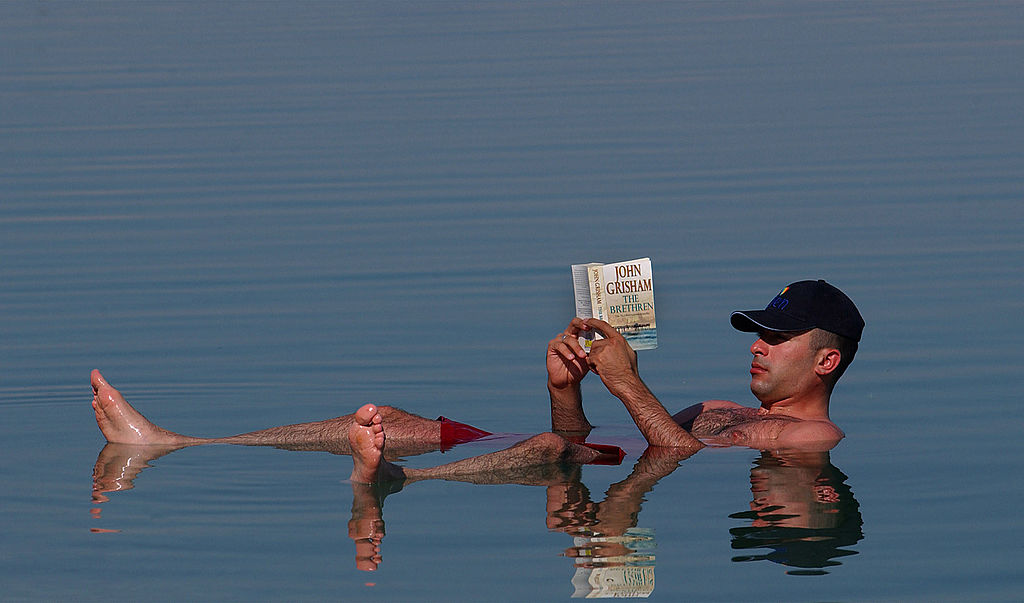
I thought of these trips to the library when I was reading a viral op-ed in the Wall Street Journal this week about the precipitous decline in “dad books”; I also think this genre could be termed “boy books” — if there are still any boys who read books, that is. According to the piece, sales of nonfiction books are down 8% in the past year, while publications on politics and current affairs are down 19%. Obviously, men aren’t the only ones who read these books, but there’s certainly a long-standing idea that men are more likely to sit down with a meaty read on a particular battle or moment in history.
The discourse around the piece, meanwhile, concerns why or how this happened, and also “so what?” The answer produced by the broader commentary out there seems to be that men have turned to podcasts as publishing has become fundamentally feminized. Women read romantasy; men listen to manosphere pods.
While these generalizations are broadly sound, the deeper meaning of the decline of the dad book is being overlooked. The dad book is actually a devolved genre, shaped into a product by publishers, which is a descendant of literature that has a masculine, if not masculinist, sensibility. This genre was not only good entertainment for men of all classes, but could also serve as a meaningful tool of character formation for their sons. I remember my dad reading Jack London and listening to Ernest Hemingway and Leo Tolstoy on audiobooks. Mark Helprin’s A Soldier of the Great War, about an Italian soldier in the First World War, was one of my dad’s favorite books and became one of mine. Alessandro Giuliani in Helprin’s Soldier, or Prince Andrei in War and Peace, provided evidence and encouragement that men could be both strong and sensitive, could form families, and could still engage in forms of existential brinkmanship. The chatty discourse around dad books, therefore, is really a mourning for the kind of literature that transmits the meaning of manhood.
This has a further knock-on effect. Regardless of whether men have been pushed out of publishing and pulled into podcasts, the result is that they are less sensitive to the wisdom and wonder that comes from engagement with well-written fiction and history. A whole way of thinking and feeling goes away when men stop reading deeply.
This is not to completely denigrate the shift to the sphere of podcasts, which aren’t empty calories. But they are not cognitively equivalent to reading a book from start to finish. There’s no adventure in them, no interiority. You can curl up in the sun with AirPods in, listening to something on your phone, but it’s not the same as curling up with a book.
My trips to the library with my dad were trips to a quarry to get materials with which to build a self. I would have no sense of myself without those foundational reading experiences. Now, when I stubbornly refuse to sell or give away any of my books, I’m aware the reason is that I imagine my son will read them one day. When a father gives his son a book, it becomes a dad book. The bigger problem is not that men are no longer buying books written by men, but that they have no relationship to books at all.
