









June 8 2026 - 7:00am
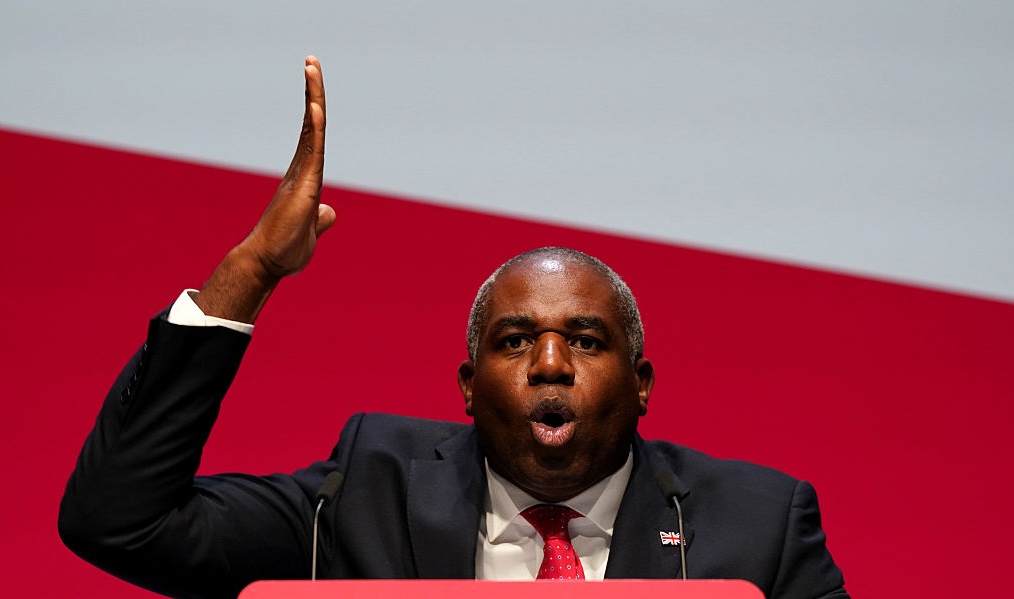
Deputy Prime Minister David Lammy’s contribution to the two-tier policing debate involved a typical lawyer’s answer: “Look, there are particular circumstances in which, of course, the police have to go a bit deeper than treating everybody equally,” he told the BBC. Lammy then suggested exempting an Orthodox Jew from attending a police interview on the sabbath as an example.
This was, at best, a facile attempt to distract attention from the elephant in the room: the large-scale adoption of critical race theory by British police forces. Lammy, a veteran antiracism campaigner, appears to be trapped in the “Equity Loop” — one that routinely mistakes what many would describe as “reasonableness” for naked impartiality. Given the broader issues raised by Henry Nowak’s murder, such as minor adjustments considering the sensitivities of religious minorities, are relative trifles by comparison.
As a former police officer, I hold unfashionable views on the issue of two-tier policing. As per my initial training, they’re influenced by Peelite principles, discretion and common sense. Sadly, thanks to critical race theory, policing by consent has been increasingly replaced by policing by diktat and fear — a semi-informal type of political control. Having spent five years investigating police wrongdoing, I watched the video of Henry Nowak’s arrest with interest. I would suggest that, despite the complexity of the situation faced by officers, there is evidence of confirmation bias on display. Where did the confirmation bias originate? Why did the officer who handcuffed Henry ignore his pleas that he’d been stabbed? Triage for stab injuries is a basic tenet of police Emergency Life Support training. These are entirely fair questions. It’s also an entirely different question from sparing Orthodox Jews police interviews on Saturdays.
This is where Lammy and his colleagues find themselves on the horns of a dilemma. Policing’s increasingly Leftward turn may have taken place under a hapless Conservative government, but it has been accelerated by the enthusiasm of Labour-aligned activists and public sector professionals. I have little doubt that David Lammy and other Labour ministers privately sympathize with the assumptions underlying critical race theory, which treats many social norms, institutions and categories as cultural constructs. For much of the modern Left, these ideas have become articles of faith. By acknowledging evidence of two-tier policing, Lammy would not merely be criticizing the police; he would be challenging a worldview shared by many on his own side.
Expect to see British criminal justice elites circling wagons to protect the 30-year Macpherson project, one that saw police chiefs quite literally take the knee. Careers have been made and empires built in places like the Home Office and the College of Policing. With reputations at stake, chief officers will cite misunderstandings of police race action plans, order reviews of first aid training and launch e-learning packages covering initial investigation by first responders.
These are all perfectly valid concerns, along with the consequences of austerity on police recruitment, training and retention. Yet none of them address a wider issue, one brewing for a decade or more around the mounting sense of unevenness in policing towards white victims and protests. Instead, Labour accused critics of bad faith and racism, citing the interference of bogeymen like Elon Musk and JD Vance. And so, political vanity and hubris ensure the already battered reputation of British policing degrades even further.