








March 25 2026 - 6:30pm
For years, a troubling pattern has persisted within parts of the Western anti-imperialist Left: diaspora voices are readily dismissed when their lived experiences contradict the movement’s preferred ideological framework. Many people who have fled repression in countries such as Syria, Iran, Venezuela and Cuba find themselves sidelined. The niche cohort responsible for this often seems more focused on opposing Western power than confronting human rights abuses or engaging seriously with testimony from those who have actually lived under these regimes.
This group of anti-imperialists publicly presents itself as standing in solidarity with the world’s most oppressed. Yet it advances a paradox that diaspora voices carry less weight — or none at all — precisely because those individuals no longer live in the countries they fled.
Take the recent events in Cuba. The island hosted a self-styled “humanitarian convoy” organized by CodePink — a group with a well-documented history of accepting regime-sponsored trips to anti-Western states. Among those joining were British politician Jeremy Corbyn, prominent progressive podcaster Hasan Piker, and Isra Hirsi, the daughter of Congresswoman Ilhan Omar.
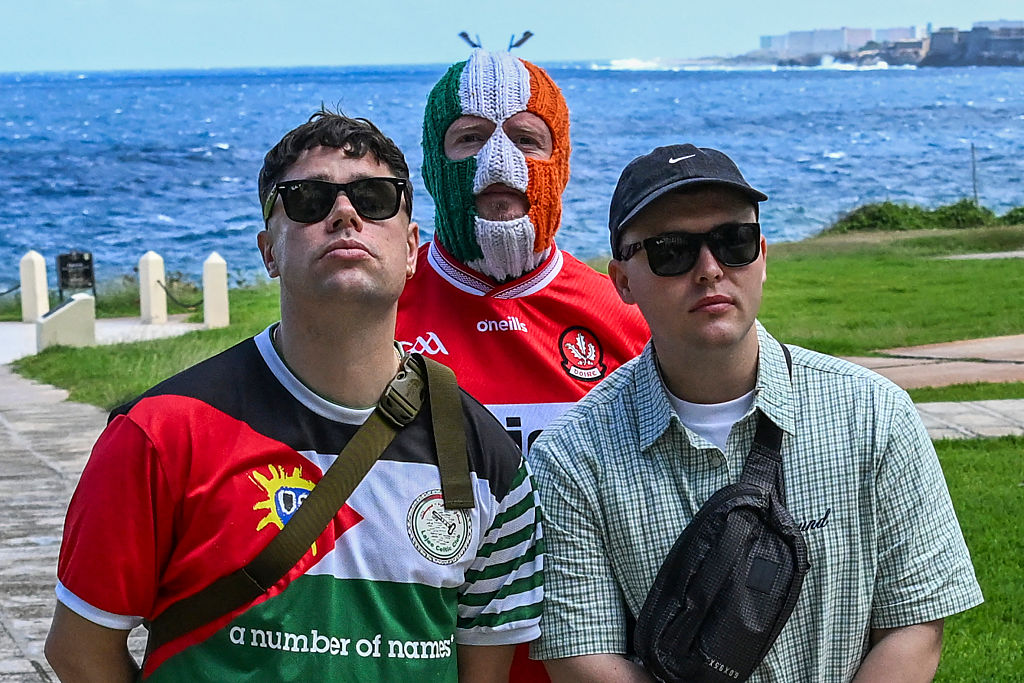
Though billed as a purely humanitarian mission, the trip bore the hallmarks of a curated political excursion. Delegates stayed in a five-star hotel under security, flew in artists to paint what was described as “a mural of humanity” for the Cuban people, and attended a concert by Irish rap trio Kneecap. Local reports claimed that power outages followed shortly after the concert.
Days before departing for the regime-sponsored trip, Piker launched a smear campaign against the Cuban diaspora in Florida, dismissing “most of the Cubans” who settled there as “the crazy ones”. The remark was rooted in frustration with Cuban-American voting patterns, which have historically leaned conservative. But in doing so, he maligned more than 2.9 million people, many of whom fled the island over decades to escape the economic ruin and political repression imposed by the regime.
For the anti-imperialist, diaspora communities often become an inconvenience because they are a living contradiction to a preferred anti-Western narrative. In Cuba, political rights and civil liberties are all but absent, and more than 1,100 political prisoners remain in detention — a longstanding human rights abuse that cannot be easily reconciled with romanticized portrayals of the regime.
Diaspora communities such as Cuban-Americans frequently hold political views that cut against these assumptions, shaped not by theory but by lived experience. Their perspectives complicate any attempt to present a tidy, “Left-leaning” political system, exposing the gap between ideological abstraction and political reality.
To an outside observer, the convoy looks less like solidarity than a form of saviorist activism dressed up in moral language. Its flaw is a patronizing lens, casting ordinary Cubans as a misunderstood “noble” people. From there, it is a short step to recasting exiles as “corrupted”, a degrading inversion of the same myth where the “pure” native is contrasted with those deemed tainted by the outside world.
These regime-sponsored excursions are nothing new. For years, segments of the anti-imperialist Left have enjoyed privileged access to countries such as Venezuela and Syria — even as many citizens of those same states risked detention or worse if they attempted to return.
In 2021, Nicolás Maduro’s government hosted a delegation from the Democratic Socialists of America (DSA). The group stayed at the five-star Gran Meliá hotel in Caracas and were granted direct access to Maduro himself at the Miraflores Palace — a visit widely seen as a public-relations coup for the regime. That same year, Grayzone writer Aaron Maté gained access into regime-controlled parts of Syria, where he enjoyed VIP access to a country that had been off limits to outside reporters critical of Bashar al-Assad.
When it comes to human rights, the Western Left often trips over its own hubris, oversimplifying complex realities. The Cuban convoy illustrates this: a performative display of solidarity that is at once tone-deaf and outdated. By prioritizing spectacle over substance, it ignores the diversity of exiles and the lived experiences of those who have fled repression in search of better lives. This, more than anything else, undermines any claim to meaningful progressive solidarity.
Join the discussion
Join like minded readers that support our journalism by becoming a paid subscriber
To join the discussion in the comments, become a paid subscriber.
Join like minded readers that support our journalism, read unlimited articles and enjoy other subscriber-only benefits.
Subscribe