








January 11 2026 - 4:00pm
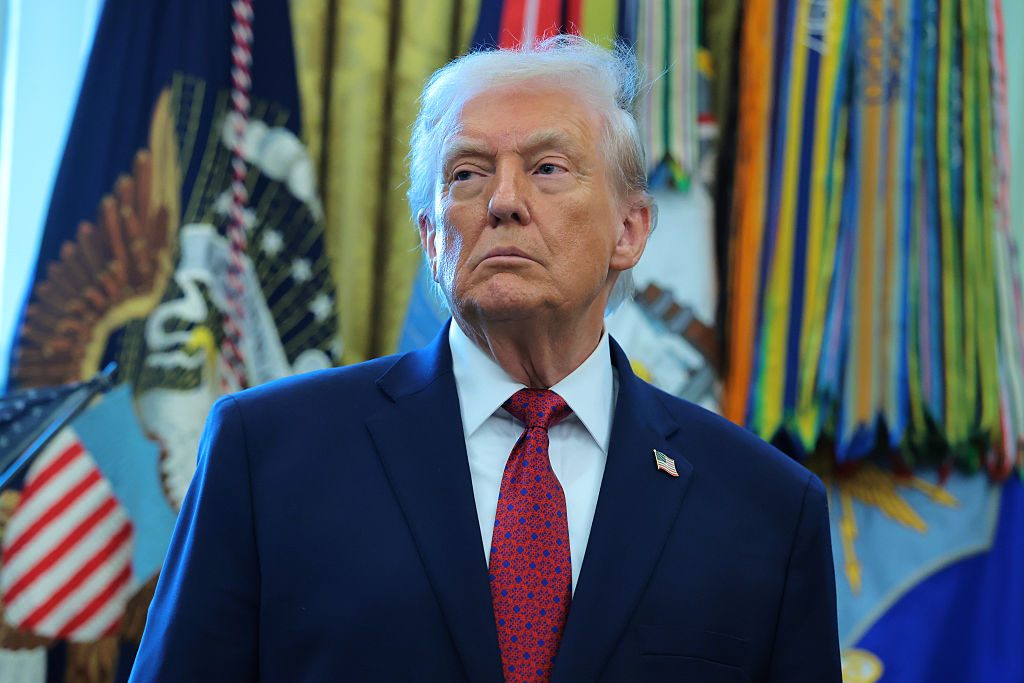
Faced with a spate of recent setbacks in state, local and special elections, President Donald Trump was at first dismissive of rising Republican anxieties about the economy. Convinced that once the Big Beautiful Bill’s tax cuts took effect this year, Americans would not only see the economy take off but feel their pay packets swell, he was confident they’d come to see the wisdom of his policies. He even went so far as to suggest that the affordability issue on which Democrats had capitalized was a hoax.
His tune has now changed, though. With a slew of recent announcements — banning institutional investors from buying single-family homes, purchasing mortgage bonds to lower interest rates and now, capping credit card interest at 10% for the next year — he has shown that nervousness about Republican prospects in the November midterm elections is starting to reach the White House.
With these proposals, Trump is reverting to a familiar strain of conservative populism. Having cultivated close ties with business oligarchs, he is now attempting to deploy that leverage to channel tangible gains to ordinary Americans and thereby shore up mass support. The question is whether this bargain can still hold.
It’s not clear just how Trump would make any of these measures take effect, nor whether they would make much difference. The housing moves are clearly designed to make it more affordable for first-time buyers to get onto the housing ladder. However, the impact of the proposed purchases of mortgage bonds — which would raise their price and thereby lower their effective interest rate — would, given the huge scale of the mortgage market, barely move interest rates. The same goes for the block on institutional investors: as a relatively small share of the housing market, their withdrawal would move prices little, if at all.
A cap on credit card costs could have a more significant impact, given how stressed lower-income Americans are by rising credit bills. However, short of legislative changes, the president can’t just dictate interest rates, though there could be scope for applying regulatory and even personal pressure to card issuers. However, the risk would be that credit card companies would compensate by freezing higher-risk borrowers, those most in need of credit, out of the market altogether, worsening the crisis for millions of Americans.
There is an added risk to this sort of presidential meddling. While arbitrary executive actions can benefit the favored businesses, the rising uncertainty tends to be bad for the economy. His efforts to control Venezuelan oil, for instance, have benefited a handful of companies, but may herald trouble for the US energy sector.
But the biggest risk of all is that it ends up being too little, too late. The fundamental driver of the affordability crisis is that the share of national income derived by labor is at an all-time low, and getting worse. The rich are getting richer as the poor, if not getting poorer, are treading water: job creation has slowed to a crawl, wages are only narrowly ahead of inflation, and the inflation rate on the basket of goods bought by poorer Americans is higher than that for richer Americans. Trump’s tax measures haven’t done anything to rectify this imbalance, and cuts to food stamps and medical subsidies are making things harder for many of the people who voted for Trump.
It could be that the signal these announcements send, that Trump at least hears their pleas, will suffice to preserve their bond with him. But if they fail to do the trick, Republicans could be in for quite the reckoning in the November elections.
John Rapley is an author and academic who divides his time between London, Johannesburg and Ottawa. His books include Why Empires Fall: Rome, America and the Future of the West (with Peter Heather, Penguin, 2023) and Twilight of the Money Gods: Economics as a Religion (Simon & Schuster, 2017).
 jarapley
Join the discussion
Join like minded readers that support our journalism by becoming a paid subscriber
To join the discussion in the comments, become a paid subscriber.
Join like minded readers that support our journalism, read unlimited articles and enjoy other subscriber-only benefits.
Subscribe