









September 30 2026 - 10:00am
Astonishing news has arrived from France: Emmanuel Macron is dropping hints that he could run for a third term as president.
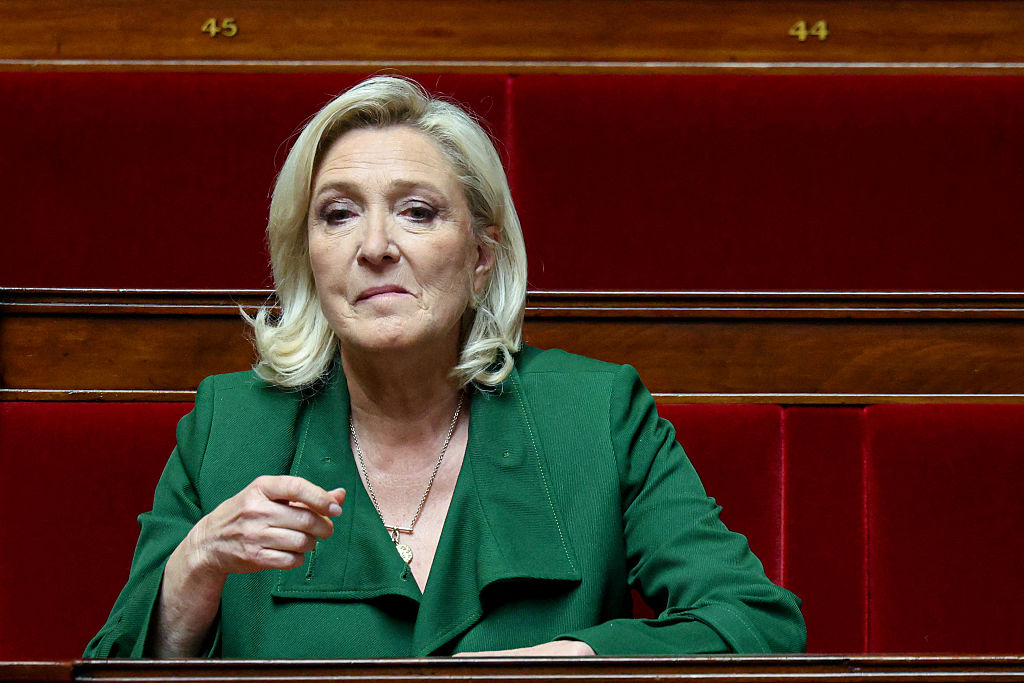
This can’t be in next year’s presidential election, because the French constitution forbids more than two consecutive terms. But he could run for a non-consecutive third term in 2032, when he’ll only be 54. It’s a sign that the French political establishment realizes it is losing the fight to stop Marine Le Pen from winning in 2027. In fact, the elites are beginning to bring Le Pen and her Right-populist National Rally (RN) party in from the cold.
For instance, on Sunday the RN gained a substantial number of seats in the Senate, rising from three to 15. This is the upper house of the National Assembly, whose membership is normally stitched up by the established parties through a convoluted process of indirect elections. The fact that RN senators are getting through for the first time therefore looks significant.
The latest polls show Le Pen extending her lead in voting for the two-round presidential election next year. She’s all but guaranteed to win the first round by a wide margin, leaving her to face the runner-up in the second round. It had been assumed that this challenger would be a moderate, most likely a Macron ally. But polling now shows radical Left-winger Jean-Luc Mélenchon moving into second place.
This is the nightmare scenario for the status quo in both Paris and Brussels — a chilling omen that, in Europe, the center cannot hold. The issue is not just that Mélenchon is the worst placed of all the main candidates to beat Le Pen in the second round, but that, given the choice, the elites might actually prefer Le Pen.
Consider Mélenchon’s proposal to freeze interest payments on central bank holdings of French government debt — in effect, defaulting on it. This would be an insane plan even for a fully sovereign country such as Britain, but in France’s case the central bank is ultimately the European Central Bank. A Mélenchon presidency would therefore threaten the stability of the entire eurozone — and the EU itself.
But that’s not the only reason why Le Pen is beginning to look like the moderate candidate in comparison. Unlike many on the Left, Mélenchon has not sought to downplay the demographic implications of mass immigration. Instead, he looks forward to the rise of a “New France” created through a process he calls “creolisation”.
For her part, Le Pen is cultivating the identities, loyalties and traditions of the old France, which demonstrated their mainstream appeal during the visit of the Pope over the last few days. While the French turned out in force to greet Leo XIV, Le Pen and RN President Jordan Bardella — neither of them known for their religiosity — were careful to be seen at Mass. For Le Pen, there could have been no better backdrop for her strategy of mainstreaming her image and that of her party — or as it’s known in France, dédiabolisation.
Peter Franklin is Associate Editor of UnHerd. He was previously a policy advisor and speechwriter on environmental and social issues.
 peterfranklin_