









December 6 2025 - 7:00pm
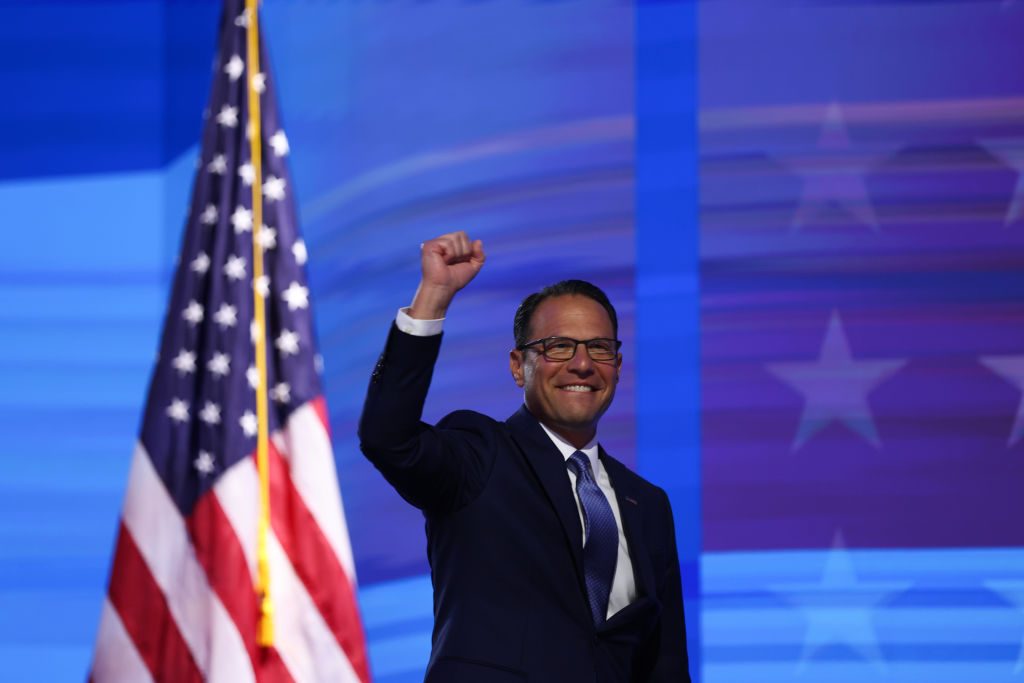
In a wide-ranging interview with the Atlantic this week, Democrat Josh Shapiro laid out his case for a post-Trump politics. The Governor of Pennsylvania — arguably the nation’s most important battleground state — insisted that America is tired of bloodsport politics. In his view, the country is hungry for “someone who can actually heal and unify, and someone who can solve problems and get stuff done”. Whether he’s on to something will be tested a little over a year from now — shortly after he stands for re-election — in the Democratic Party’s presidential primary. But his time in politics has convinced Shapiro that he has a formula for both his own success and that of the country.
This plan hinges on two core principles, the first of which is to “meet people where they are”. According to Shapiro, Democrats will need to show some humility to rebound with voters and account for how they have contributed to the fracturing of the electorate along class-based and cultural lines. He chastised former party leaders such as Barack Obama and Hillary Clinton for making comments about Donald Trump voters that either seemed dismissive (“they cling to their guns and religion”) or outright hostile (“basket of deplorables”). In her memoir published in September, Kamala Harris wrote that she didn’t choose Shapiro as her running mate because she “had a nagging concern that he would be unable to settle for a role as number two”. Speaking to the Atlantic, the Pennsylvania Governor called this assessment “blatant lies” and said Harris was “trying to sell books and cover her ass”.
For his part, Shapiro has made a point of establishing relationships with voters from all across his state, including many who voted for Trump. As a strategy, it’s paid off: when he won the 2022 gubernatorial election he trounced his Republican opponent by 15 points, winning eight counties which broke for Trump in 2024 and 18% of self-identified Republicans.
As governor, he has insisted on rejecting the purity politics and litmus tests which have come to define Democrats in the Trump era. Instead, Shapiro has demonstrated an interest in helping working people who may not traditionally vote blue. Early in his tenure, he dropped the state’s college-degree requirement for most public-sector jobs, opening as many as 65,000 new employment opportunities to all residents regardless of educational attainment. He has also worked to establish relationships with Republicans in the state legislature, and even made appearances on Right-wing media.
If going into less friendly places is a prerequisite for earning people’s trust and possibly even their support, then basic governing competence helps retain it. This points to Shapiro’s second conviction: “GSD (get shit done)”.
He has made clear that he believes government should be a force for good in people’s lives and responsive to their problems. The most high-profile example of this came just a few months into Shapiro’s term as governor, when an interstate overpass in Philadelphia collapsed. In less than two weeks, he had coordinated with state government agencies to reopen part of the highway. In another, more understated episode, he helped secure a state grant for a small general store in rural, deeply Republican Potter County to replace its outdated gas-storage tanks.
The Atlantic interviewer noted that residents in Trump-voting counties are often surprised when they receive a visit from the Governor — a Democrat — and that many respect him for it. An October Quinnipiac University poll showed that Shapiro has maintained broad popularity with Pennsylvania voters on the job, with an approval rating of 60%. This is an astounding benchmark for a swing-state governor, and it includes support from two-thirds of independents and half of white working-class voters — a Republican-leaning cohort. In hypothetical matchups for his 2026 re-election, he led his GOP opponents by around 16 points.
It remains to be seen whether America after Trump really will want a “return to normalcy”, something former president Joe Biden promised but, in the eyes of many voters, failed to deliver. It’s possible Trump has unlocked a new tribalism in American life that won’t be easily undone. But if the country is to ever find a path toward reconciliation, it will begin with leaders who aren’t afraid to take the first step.
Shapiro is holding out hope that this path is waiting for him. “The vast majority of people that I confront every day are really good people,” he told the Atlantic. “And, at least here in Pennsylvania, are willing to split their tickets and are willing to vote for people that they think are gonna get out there and make their lives better.”
