









December 10 2025 - 7:00pm
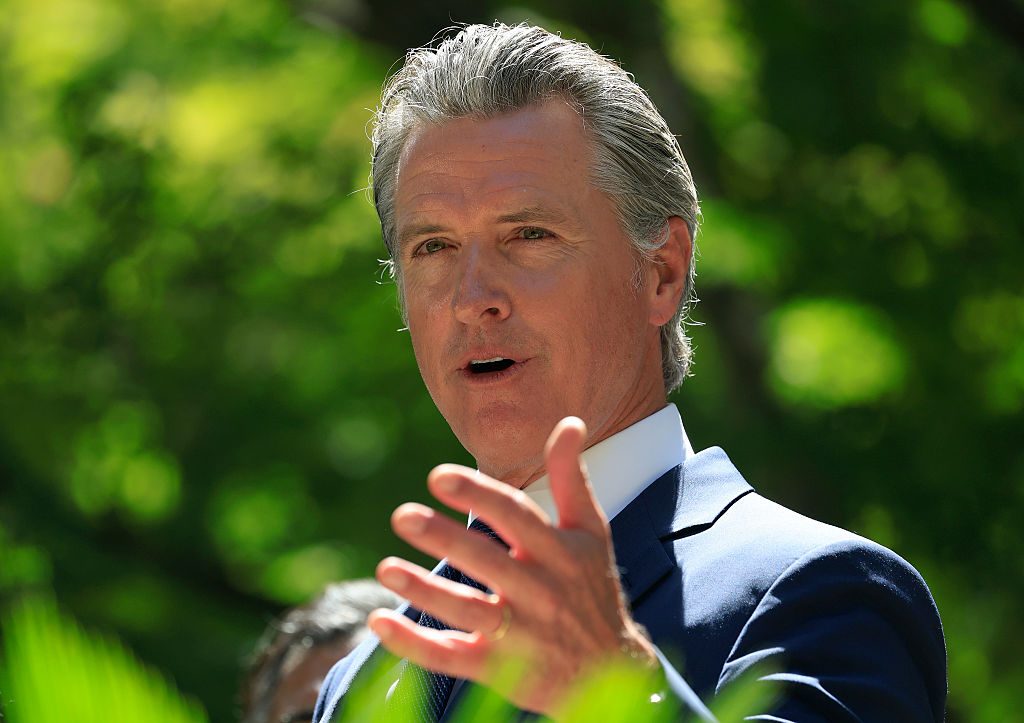
California Governor Gavin Newsom loves to describe his state as “an economic powerhouse”. Yet he’s far more reluctant to acknowledge its dramatically worsening employment picture. According to new outplacement figures, Golden State employers announced over 170,000 job cuts this year, up 14% from last year. More than 75,000 of these cuts were made in the all-important tech sector.
No other state outside Washington DC has been cutting so many jobs, and California now suffers from America’s highest unemployment rate at 5.5%. But this is nothing new. The state has been hemorrhaging jobs in fields such as manufacturing, construction and business services since Joe Biden’s presidency.
Michael Bernick, who previously served as the director of California’s labor department, has pointed to the state’s “Upstairs, Downstairs economy”, in which a wealthy college-educated class relies on service economy workers. California manages to be at once the state with the most billionaires and the nation’s poverty capital. Its teenage unemployment rate tops 21%, just short of twice the national average; for those under the age of 30, it ranks second nationally behind Mississippi.
This shortage of jobs, particularly high-quality ones, has steadily built into a crisis in recent years as politicians look away. Affordability, particularly for housing, is a big issue but California is also by far the worst state at creating jobs which pay above average, losing 1.6 million such roles in the last decade. In the past year, the only jobs created in California were in government-financed healthcare and government itself.
Tech is supposedly California’s strong point, yet even here things are murky. While venture-financed AI startups descend on the Bay Area, the overall picture is one of tech job losses. This year, according to the LA Times, thousands of workers at the likes of Amazon, Meta, Paramount and Warner Bros have been laid off. Worse still, many tech jobs are headed elsewhere. Texas is leading the charge, followed by Florida, as Southern states including Tennessee and Georgia make significant gains.
One factor here is that California’s nationally high energy prices are undermining its AI industry. Firms such as Nvidia and Samsung are now looking to establish data centers in locations with lower prices, so that they’ll be better placed to develop advanced chips and processors. For instance, the University of Texas at Austin is planning a substantial new quantum computing center, while energy-rich states such as Pennsylvania are now seeking AI growth as a way to reanimate traditional industrial sectors.
All this places California — and Newsom — in a quandary. Despite a stock boom largely enriching companies in the state, growing poverty has caused social spending to rise far faster than revenues. The state’s nonpartisan Legislative Analyst’s Office last month projected multibillion-dollar budget deficits for this year which will only get worse in future. The Left, still ascendant in California, plans to handle this with a plan to tax the billionaire elite for unrealized capital gains, something likely to accelerate an already sizeable migration of wealth outside the state.
This essentially leaves California as a model not for shared prosperity but for oligarchy, combined with mass poverty, diminished opportunities and a declining infrastructure. It will take remarkable media obfuscation to hide a reality that undermines those ambitions of Newsom’s which reach well beyond the boundaries of the state.
Joel Kotkin is a Presidential Fellow in Urban Futures at Chapman University and a Senior Research Fellow at the Civitas Institute, the University of Texas at Austin.
 joelkotkin