









June 12 2026 - 10:00am
The Western world spent years worrying about falling birth rates. Everything from the impact on the economy to labor shortages and the burden placed on an ever-smaller working-age population has been analyzed. But one aspect has often gone overlooked.
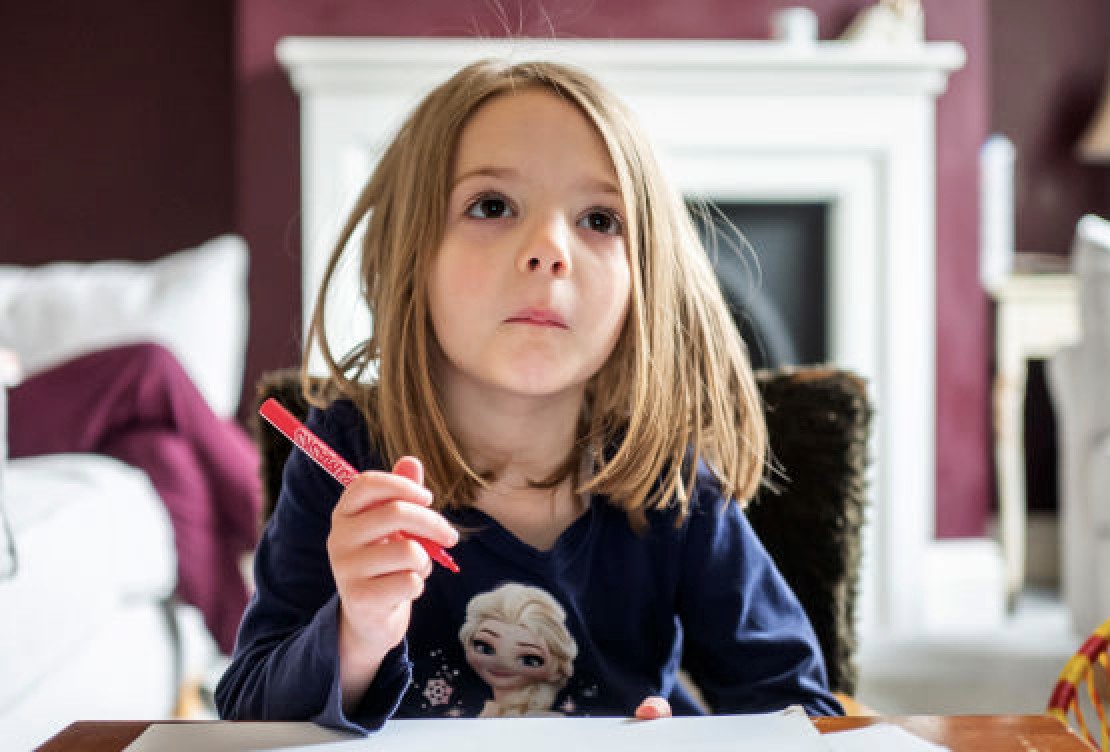
Figures released this week by the ONS reveal that one-child families are becoming increasingly common, with the proportion of women having only one child rising by almost 50% compared with their mothers’ generation. Children today are likely to grow up with fewer siblings than any previous generation, and one under-acknowledged impact of this is that there will likely be a drastic shift in the temperament of those who make up British society.
The sibling relationship is typically the longest and arguably the most important in a person’s life. More than a century ago, Austrian psychiatrist Alfred Adler suggested that the child who gets the hand-me-downs grows up differently from the child who hands them down. According to Adler, firstborns begin life as the undisputed center of the universe until a younger sibling arrives and stages a bloodless coup. Middle children become accustomed to negotiating life between competing factions, while youngest children and only children enjoy the pleasures and perils of being fussed over. Unsurprisingly, the reality is more complicated than the theory.
Birth-order theory has spent a century irritating people because it can be simplistic and often comes from the perspective of the conventional, nuclear family. But there are so many variables that this theory can quickly unravel, depending on family circumstances. Like most psychological theories, birth order is interesting to reflect upon, but not strong enough to base decisions upon.
Enthusiasts of birth-order theories have always enjoyed matching personalities to professions. According to the stereotype, firstborns gravitate towards respectable occupations involving responsibility, delayed gratification and sensible shoes. They are more likely to become doctors, scientists, engineers and managers. Younger siblings, by contrast, are more likely to work for themselves. They become entrepreneurs, artists and adventurers, preferring to ask for forgiveness rather than permission.
Middle children occupy a category all of their own. Forever negotiating between older and younger siblings, they are typically drawn towards professions requiring diplomacy and emotional intelligence. They become teachers, therapists, writers and politicians. In other words, they spend their adult lives doing professionally what they practiced around the kitchen table as children, trying to persuade everybody to calm down and see the other person’s point of view.
Modern research has found traces of these patterns, albeit in a more modest form. A study from Ohio State University found that firstborns and only children showed stronger cognitive and analytical interests. Meanwhile, economists Sandra Black and colleagues found that firstborns were disproportionately represented in management and leadership positions while younger siblings were more likely to strike out on their own. While the eldest child is climbing the corporate ladder, the youngest is trying to go viral.
We seem to be conducting a fascinating social experiment. For most of history, society produced a healthy supply of eldest children, youngest children and, in abundance, middle children. Today, quite by accident, modern society has begun breeding out the middle child.
Roughly 57% of families in Britain today have either one or two children. In other words, most families produce no middle child at all. If birth order influences personality even slightly, we are still giving birth to plenty of leaders and plenty of risk-takers. It is the diplomats who are becoming an endangered species.
As a fairly typical middle child myself, I believe I can already see the effects among the younger generation. Public life feels increasingly tribal; what seems to be in shorter supply are the people saying, “Hang on, perhaps they have a point?” Society is inadvertently creating more lone wolves and fewer peacemakers — I suspect we’re going to miss them.
Stella O’Malley is a psychotherapist and bestselling author. She is Founder-Director of Genspect, an international organisation that advocates for a healthy approach to sex and gender.
 stellaomalley3