








December 20 2025 - 8:15am
Being heavyweight champion of the world, Norman Mailer once claimed, “is like being the big toe of God”. Those words were written about Muhammad Ali, widely regarded as the greatest heavyweight boxer ever to set foot in a ring. Yet when not rope-a-doping and shuffling his way to victory against the likes of George Foreman and Joe Frazier, Ali participated in several bouts which would make any boxing purist wince. In amongst exhibition matches with ice hockey players, NFL stars and Marvin Gaye, one example sticks out. In 1976, he took on Japanese wrestler Antonio Inoki in a farcical hybrid-rules fight, in which Ali spent 15 rounds circling the edges of the ring while Inoki rolled around on his back in the center trying to kick the boxer’s shins.
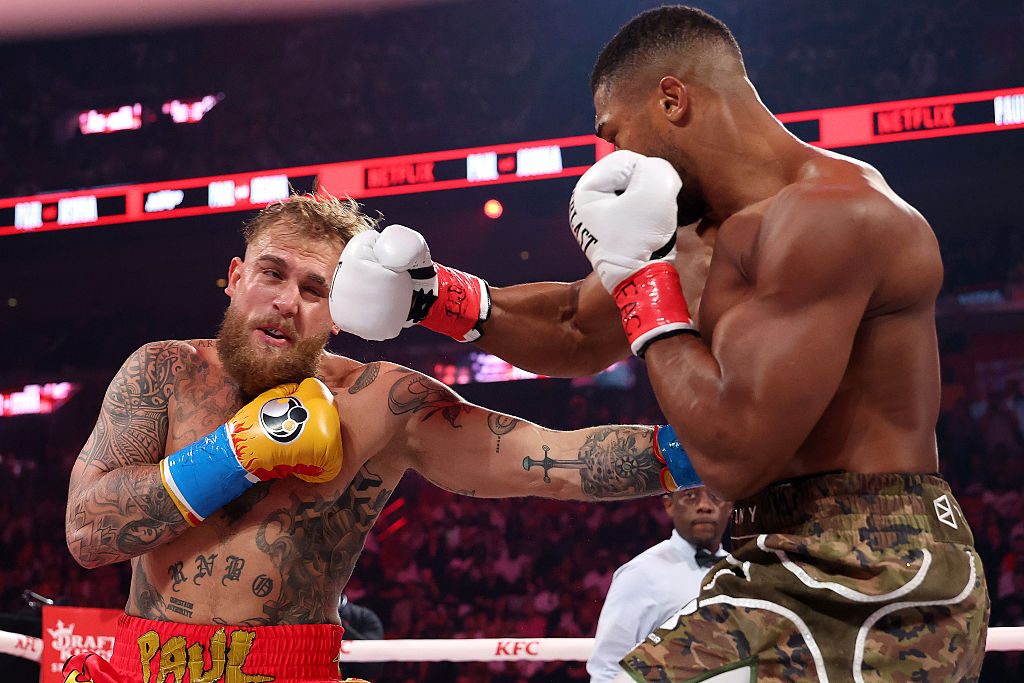
“This is serious,” Ali insisted before that unserious show. “I want you to know that this is real.” Similar noises were made by another former heavyweight champ Anthony Joshua during the build-up to his professional fight with online influencer Jake Paul in Florida last night, which he won via knockout. His one-sided victory went only a small way towards restoring the sport’s honor, given it took all of six rounds, but that was always a secondary aim. “I’m not worried about what people think about the integrity side. I’m more worried about: are they talking?” Joshua said earlier this week. “That’s the whole point of this fight. It creates conversation.” Really, Paul has not single-handedly turned boxing into a circus: the sport has long been happy to do that itself.
Having found fame as an online prankster, in 2018 Paul made his boxing debut in a white-collar match-up against a fellow YouTuber. Leading up to the Joshua fight, he fought a further 13 times (now in sanctioned professional bouts), taking on opponents varying from retired MMA fighters to the plodding, 58-year-old shadow of Mike Tyson. In several cases, active world champions have been content to appear on his undercard, the professionals who should be the faces of the sport playing second fiddle to the amateur who knows how to make the most money.
Neither Joshua nor his rivals have been immune to this cheapening of the sport. Both he and fellow British heavyweight Tyson Fury have faced mixed martial artist Francis Ngannou in crossover events. Fury has appeared on several WWE cards, indulging in the kayfabe of which Paul and his noisy gang of boxing interlopers have frequently been accused. Ali borrowed his pre-match brashness and trash-talking from the Forties and Fifties wrestler Gorgeous George, but that was always a psychological tactic. Now, we’re left with pure spectacle.
By embracing theater, though some would call it flippancy, Paul has undeniably boosted boxing’s global reach. With over 100 million total viewers on Netflix, the Tyson fight last November became the most-streamed sporting event of all time; in contrast, high-level world title fights tend to air on a pay-per-view basis, rarely pulling in a live audience over a million. Even America’s most bankable current beltholders, such as Gervonta Davis, Devin Haney, and Shakur Stevenson, have a considerably lower profile Stateside than the man beaten by Joshua last night. Paul has also been hailed for “saving women’s boxing”, securing significantly larger paydays and exposure for the female fighters who appear on his undercards.
Last night’s bout wasn’t a fake. The patchwork of ascending pinks and purples lining Paul’s face attest to that, and he was taken to hospital with a suspected broken jaw. But was it boxing, as opposed to a crude replica? Longtime fans would say no, but the sport-entertainment barrier has already been breached and Paul is not the only culprit.
Joshua has taken home tens of millions of pounds for a sparring session with a YouTuber two stone lighter than him: why wouldn’t other professional champions take note? Then-world heavyweight champion Joe Louis was gleefully dispatching a procession of no-hopers before the Second World War in his “bum of the month club”; now the bums are the draw. But then perhaps Joshua doesn’t mind being the supporting act. After all, why be an extension of God when you can be richer than Him?

Join the discussion
Join like minded readers that support our journalism by becoming a paid subscriber
To join the discussion in the comments, become a paid subscriber.
Join like minded readers that support our journalism, read unlimited articles and enjoy other subscriber-only benefits.
Subscribe