









August 23 2026 - 1:00pm
In 2022, Roberto Escanio (aka “Fanum”) started taking food off the plates of his fellow streamers and calling it a tax. This became known as a “fanum tax”, a phrase that now broadly and ironically refers to most forms of theft. Had George Orwell been writing today, he might well have noted that Dickens is one of those writers who are well worth fanum taxing. That Marxists claim him as “almost” a Marxist, Catholics as “almost” a Catholic, and, more recently, Barbara Kingsolver could relocate David Copperfield to contemporary Appalachia is proof of this.
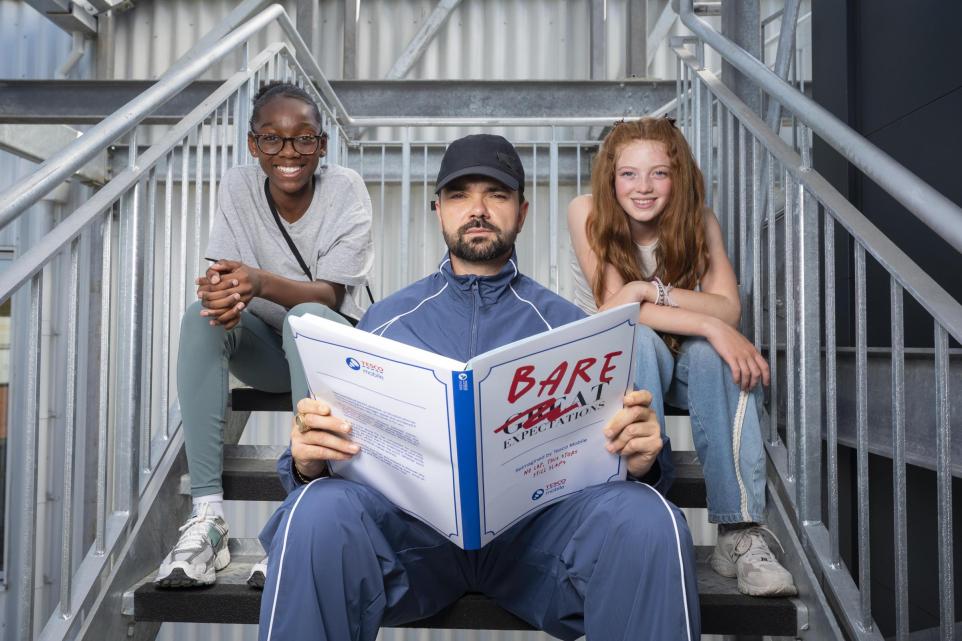
Dickens’s latest fanum taxer is Tesco Mobile, whose back-to-school campaign includes an abridged version of the 1861 novel Great Expectations “translated” into Gen-Z speak. It is hoped that this will help parents understand what exactly their brainrotted 10-year-old means when he talks about, say, “fanum taxing” or “gyatt”, all while hoping to further brainrot said child by selling him a discounted smartphone.
The resulting 30-minute audiobook, “Bare Expectations”, opens with Pip “doomscrolling [his] trauma” in a Kentish churchyard that has “proper bleak vibes, all mist and sadness”, when a convict appears and fanum taxes him, requesting a “bussin’ pork pie” and a file. Later, Miss Havisham (who is “absolutely cooked”) introduces Pip to Estella, who promptly dismisses him: “He’s a common laboring boy. He’s clapped.” In the novel, one of Joe Gargery’s only expectations is a future of “larks” with Pip; in Bare Expectations, this amounts to little more than him duncing about and saying the word “skibidi”.
Dickens would have loved this idea, if not its execution. As one of English literature’s more acute listeners, he was always making a raid on the vernacular, rooting around for fresh words to describe fresh experiences, and to make his characters’ speech more in tune with what Wordsworth called “the real language of men”. That his novels were serialized — Great Expectations was published in 36 installations between December 1860 and August 1861 — necessitated the repetition of his characters’ verbal and visual tics. This served to jog the reader’s memories of characters they may have met several chapters — and thus several months — ago. Think of Uriah Heap’s insistence on calling himself ‘’umble’, or Mr Jaggers’s acrid soaps and perfumes
But would he, really, have said “skibidi” or “gyatt”? Had he done so, he would at least have tried to use them correctly. Claude, which wrote Tesco Mobile’s translation, cannot. Perhaps its most comical slippage is in its use of “Gyatt”, which the accompanying infographic claims “express[es] strong excitement, surprise, or admiration”. But ever since its 2022 semantic shift, “Gyatt” has, in fact, referred to a large butt. Thus, Pip’s exclamation, “Gyatt. That was frightening,” is an unusual response to an encounter with a convict on the Kentish Marshes. Thankfully, he is too much of a gentleman to use that word in front of Estella, with whom he has no chance because of his “rizz debt”. This leads to the (again, false) announcement of Pip’s “looksmaxxing era” (where’s the hammer, Pip, and the peptides and the mew?).
This is, of course, a comic piece of advertising. Even so, it is a reminder of quite how bad and imprecise AI can be when it comes to using the English language, with all its indeterminate and shifting meanings. The OED credits Dickens with the introduction of some 258 words to the written language, including “boredom”, “butterfingers”, and “allotment gardens”. It seems unlikely that, when the Zoomer vocabulary is finally fanum taxed and the word “gyatt” enters the OED, it will be qualified with a quotation that reads: “As in: Gyatt. That was frightening. Claude, Opus 4. Bare Expectations.”
